
Apple said the Duo redefines the foldable experience, boasting the largest display ever on an iPhone.
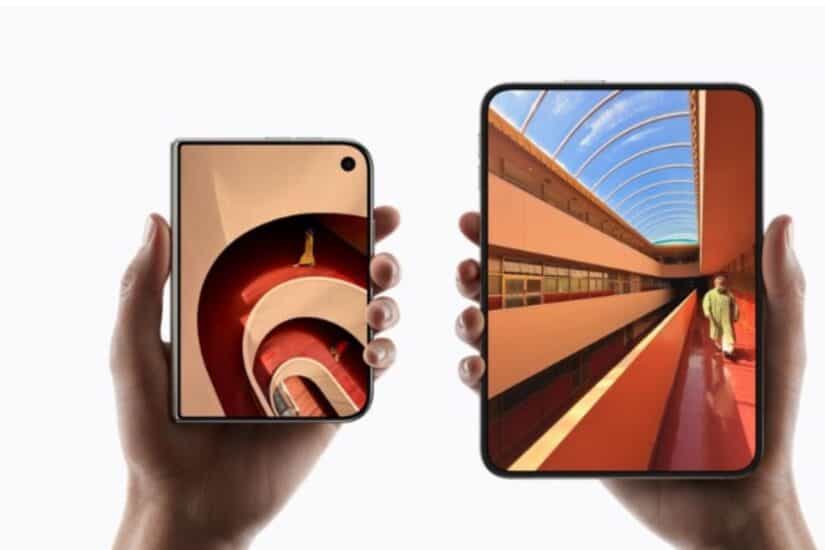
Apple has launched its first foldable smartphone, the iPhone Duo. Picture: Apple


Apple has launched its first foldable smartphone, the iPhone Duo, marking the biggest change in the iPhone’s nearly 20‑year history.
With a starting price of $2,000 (R32 061 excluding duties and taxes), the Duo pushes Apple into direct competition with Samsung’s Galaxy Z Fold 8, unveiled last month.
Apple event
Apple introduced the device at its “Surprise and Shine” event at the Steve Jobs Theatre in Cupertino, California, on Wednesday, 9 August 2026.
Apple said the Duo redefines the foldable experience, boasting the largest display ever on an iPhone. Made from titanium, it features a unique centre hinge that helps it lie flat and controls opening and closing. When unfolded, Apple claims it is the thinnest iPhone ever.
New CEO
The company’s new CEO, John Ternus, leading his first launch after succeeding Tim Cook, hailed the Duo as a milestone.
“iPhone Duo represents the incredible creativity, ingenuity, and dedication of teams across Apple. It reflects what’s possible when we bring our very best work together in service of creating something truly meaningful for our customers.”
iPhone Duo
The Duo ships in October, supports the Apple Pencil, and comes in dark blue and white. Storage scales up to two terabytes, pushing the price to roughly $3,000 (R48 091 excluding duties and taxes). Apple confirmed the device is eSIM‑only worldwide, with split batteries delivering 31 hours of video playback on the inner display and 44 hours on the outer display.
Display
The foldable features a 7.6‑inch Super Retina main display, smaller than the iPad mini’s 8.3‑inch screen, and a 5.4‑inch exterior display.
The main screen introduces an under‑display camera, while the outer display uses a hole‑punch cutout. Speakers sit at the top and bottom, and it comes in Star White and Night Sky.
Features
Powered by the A20 Pro chip, the Duo shares the same architecture as the iPhone 18 Pro models. Pre‑orders open 16 October, with availability from 23 October.
Apple’s foldable debut underscores its focus on durability, battery life, and AI integration. Yet the steep pricing and limited Siri AI rollout may temper adoption, especially in markets where rivals like Samsung and Huawei already dominate foldables.
#BREAKING Apple unveils a foldable iPhone. #iPhoneDuo. Here it is: #AppleEvent pic.twitter.com/pxBhf1x2cF
– 𝙵𝚊𝚒𝚣𝚎𝚕 𝙿𝚊𝚝𝚎𝚕 ⚡️ (@FaizelPatel143) September 9, 2026
iPhone 18 Pro and Pro Max
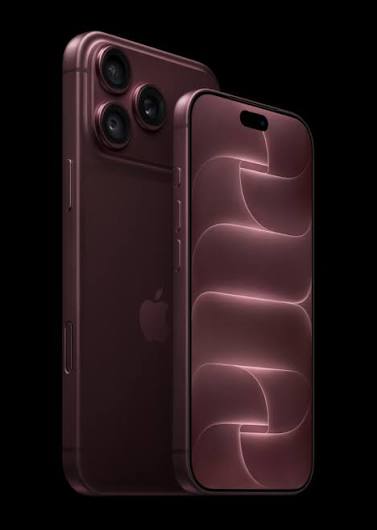
Alongside the foldable, Apple unveiled the iPhone 18 Pro and Pro Max, both running on the A20 Pro chip built on 2nm architecture. The chipset delivers a 40% graphics boost, 50% more memory bandwidth, and a 32‑core neural engine for AI tasks.
Ternus framed the iPhone as more than a phone.
“The iPhone is an intelligent personal hub, at the centre of your life.”
The Pro Max boasts Apple’s longest battery life yet – 45 hours of video playback – while the Pro offers around 36 hours. Both support rapid charging, with 15 minutes delivering 50% capacity.
Camera upgrades include a 48MP fusion main sensor with variable aperture, 4K Dolby Vision HDR, and a new Apple Reference Image feature to authenticate photos.
Prices start at $1,199 (R19 220 excluding duties and taxes) for the Pro and $1,299 (R20 823 excluding duties and taxes) for the Pro Max, each $100 higher than last year. Pre‑orders open 12 September, with availability from 18 September.
Apple Watch Series 12 and Ultra 4
Apple also refreshed its Watch and AirPods lines, integrating them more tightly with Siri AI. However, Siri AI’s rollout remains delayed in the EU and unavailable in China.
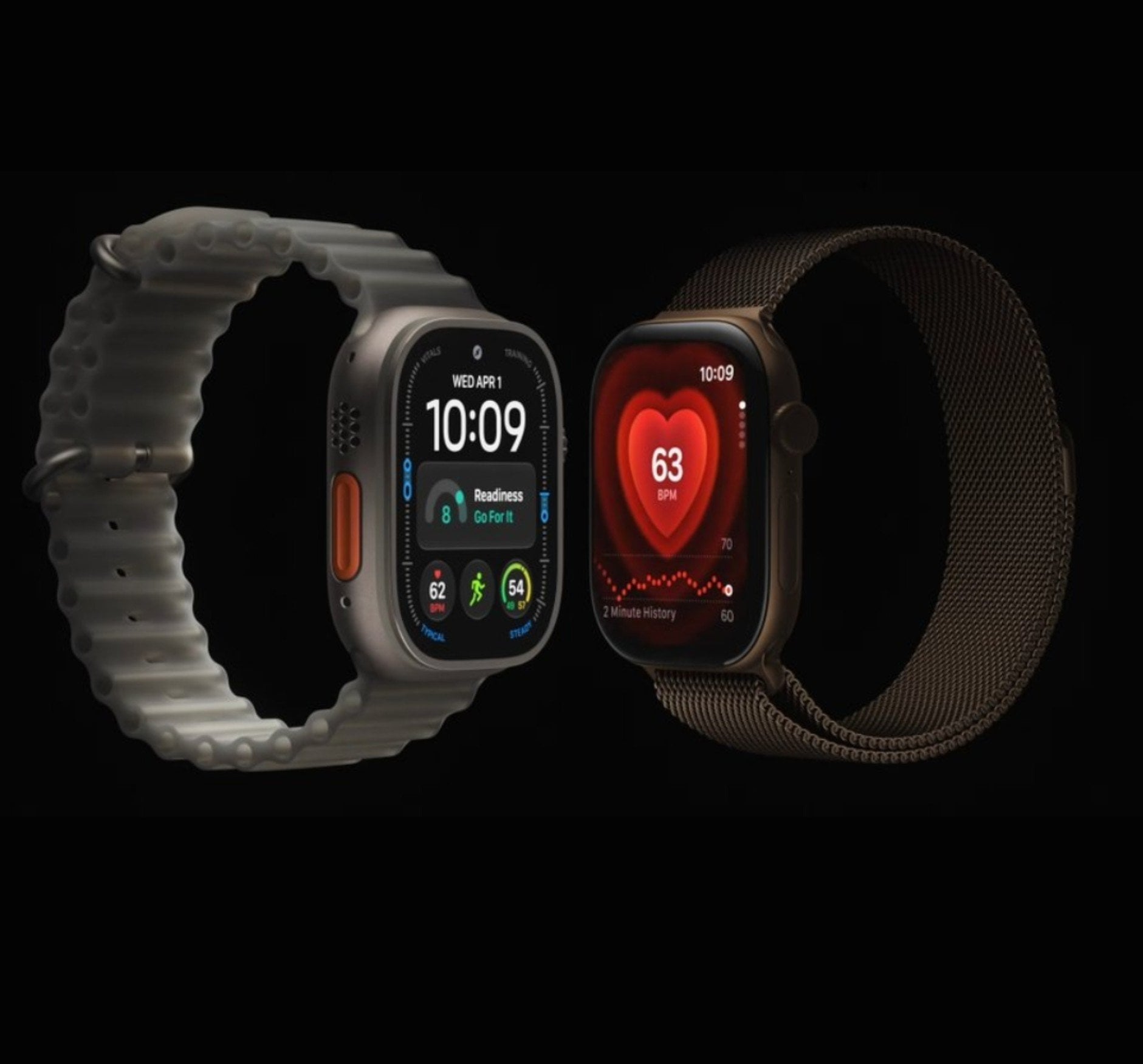
The new Watch Series 12 debuts a Health Sensing System with improved skin contact and larger LEDs for more accurate heart‑rate data. Apple said tests showed the sensors “beat all competitors.”
Health app
Data feeds into a redesigned Health app, powered by Apple Intelligence, offering personalised suggestions, a “Health Age”, and “Longevity” scores.
AI features include audio intelligence to detect sounds like sirens, a live rewind function to replay the last 15 seconds of audio, and Siri Recap to record and transcribe conversations.
Power
Powered by the S11 chip with a faster CPU/GPU than the A20 Pro, the Series 12 also features 60% tougher glass, new watch faces, and finishes from grey and bronze to pearl white and blue ceramic. Battery life is 24 hours.
The Ultra 4 doubles endurance with two days of battery life, including 18 hours of workout tracking, and comes in black and natural titanium.
Pricing starts at $399 (R6 396 excluding duties and taxes) for the Series 12 GPS model and $799 (R12 808 excluding duties and taxes) for the Ultra 4, with pre‑orders open today and availability from 18 September.
Balanced take
Apple’s historic foldable debut signals its ambition to reshape the smartphone market, while the Pro models and new wearables highlight advances in AI, health, and battery life.
But with premium pricing and limited Siri AI rollout, Apple faces the challenge of convincing consumers in competitive markets to embrace its bold new direction.