Experts examine artefacts in ancient shelter
“We have found various animal remains, including zebra and duiker, as well as African giant snake shells”
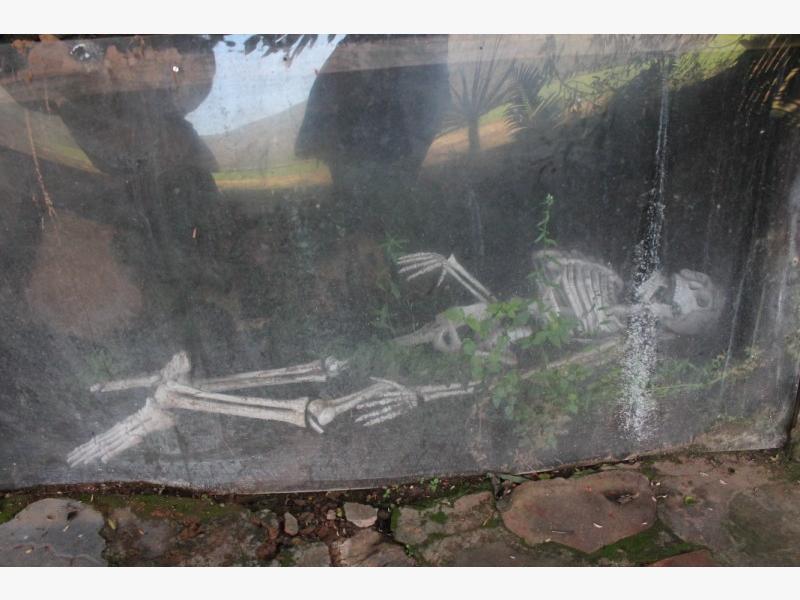
OHRIGSTAD – The well-known French researcher, Dr Guillaume Porraz, recently visited the biggest rock shelter in Africa – also known as the Museum of Man. It is one of only four Middle Stone excavation sites in South Africa and is situated just outside Ohrigstad and a few metres from the well-known Echo Caves.
Although the caves have no historical significance, in that prehistoric items and artefacts dating back to the Stone Age have never been found, Porraz shifted his focusto study the ash layers in the shelter with the aim of determining how people evolved over time.
Porraz, who was accompanied by various other experts in the field, including physicist Chantal Tribolo, from the University of Bordeaux, elaborated the first study by Professor Eloff to determine how people’s behaviour, environment, food and hunting techniques changed over time by looking at the layers of ash in the shelter. “Eloff did a great job and the foundation he laid is of immense value but today we are using new techniques to capture the data and re-examne what we found, to expand and refine the study.”
According to Porraz it is a project driven by both France and South Africa and although the study is still in its early days, very interesting information has already surfaced. According to them, nearly all the 105 layers of ash contain archeological material. “We have found various animal remains, including zebra and duiker, as well as African giant snake shells”, Ms Aurore Val from the Institute for Palaeontological Research from Wits, said.
“The aim of the study is to document changes in the environment that took place over the past 150 000 years.” According to her, cut marks on bones also revealed that hunting techniques and procedures in killing changed over time, which is supported by different rock-breaking procedures identified. According to the experts, it is a given that changes over more than 100 000 years did appear, but it seems as if they are especially interested in not only why the changes occurred, but also why they disappeared.