Orphaned rhino calves flooding in
First and foremost, they try to save these animals lives; secondly, they try to save their souls, and lastly, all together, we try to save the species.
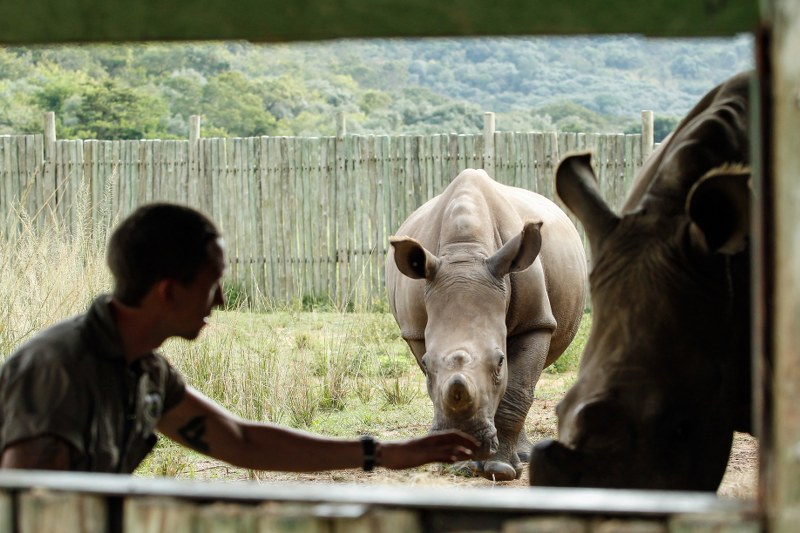
NELSPRUIT – A third rhino calf was brought to Care for Wild Africa rehabilitation centre within the past seven days, revealing the extent of rhino poaching in our region. The latest figure supplied by the Department of Environmental Affairs, is that 172 have been killed since the beginning of the year, with 113 in the Kruger National Park (KNP).
Orphaned calves were often shot in the past, the effort and cost of their rehabilitation as reason, yet they are now rather taken to rehabilitation centres to ensure the species’ survival. One such centre is located near Mpumalanga’s capital, where a dedicated team under the guidance of Me Petronel Niewoudt has succesfully treated no less than ten rhino calves over the past three years.
The latest rescued calves currently in the custody of Care for Wild Africa are:
• Satara, female

From region: Nwanetsi, Kruger National Park
Circumstance: Rangers came across the mother’s carcass on March 11 with the calf refusing to leave her side. The poachers had not removed the horn. She was darted by Dr Peter Buss and transported via SANParks helicopter to Skukuza and then by road to Care for Wild Africa.
Satara is the first Kruger rhino orphan to be taken to a rehabilitation centre.
Arrived at Care for Wild Africa: March 11
Approximate age: Between six and eight months
Status update: Satara has adjusted relatively well to her new surroundings, says Mr Sam Browett of Care for Wild Africa. “She wants to play with everything in her boma!” he told Lowvelder, a week after the young animal’s rescue.
• Tana, female

From region: Limpopo
Arrived at Care for Wild Africa: 15 March
Approximate age: Between two and four months
Circumstance: Tana’s mother was shot and dehorned by poachers on a private game farm. Her rescue was traumatic due to complications during darting. Care for Wild’s Angelique de Klerk explained that it required extra care to get to a point where she would allow humans to come near her for feeding, to treat her wounds and to lend physical comfort.
Status update: After spending an agitated four days in a tight enclosure, Tana was introduced to a large boma with fellow orphan Satara in on March 19. “When she sleeps, she longs for her mother,” said Petronel Niewoudt, founder of Care for Wild. Niewoudt believes the two young calves are giving each other comfort during these confusing times.
• “Bulletjie”, male

From region: Satara, Kruger National Park
Arrived at Care for Wild Africa: 19 March
Approximate age: Approximately eight months
Circumstance: It is not known whether the mother’s horn was poached. At this time, the only information that Lowvelder could confirm was that the poaching incident occurred near Satara. The animal was captured by Dr Markus Hoffmeyer of SANParks and Chris Hobkirk and Dr Ferreira du Plessis from the Mpumalanga Tourism and Parks Agency (MTPA) collected the young bull from Skukuza for transport to the care centre.
Status update: According to Niewoudt, he is reacting well and feeding. More information on his progress will be available shortly, but he is also described as calm considering the circumstances.
You can also help Care for Wild Africa to help these animals
First and foremost, they try to save these animals lives; Niewoudt describes the important work that she and her dedicated volunteers do. “But secondly, we also try to save their souls,” she says, in reference to their attempts to restore these traumatized animal’s will to live. Lastly, she added, “all together, we try to save the species.”
• One calf drinks between 14 and 16 L of Denkavit milk per day and Care for Wild spends almost R3000 per week on milk for these three orphans.
• As with any baby, feeding takes place at odd hours of the day including at 02:00and 05:30 in the morning.
• Apart from the milk, food for these orphans consists of lucern and horse pellets.
• Glucose is an essential part of the nutritional mix for traumatised calves.
• Every rescued animal is put on a drip during and after their transport.
• Stressed rhino calves are prone to stomach ulcers, and a box of 30 tablets lasts less than a week at this centre!
• Apart from food, these young charges need physical comfort and company. Volunteers at the centre even sleep in the enclosures to keep the calves company at all times.
• It costs around R120 000 to raise a rhino calf, per year.

“We will never say no to another orphaned rhino,” concluded Niewoudt. More baby rhinos, however, means more bomas. Contributions and sponsorship of these would be agreat relief to this dedicated team.
To contribute toward the care of the young rhinos, Care for Wild Africa asks that people buy and leave items like five kilogramme glucose containers at Mopani Pharmacies or order the Denkavit Milk for foals through their veterinary practice.
Just let them know of your generous contribution by contacting Petronel Niewoudt on 082-825-8735.
Visit Care for Wild .Africa. on Facebook for the launch of their video web series on March 21 at 12:00
Read about the latest rhino poaching statistics as well as more on the shokcing discovery of a maimed rhino by KNP tourists.