Kruger holiday resort may still become a reality
Wright added that a tented design had a lighter footprint, resulted in less environmental disturbance and was becoming a well-received trend in safari ecotourism destinations
MALALANE – Kruger National Park (KNP) lovers who thought they had won the battle against the proposed development of a “hotel” in Kruger, must think again. The developer is proceeding with its application to make the Radisson Blu Safari Resort a reality.
It is to be constructed at the confluence of the Timfene and Crocodile rivers in the Malalane section of the park.
Lowvelder and other media reported last week that Malelane Safari Resort Investments (Pty) Ltd (MSRI) had missed the deadline to submit an application for environmental authorisation to the department of environmental affairs. The application was then closed.
However, the developer indicated this week that it was continuing with all processes necessary for the implementation of the rights to construct and operate Radisson. Lowvelder spoke to Mr Michael Wright, director of MSRI about the proposed development.
He gave a detailed explanation about what exactly they envisaged for this resort.
A hotel in the middle of Kruger?
Many Kruger lovers fear that a monstrosity similar to that of other hotel franchises will be constructed in the middle of the park, but Wright painted a very different picture.
“It is not a hotel. It is a 240-bed safari resort. The term ‘hotel’ misconstrues images of the Sun City Cascades and Umhlanga Cabanas,” he stressed.
He explained that the term hotel was originally used for three reasons:
• SANParks needed to distinguish from the 11 other private safari lodge concessionaires.
• Hotel is a general term that refers to any commercially available accommodation.
• The old Southern Sun Hotel at Leopard Creek, only some two kilometres away from the site for the proposed development, which burnt down several years ago, needed to be replaced to keep visitor numbers and revenues up.
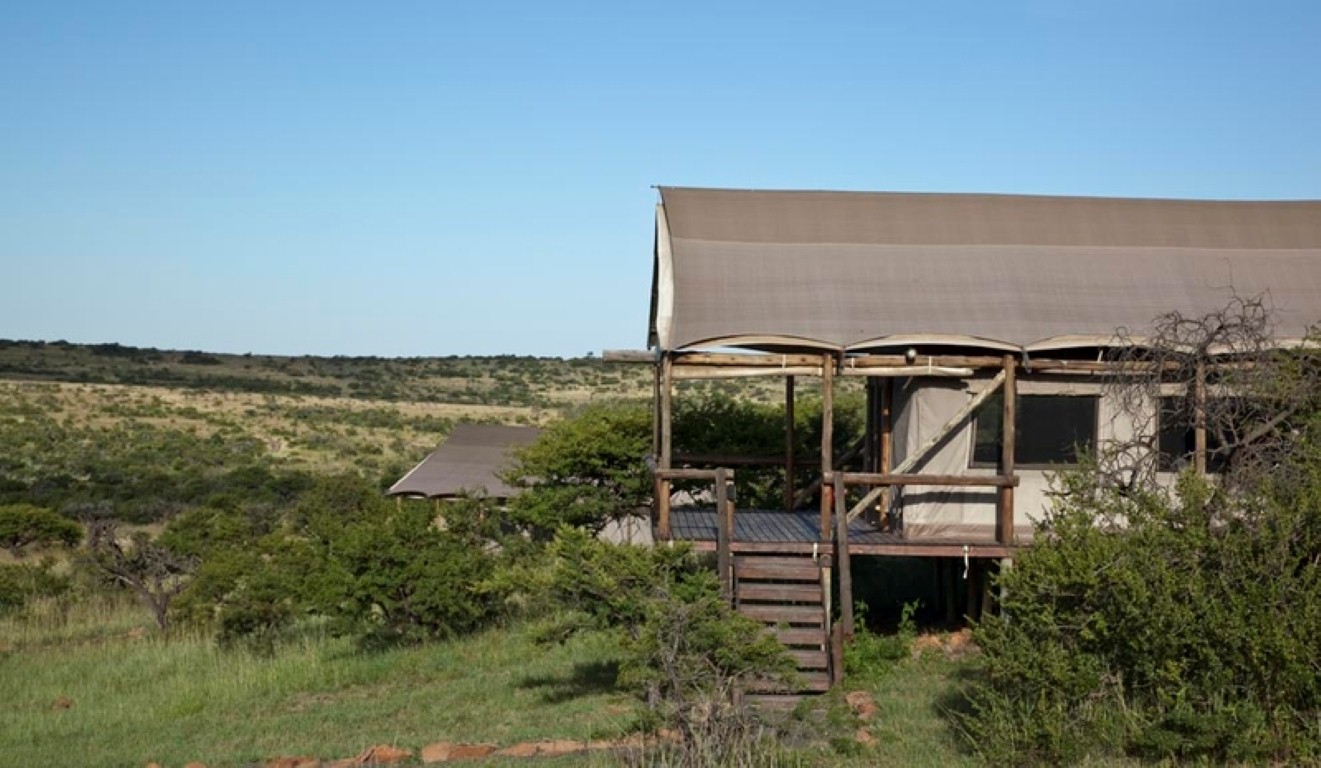
Significant changes have been made to the design of the resort. Although it originally included a single-storey, brick-and-mortar design with steel, not unlike most of Kruger’s public camps, it will now be a tented camp.
“The proposed design has been changed to only individual standing luxury safari canvas-tent accommodation (112 single tents and four family tents). Canvas will also be utilised in the other main facilities. All structures will remain single-storey only, with only the main lodge facility and conference centre being single-storey extra volume in certain placaes,” he said.
Wright added that a tented design had a lighter footprint, resulted in less environmental disturbance and was becoming a well-received trend in safari ecotourism destinations. “The proposed resort is significantly smaller than all the current public rest camps and even smaller than some of the bushveld camps in Kruger.”
In addition, an efficiency-generation utility for off-grid power on-site has now been proposed. Originally, regular Eskom power was going to be used, which would have required pipe-jacking electrical cables underneath the Crocodile River and then laying them underground to the site.
This new system will not only reduce the proposed construction cost by up to R45 million, but renewable energy will be generated, rather than using Eskom coal-fired power.
So why did the developer fail to submit an EIA to the department?
“It wasn’t a case of failing to adhere to the deadline. Through prior discussion with the department, due to the change in the scope and nature of their proposed development, an Environmental Impact Assessment (EIA) authorisation was no longer required. The regulations only required a basic-assessment authorisation and hence we deliberately allowed the EIA application to lapse so that we could initiate the new process.”
The appointed consultants – NuLeaf Planning and Environmental – submitted a new application on September 8 and are now awaiting acknowledgement of receipt from the department.
“Upon receipt of this, which is expected in the next week or so, they will commence the process and conduct a new public- participation process with interested and affected parties.”
Argument for the resort
Wright is a qualified candidate natural scientist, nature and bird guide and says he understands the economic, environmental and social responsibilities involved.
He is of the opinion that the best way to preserve biodiversity and protected areas in South Africa today is to make them commercially sustainable and responsible and therefore to reduce community demand and pressures on resources. “Hence our vision is four-fold: biodiversity preservation and expansion, sustainable and responsible ecotourism development and operation, socio-economic upliftment of impoverished communities and environmental education and awareness.”
There is a huge domestic and foreign- market demand for catered accommodation for middle to high income visitors to Kruger who do not like self-catering and prefer guided safari experiences. This safari resort will help to create a supply for some of this market.
Wright added that significant job creation, shareholding in MSRI, corporate social investment initiatives and environmental education, will ensure that these communities value and respect the need for conservation. “These people don’t have the same voice to influence the public in the media, but they live adjacent the park and don’t just visit it occasionally. Perhaps this will garner community support and assistance with rooting out the scourge of rhino, elephant and bushmeat poaching.”
Argument against the resort
Mr Gerhard Smit, convener of Against Interference in Kruger Our Nature Asset (Aikona), said in reaction that MSRI was planning the ninth biggest complex in Kruger and the fourth biggest south of the Sabie River, in an already overutilised area of the park.
He argues that the best way to conserve nature is to follow the principle of Custos Naturae – which means guardian of nature. “The terrain involved hosts the critically endangered Swazi impala lily and there are natural salt licks that have been supplying animals with minerals for centuries. The last nesting site of the critically endangered fishing owl in the Crocodile River, can be found at the confluence of the two rivers,” he said.
Smit continued by saying that tourism researchers at the North West University had determined that there was no need for this type of facilities.
“In fact, more than 80 per cent of the respondents indicated that they wanted Kruger to stay the way it is.”
• Mr Glenn Phillips, managing executive of tourism development and marketing at SANParks, added that this proposed development was in line with their 2022 Responsible Tourism Strategy that not only to ensure ongoing product diversification and relevance in an everchanging an competitive global tourism industry, but also to ensure financial sustainability for the SANParks system of 22 national parks of which only five were generating surplus revenue and hence subsidising the remaining 17 national parks.