
4 international research teams study ancient Barberton rocks
Discoveries in the Barberton Makhonjwa Mountains offer new clues about Earth’s early atmosphere, ancient ocean chemistry and early microbial life.
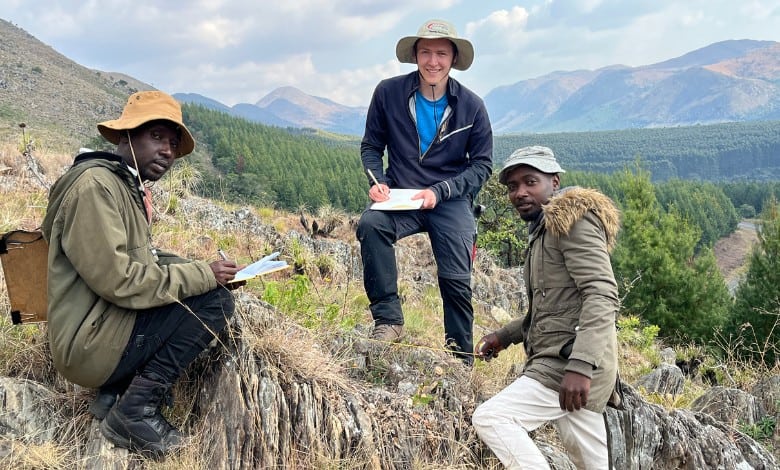
Four international geological groups are working out of Barberton this winter. They are led by Prof Mathieu Lapôtre of Stanford University, Prof Desiree Roerdink of the University of Bergen, Prof Paul Mason of Utrecht University and Prof Christoph Heubeck of Jena University.
The Barberton Mountains hold sedimentary rock strata that escaped the usual ‘recycling’ through deformation, heating and remelting.
“A hundred years ago, geologists searched for gold and minerals,” said Heubeck. “Now we look for indicators of surface temperature, ocean chemistry and the conditions of the earliest life.”
ALSO READ: 101 paragliders take to the sky above Barberton
Researchers investigate Earth’s early climate
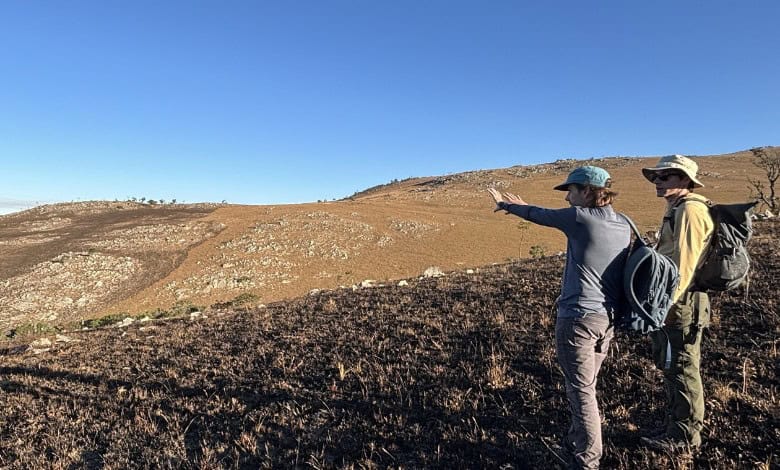
> Photo: Supplied/L Webb
Lapôtre’s team is searching the Moodies Group for fossilised sand dunes, which could reveal the nature of Earth’s early atmosphere when life began.
Roerdink and Mason’s group has studied the world’s oldest baryte and gypsum deposits, near the Eswatini border, using sulphur isotopes to determine ancient oxygen levels and microbial activity.
Heubeck’s research this year looks at ancient gravels, which break down faster with distance than modern gravel – a sign, he suspects, of a more acidic ancient climate. MSc student Armin Waldmann said the team works closely with local foresters, landowners and tourists rather than just passing through.
ALSO READ: Global scientists gather in Kruger National Park for Savanna Science Network
Preserved rocks draw global attention
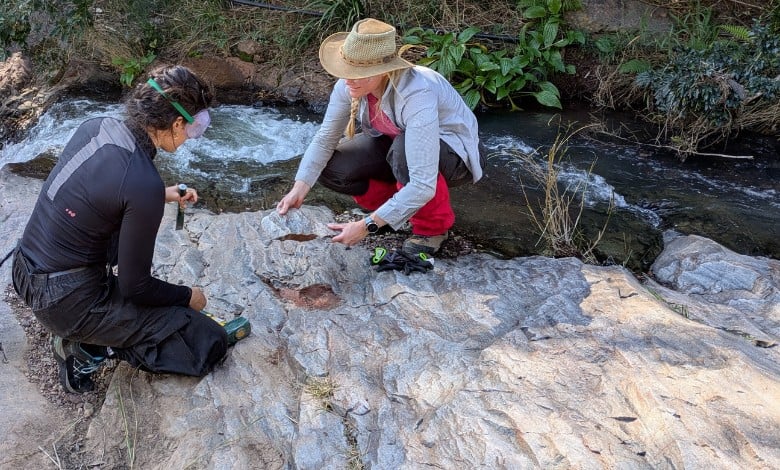
The scientists agree on the immense value of the rock strata in the Barberton Makhonjwa Mountains.
“The rocks are better preserved than anywhere else in the world,” explained Heubeck. “The next challenge is sharing data between groups and improving public communication.”
Astrid Christianson of the Barberton Community Tourism office said the researchers helped establish the Barberton World Heritage Site and R40 Geotrail, and that their 2021/22 drilling programme drew international attention.
ALSO READ: Local campaign cleans Lydenburg and surrounds