MBOMBELA – The absence of a defence attorney resulted in frustration and the postponement of a poaching case in which tracking dogs had led to the accused’s
arrest. Mr Andelius Mukwebe (21) and
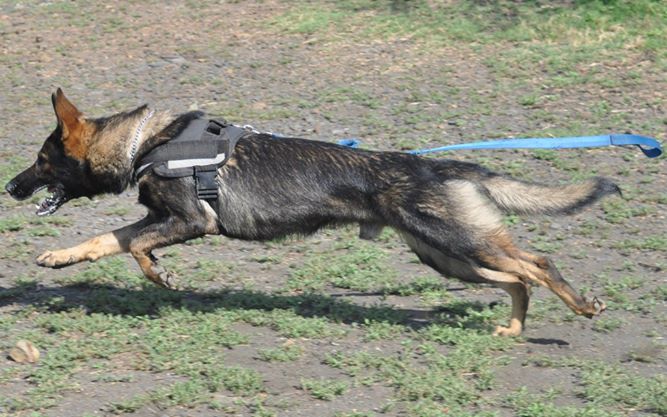
Mr Jeremano Thive (21) were arrested in the Nwanetsi area of the Kruger National Park on January 19, 2013. A tracking dog of the Belgian Malinois breed was used to track down these two suspects. They allegedly had rhino horn in their possession, which was submitted to a laboratory where it was tested to verify whether it matched the DNA of an injured rhino that had been found close by on that day.
Mukwebe and Thive appeared in court on October 31 when the state produced an affidavit to prove its case. It was postponed as the attorney for the accused, Mr Daniel Mabunda, indicated that he required additional time to read the affidavits. The magistrate, Mr Eddie Hall said that the postponement was not the ideal, but granted it as Mabunda insisted that his clients had requested it. The case was supposed to resume on Monday, but Mabunda did not show up and the process was delayed again – this time until January 13, 2015.
Apart from evidence in the form of this affidavit, many believe that the tracking dog’s identification of the suspects will be used as evidence in court. Although this seems ideal, the current legal position may pose a challenge. The admissibility of this evidence was rejected by the South African Appellate Division in 1920. At that point in time, the judge reasoned that sufficient scientific knowledge was not available to prove that certain breeds were able to follow the scent of specific humans without error. Due to room for uncertainty, he said this evidence could not be legally relied on.
In 1986, the Supreme Court of Appeal revisited this position, saying the final say in the matter had not been pronounced. The court said evidence produced by tracking dogs would be considered inadmissible unless a proper foundation for this evidence had been laid. If the court considered this evidence admissible, it would be considered with caution.
Whether or not the court chooses to accept or reject the tracking of Mukwebe and Thive remains the decision of the Nelspruit Magistrate’s Court. Lowvelder previously reported on the training programmes that tracking dogs like Killer had to undergo. Killer was introduced to the Kruger National Park at an early age to desensitise him to wild animals. He had to get used to the scents of animals so that he could focus on tracking humans. According to his trainer, Mr Henry Holsthyzen, he underwent a two-year training process and Holsthyzen was confident that even the blood of a rhino would not distract the canine from tracking a human.
The Kruger chose to use Killer’s breed as it has proved to be the most effective one for the purpose of tracking humans in the park.
It will be interesting to see what measures the state will choose to employ in order to render Killer’s evidence admissible.
Read more here.