Creating a sustainable harvest
"The great aspect is that these communities are doing it for themselves. It is great when you see how you have contributed to their well being,"
WHITE RIVER – A viable and sustainable platform for agricultural development and economic growth has been part of one organisation’s mandate for the past 30 years.
Ecolink was founded in 1985 by the South African veterinarian and environmentalist, Dr Sue Hart as a response to the HIV/Aids and poverty pandemic that many local communities in South Africa are facing. Since then Ecolink has grown from strength to strength with support for local communities in terms of food production and environmentally sustainable living.
According to Ray Achillah, project manager at Ecolink, one of the most important aspects of their community programmes is the Agriplanner. “We would visit communities, such as the one in Oshoek and teach them not only to grow crops but also focus on the business concepts in order to support their families financially,” he explained.
Ecolink’s biggest environmental efforts have been to use a variety of water-harvesting methods. Rainwater is used which travels through a reservoir to feed crops in the communities. They are also taught to harvest storm water for irrigation purposes.
Permaculture techniques are also developed, which includes training and information sessions on understanding the ecosystem. permaculture ethics, principles as well as looking at growing productive food systems. The application of in-field rainwater harvesting techniques is also one of many other important skills taught by Ecolink.
The most important objectives are to provide communities with viable ways of solving problems so that solutions are sustainable and effectively implemented. “We also educate people on the importance of sustainable development through agricultural, food and water management methods that are ecologically sound. It is important that the piece of land does indeed belong to the community. We then would also provide fencing as well as JoJo tanks,” he added.
These communities now also have commercial links with the SUPERSPAR in White River. The one group from Mbonisweni are producing vegetables, poultry, as well as aqua culture fish farming. “One community in Mataffin also constructed their own fencing which they have now given back to Ecolink so that we can redistribute it to needy communities. That is the perfect example of communities being there for one another,” Ray said.
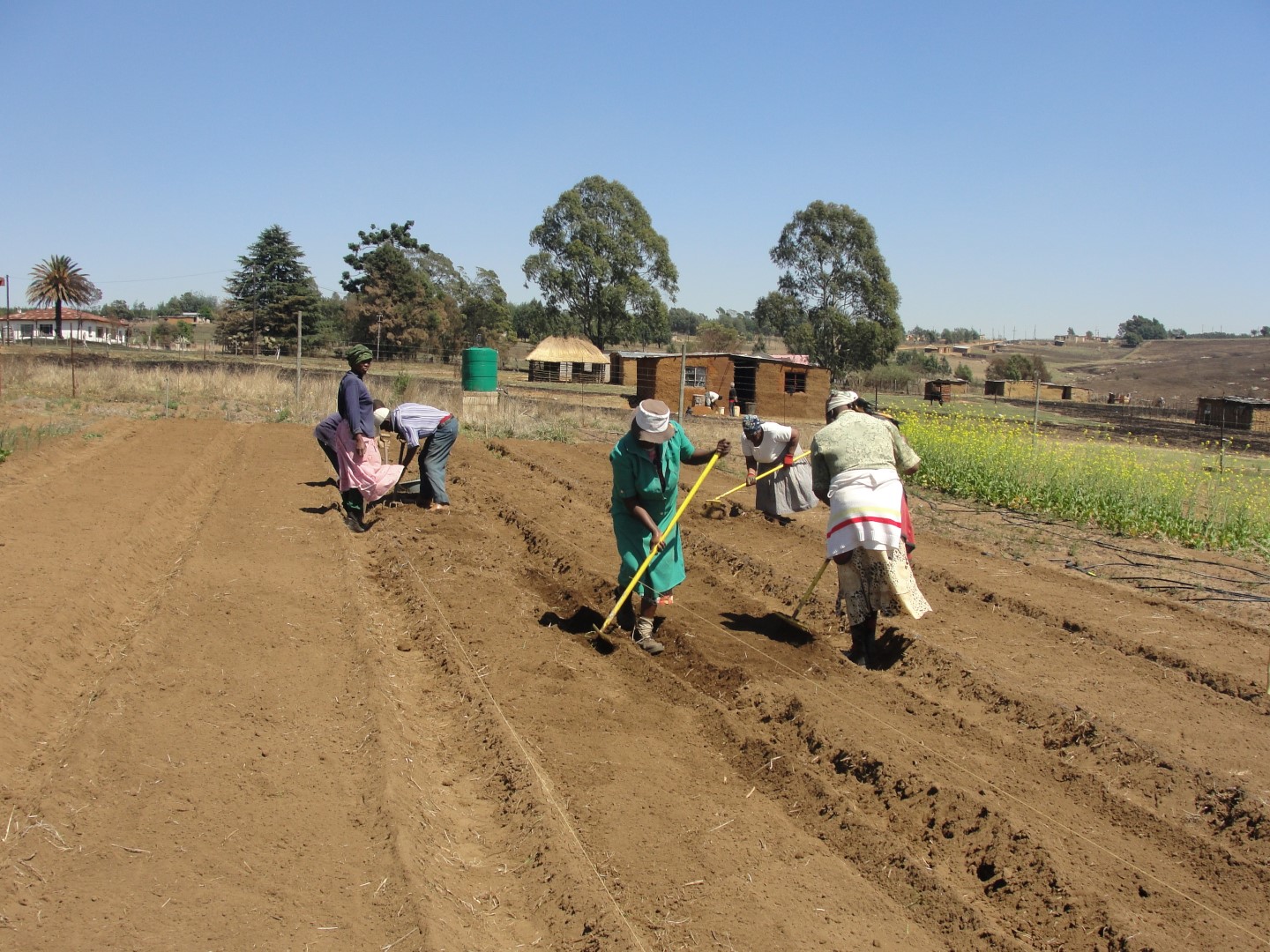
One of the key achievements for Ecolink in their history as been the Tjekhulu Women’s Group project. This project started in 1993 when 19 women came together with the aim of starting a farming project. They approached the tribal authority for land which was then apportioned to them and they cleared the bush using their own tools.
In 1996 Ecolink introduced them to rainwater harvesting and supported the project with planting, seedling provision and the stationing of JoJo tanks. Some of these women have now been able to pay for their children’s school fees as well as build and refurbish their own homes.
“The great aspect is that these communities are doing it for themselves. It is great when you see how you have contributed to their well being,” Ray expressed.
“The communities are able to sustain themselves. We work with organised women and currently have 16 groups funded by the National Development Agency (NDA) and Nestlé South Africa.”
Ecolink implements the following activities:
• Food security training (Earthcare)
• Water-tank construction
• Rainwater harvesting projects
• Orphan care programme
• HIV/Aids awareness
• Environmental education and awareness
• Water research and survey mapping
• Small-scale farming.