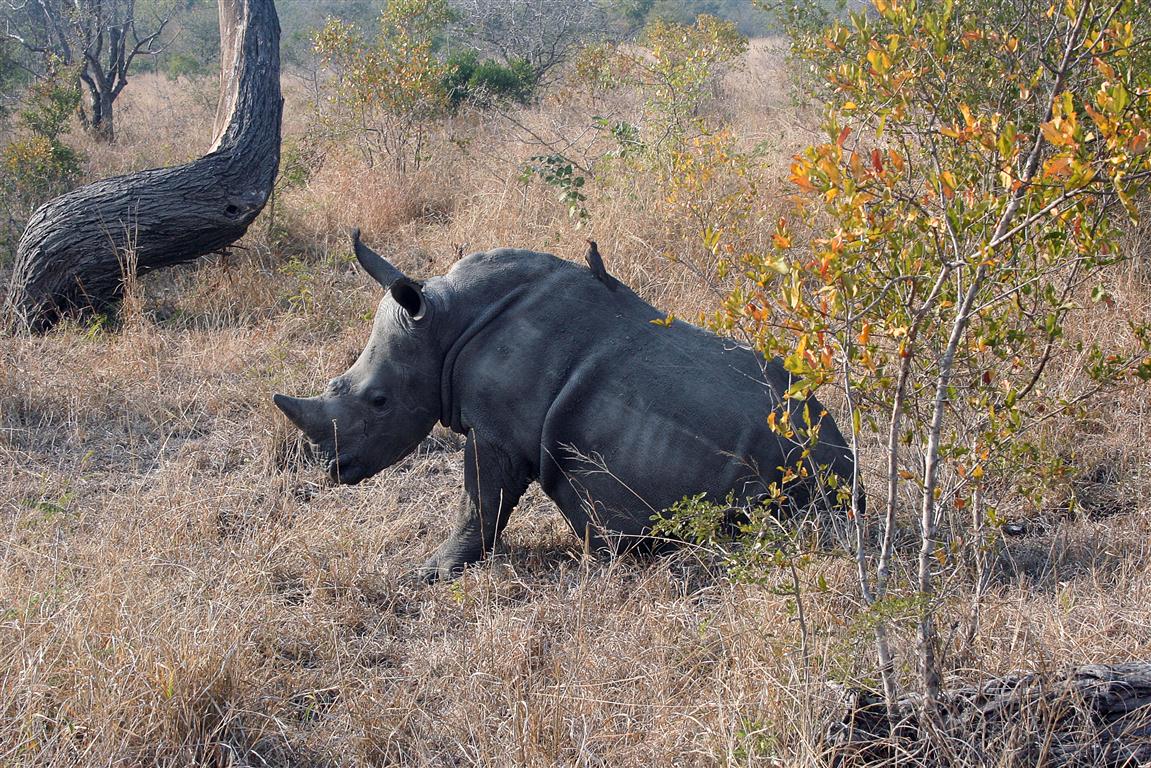
MBOMBELA – She prosecutes with her head, but when senior state prosecutor Ms Ansie Venter fought for a collective rhino-poaching sentence of 60 years on Thursday, she did so with her heart. “We are fighting for the rhino and the rangers, for our country, nature and those who love these things,” she said with utmost devotion.
The guilty pleas of Silva Tubane (33) and Aboxubi Mucindi (19) unequivocally declared that they had poached rhino and wanted to poach more, but that game rangers stopped them from doing so. Tubane and Mucindi pleaded guilty to five charges each: the illegal entering of the Kruger National Park, illegal hunting of a white rhino and the illegal possession of rifles and ammunition with the intention to poach more rhino.
The magistrate, Mr André Geldenhuys, sentenced the accused in accordance to their pleas. Both Tubane and Mucindi will spend a total of 30 years behind bars – this exceeds the 25-year term of a life sentence. Geldenhuys’ sentencing followedVenter’s emotional plea that harsher sentences be imposed on poachers. Her arguments echoed the sentiments of many who had had enough of this pandemic.
Venter specifically referred to two Mozambican villages that gained their riches from rhino blood money and begged the court to send a message of deterrence to poachers living in these towns. “Mavodse and Masingir celebrate their poachers. For those who live there, these people are heroes. If our courts do not sentence poachers harshly, the message that it is wrong will never reach those villages,” she pleaded.
Venter also fought for the rangers of the Kruger National Park. “Your Worship, the rangers chose their career path because they have a passion for nature. However, the poachers have forced rangers to become soldiers. They never signed up for this.” She gave the court insight into the extreme levels of stress that rangers had to endure when the legal system swallowed their noble intentions. “Defence lawyers dissect their every move in an attempt to discredit their evidence. A ranger’s attempts at conserving nature becomes a questionnaire centring around his possible incapabilities. It’s just not fair.”
The fate of orphaned baby rhino further motivated Venter’s plea. “South Africa has rhino orphans – some of these babies are 10 to 14 days old. Their horns are hacked off with axes and knives and they survive brutal attempted killings from poachers who want to poach their horns.” To put this into perspective, she explained that these baby rhino are smaller than labradors when they are so severely mutilated. She recalled two cases that had broken her heart. “One of these centres saved a baby rhino whose eye was hacked out – it hung from her eye socket. Another one fought a pack of 13 lions for days, guarding his mother’s lifeless body after poachers had killed her. We cannot tolerate that people do this to these little rhino.”
The effect of poaching on South Africa’s economy, biodiversity and sustainable development was briefly referred to. “We want the world to take note of our beautiful country, but instead it is taking note of us because of, among other things, the rhino-poaching phenomenon.” Anti-poaching campaigns, the police and the prosecution’s efforts must, according to Venter, be backed by enthusiasm and drive.
“But the buck does not stop with me,” she said. “The buck stops with the court, which sets the standard. The court dictates which consequences are suffered for which actions.” She asked the justice system to embrace that responsibility and carry it out with vehemence. When the sentences were passed, Venter was elated as justice had been served.