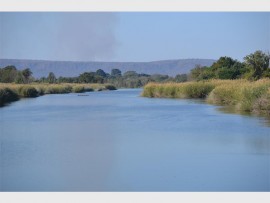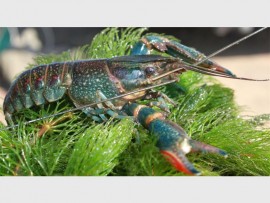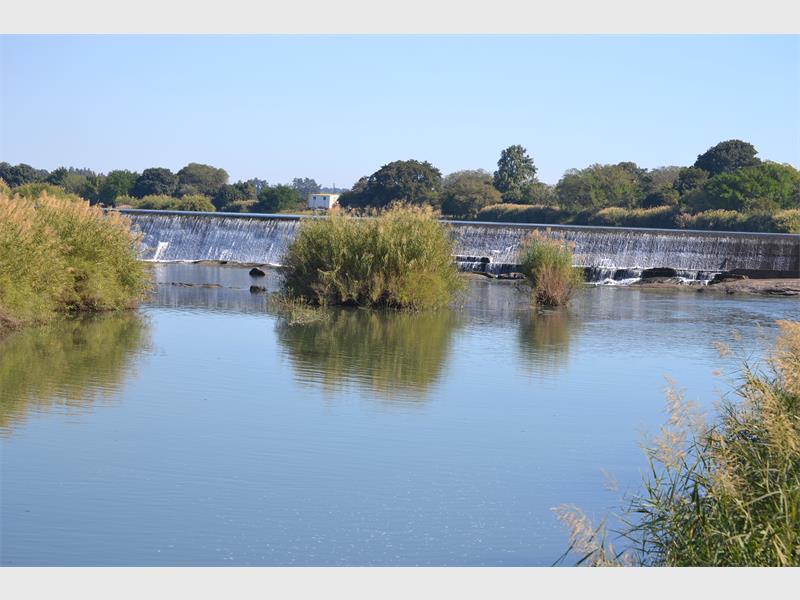
ONDERBERG – Alien crayfish are threatening to deal the Komati River a double blow. André Hoffman, an environmental expert, says the prevalence of the crustaceans and asbestos in the water is extremely worrisome.
No freshwater crayfish occur naturally in Africa. The Australian redclaw (Cherax quadricarinatus) can be legally imported.
It is believed that the feral populations found in rivers in South Africa stem from Swaziland. Specimens were first collected in SA in the Komati River in 2002 by Francois Roux of the Mpumalanga Tourism and Parks Agency.
But they have spread in a very short time, from the area from where they escaped in Swaziland, in the Komati River to the confluence of the Crocodile River and up into the Lomati as well as other tributaries of the Komati, he explained.
“How far down and upstream in the Crocodile River into Mozambique they have spread we do not know at this point.”
In an article published in the South African Journal of Science in 2013, Louis du Preez and Nico Smit write that the alien crayfish found in South Africa’s water are also infected with a non-indigenous flatworm parasite.
“Not only might the crayfish compete with indigenous aquatic invertebrates but the non-host-specific temnocephalan might transfer to local decapods, such as freshwater crabs.”
The authors further note that the effect these parasites may have on native crabs and aquatic systems are unknown at this stage, but there are several other examples of alien species becoming invasive and destructive. “This discovery further emphasises the importance of regulating exports and imports of potentially invasive aquatic fauna and flora.”
Hoffman says it is not only the parasites which may impact on indigenous crabs, prawns and shrimps, but also the fact that these crayfish will outcompete them.
“The presence of these alien beasts is of great concern because they are omnivorous and voracious feeders and may outcompete indigenous crustaceans and other aquatic invertebrates. It is known that they do have an effect on the breeding of fish. They may also spread previously unknown parasites.
“Their natural predators do not occur in this country and at this point in time we do not know which South African species will predate on the crayfish. Some fish species may be candidates. Our birds may over time learn how to catch them. Otter may also be candidates.”
In the meantime, a management plan to control this species is needed. The presence of asbestos in water also needs to be addressed, Hoffman says. He points out that there are no standards for the asbestos level in water in South Africa.
It is a mineral which occur naturally, and its erosion can contaminate water.
“People drinking water containing asbestos fibres in excess over some years may have an increased risk of developing malignant intestinal polyps,” he says.
About a year ago, an old asbestos mine with overburden was noted right on the edge of the Hlatjiwe River, a tributary of the Komati.
“Rain washes over the overburden of asbestos containing rocks and the asbestos fibres end up in the river. The whole area was covered with asbestos fibres and when inhaled, it can cause cancer. This old mine with its dump must be seen as a health hazard and the area should be rehabilitated,” Hoffman says.
He adds that nothing is known about the mine at the moment, but it was reported to the Incomati and Usutu Catchment Management Agency.
He notes that the Environmental Protection Agency has standard for maximum contamination levels which can be used as an indication.
“The contamination level could not be determined by the lab which was used to do the water-quality analyses for the survey done. At this point we do not know the effect or possible effect and it is important to determine it. Water affairs and sanitation must update their water-quality standards,” Hofmann concludes.