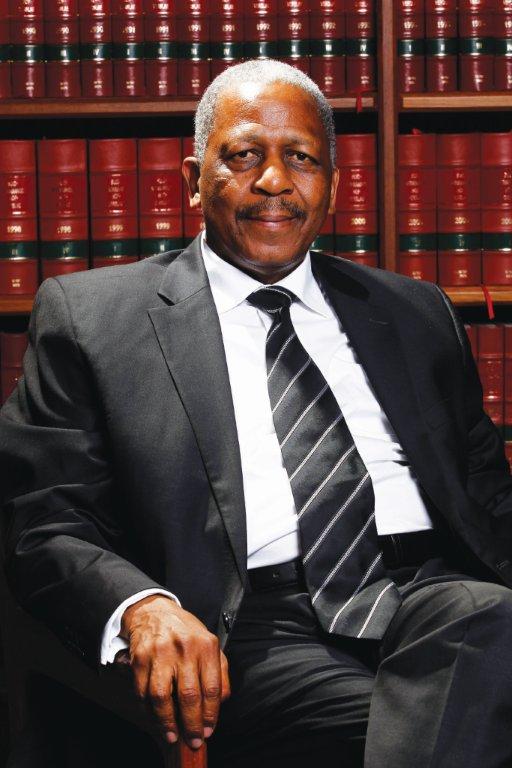
MBOMBELA – South Africa is being plagued by slow economic growth, a persistent unemployment rate and political disregard, according to well-known struggle icon and local businessman Dr Mathews Phosa.
He was the speaker at a conference about charter and economic empowerment which took place in Johannesburg last week. He added that power blackouts also negatively affected the economy.
Among the common problems, he said, were unemployment, access to land, weak educational systems, gender discrimination, and poor health-care systems. Adding to that, there was the problem of external dependency, a situation where the majority of citizens were reliant on donors.
According to Phosa, the current leadership is at times self-centred and can be perceived as protecting its failures and participants at the cost of the nation and its international standing.
“We are, however, at a junction in history where post-democratic South Africa has lost its shine as a destination for investment, tourism and other international participation,” he said.
Phosa reflected on the Freedom Charter as a founding document to a better South Africa. He said it was a great document in which a dream for a free and fair South Africa was mapped.
He lashed out at the Black Economic Empowerment policy, suggesting that, in order to build a successful economy, South Africans needed to develop sustainable future programmes in the private and state institutions.
According to Phosa, millions of black people felt left out and were very sceptical since they could not enter the formal economy. “Few benefited from tenderpreneurship and not from hard work, which creates a sense of dependency,” he said.
“Our attitude of a free for all, as a now verbatim out-of-context interpretation of the celebrated Freedom Charter, must be reviewed as things have changed during the past 60 years,” said Phosa.
He added that South Africa should foster foreign relations to achieve healthy foreign investments. “Our friendships around the world, from the east to the west, north and south, are worth treasuring if we want to develop this beautiful country of ours to make sure that there is work, safety and security for all.”
He also said South Africans were robbing themselves and their children from an inheritance of good infrastructure and sustainable job opportunities.
He slammed the current education system, having said that the way in which it prepared youth for life after school, was fundamentally flawed. He is of the opinion that the future of South Africans was placed in the hands of incapable and unqualified teachers.
According to Phosa, a new generous and prosperous South Africa as leader in Africa and elsewhere will focus on empowering the nation through the following:
- Utilising education and training as a catalyst for growth and development by working closely with a less-restricted private sector that will be responsible for economic development and sustainable job creation. Let’s focus on developing the nation by empowerment through Education (from BEE to ETE) and not artificial means.
- Providing guidance, funding and credits to businesses that implement learnership and vocational training programmes that will produce a professional level of technical expertise for business growth
- Acknowledging every South African’s inputs in making this a great nation. By fully implementing the belief that “all people shall have equal rights to trade where they choose, to manufacture and to enter all trades, crafts and professions” from the Freedom Charter, that empowerment must come from education. By cutting one cake into increasingly smaller pieces we will soon be left with crumbs only.
He commended the country’s race-free efforts to create opportunities for personal development and economic empowerment, championed by the iconic Nelson Mandela.
Furthermore, he said there was a need for an enhanced participation in the economy. This will be achieved by removing the barriers for growth and investment to create the jobs required to meet the objectives of the National Development Plan.
“I think that it has become time for us to think about empowering private sectors and businesses to become partners in economic development and job creation beyond our own borders.”