Rhino orphans get foster mothers
Saving rhinos not only means protecting them but also seeing to the orphans of poaching incidents and that is exactly what the KNP Surrogate Programme is achieving.
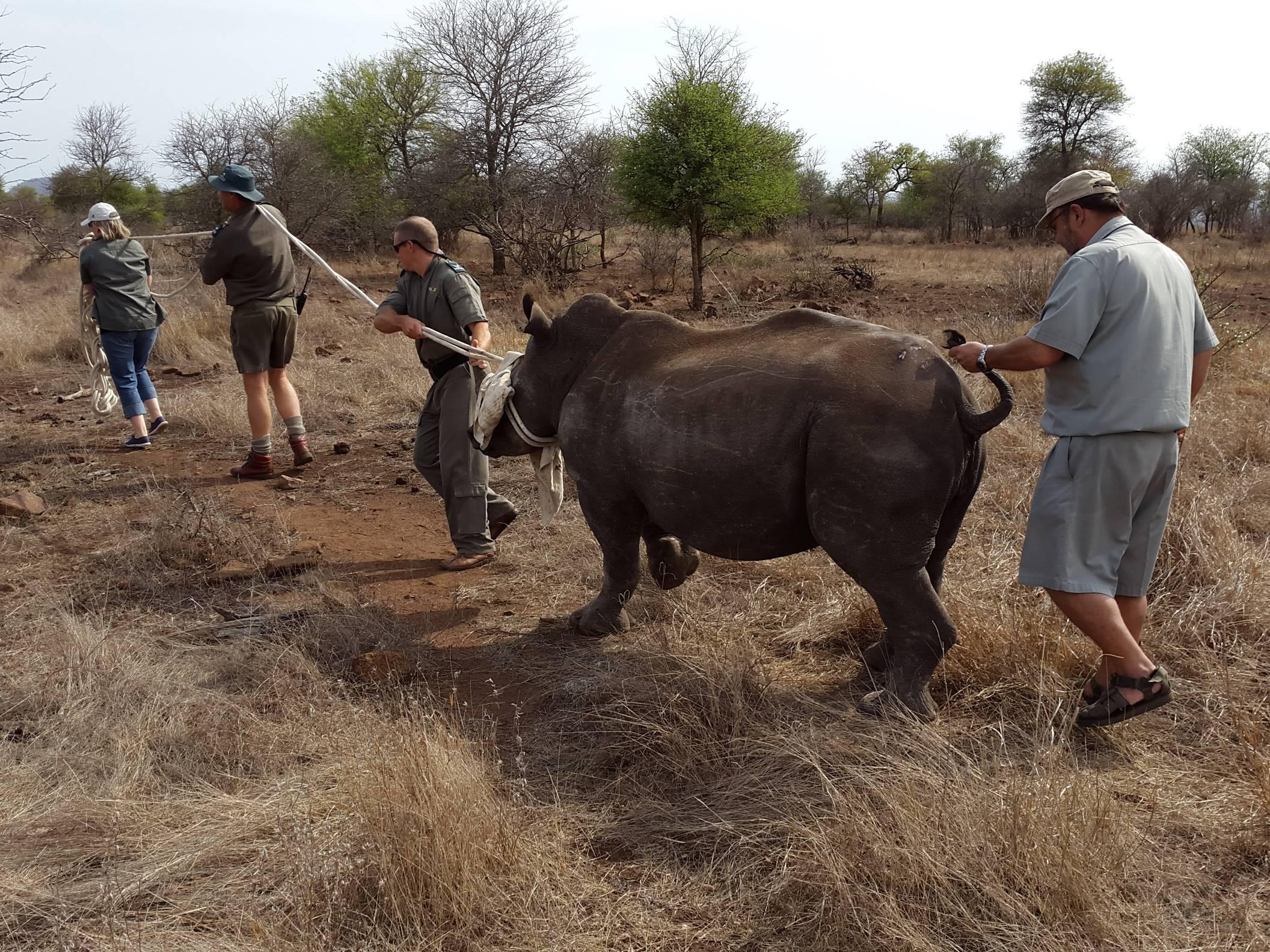
CROCODILE BRIDGE-A successful surrogate mother programme for rhino orphans in the Kruger National Park (KNP) is enabling the resettlement of rhinos to other protected areas while also teaching vets more about this endangered animal’s specific mother-calf bonding.
Dr Markus Hofmeyr and his team at the KNP’s Veterinary Wildlife Services developed the SANParks surrogate mother programme for rhino orphans when poaching problems began to escalate in 2012. Surrogate cows were released in bomas upgraded in 2007 after they were darted and transported to create a support system resembling one orphans would have known with their own mothers.

“Our aim with the programme is to keep rhino orphans as close to being in the wild as we can, especially on a social level,” says Hofmeyr.

After a poaching incident rhino orphans are caught in the veld and taken to the boma where placement in the programme is assessed according to factors like age and injuries.
The programme is divided into two streams. The one group consists of calves needing milk and intensive care (younger than 12 months). The other group is made up of calves that could be placed with a mother in the boma upon arrival.
Once they are old enough to survive without being fed, orphans from the first group are also placed with a surrogate mother. A rhino calf would typically stay with a mother for two to four years.
“This ensures that they pattern themselves on the mothers and not on the humans caring for them,” explains Hofmeyr.
At any stage a few rhino surrogate mothers are available to introduce a calf to. “We rotate the orphans and mothers to enable them to find a good fit themselves. The mothers readily accept the orphan calves as their own. When we set both of them free in the wild, they do stick together,” Hofmeyr says.
To him it would be an achievement if the calves that had been set free are able to have offspring of their own although this as yet has not happened. “It is always very satisfying to save a calf and to experience how they adapt to display true rhino behaviour.”
Hofmeyr regards the programme as an expensive but necessary measure to save rhinos on all levels. The cost involved, from allowing a rhino to the programme from under 10 months until he can be set free, can reach up to R250 000. For the older calves the cost would be less. Hofmeyr and his team obtain funding from the Peace Parks Foundation as well as other sponsors.
“It is sad that such a programme is necessary but it has an added benefit in that it keeps the rangers’ courage up.” One of the most important lessons learnt from the programme is that it is indeed possible to save rhino orphans by matching them with replacement moms and to set them free in other parks.
“It is, however, also important to realise when they should rather be euthanised because their injuries might prolong their suffering.”