Local school to debate for province once again
For the third time in a row Mashishing Secondary School is the only one in Mpumalanga that qualified to represent the province in the upcoming annual National South African Agency for Science and Technology Advancement (Saasta) debate competition in Johannesburg.
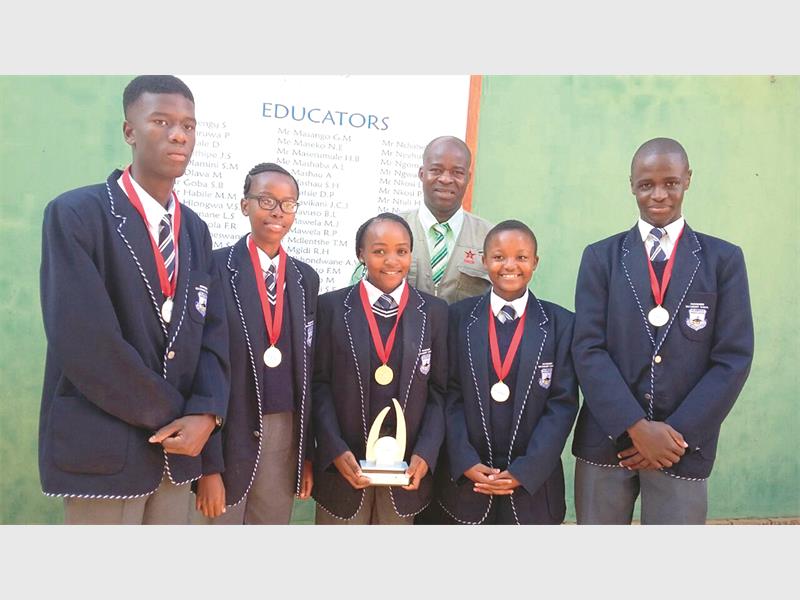
MASHISHING – For the third time in a row Mashishing Secondary School is the only one in Mpumalanga that qualified to represent the province in the upcoming annual National South African Agency for Science and Technology Advancement (Saasta) debate competition in Johannesburg.
The school was named the overall winner during the provincial finals, held in Mbombela on Friday May 20. This team will compete against eight other provincial winners on October 6 and pupils of the winning school get the opportunity to go to New York.
Mashising Secondary scooped the first place, Lowveld High took second and Dlomodlomo Secondary School came third.
These are the top-three, out of 10 in Mpumalanga, that participated during the provincial final. A total of 60 schools from across the country competed.
According to Mr Johnny Ramodike, science teacher at Mashishing Secondary School, the team had to write an essay on a topic provided by Saasta.
“The topic of the essay was ‘The use of nanotechnology in the treatment of polluted water and how it shows great promise in water-scarce countries in Africa, such as South Africa’. The 10 best schools’ essays in each province were then selected and those schools got the opportunity to partake in the provincial competition.”
During the provincial finals, pupils were given a relevant, challenging topic to research and debate, namely “Do you think hydrogen and fuel-cell technology (HFCT) can improve the quality of life for all South Africans by contributing significantly to the national energy supply, or is HFCT more applicable in industry-specific local applications?”
The competition aims to encourage young people from grades nine to 11 to debate key issues concerning science and technology, that are faced by their communities. It also gives participants the opportunity to develop research, critical thinking and information-literacy skills, as well as the ability to work as a team and present logical, clear arguments.
According to Mr Michael Ellis, manager of science communication for Saasta, the country faces many pressing socio-economic challenges, which require a skilled workforce to help steer the country towards international competitiveness, economic growth and to generally improve the lives of its citizens. “Debate is a lively and valuable platform that makes scientific information relevant to pupils; it’s the spark that can light the fire which fuels a lifelong quest for innovation,” Ellis said.