SA a safe haven for international drug lords
Porous borders, a country uninterested in prioritising drug trafficking, and a police service, prosecuting authority and home affairs fraught with corruption, created a safe haven for international drug lords to operate to and from South Africa.
MBOMBELA – South Africa’s fall into an abyss of crime and lawlessness officially started in 2003 when the then police commissioner, Jackie Selebi, in his “wisdom” decided to disband all his specialised units. One of the first was the specialist narcotics detectives of the South African Narcotics Bureau who had to go and join local police stations as ordinary detectives and uniform police officials.
This idiotic decision was described in an intelligence report of the FBI’s Drug Enforcement Agency as “squandering decades of specialised drug-enforcement experience”. A senior South African police officer added the following prophetic warning, “Years and years of specialist knowledge will go down the drain”. The same happened to the internationally renowned Endangered Species Protection Unit, resulting in the current massacre of the subcontinent’s endangered rhino herds.
Today the smuggling of drugs and rhino horn goes hand in hand in Southern Africa. The same transnational crime syndicates, be it from the soil of Zimbabwe, Mozambique, Swaziland, Botswana or Lesotho, use the same smuggling routes to ferry their contraband over international borders. Selebi opened the door for international drug lords to turn their focus to South Africa as the dumping ground for tons of drugs, from where the rest of the world is being supplied.
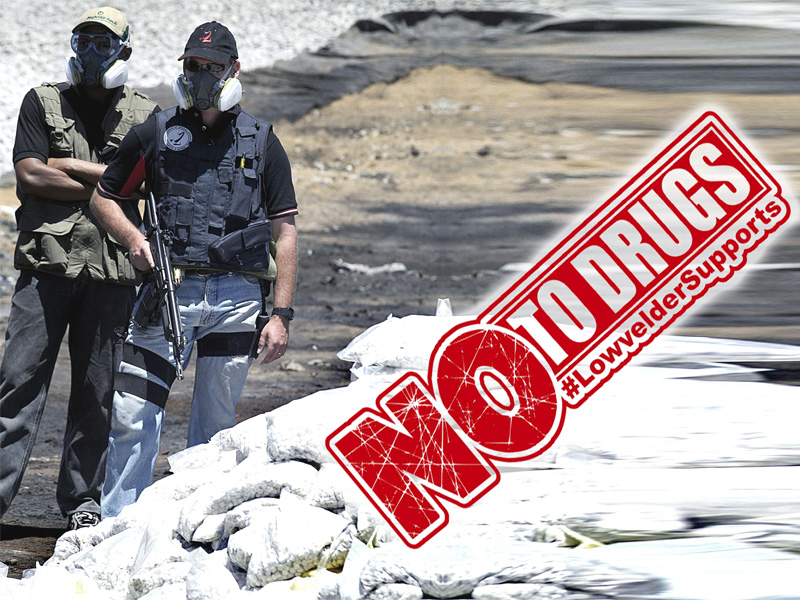
Also read: Lowvelder says, ‘No to drugs’
Porous borders, a country uninterested in prioritising drug trafficking, and a police service, prosecuting authority and home affairs fraught with corruption, created a safe haven for international drug lords to operate to and from South Africa. In the 2002/03 SAPS annual report, before Selebi implemented his changes, incidences of drug-related crimes were 118,4 per 100 000 of the population.
By 2007/08 it had already spiralled to 228,1 per 100 000 citizens, and today are totally out of control – as Lowvelder would indicate in future research material. Five years later, in 2008, the effectiveness of the NPA’s elite Scorpions unit became too hot for president, Mr Jacob Zuma’s liking and the police agency set on dealing with fraud, corruption and other priority crimes – in particular drug investigations in South Africa – was also disbanded.
According to intelligence sources, US undercover drug-enforcement agents were part of joint drug investigations with the Scorpions and boasted, until its demise, a 94 per cent conviction rate on drug-related busts. Subsequently the success rate dropped to an average of a meagre eight to 10 per cent success rate in the courts.