A must have fibre solution with DNATel
DNATel is an open access Fibre Network Owner who offers an array of Internet service options over their network. Whether you want to tiktok or stream your favourite series, you can stay cool with their super-fast fibre.
The difference between a FNO & an ISP
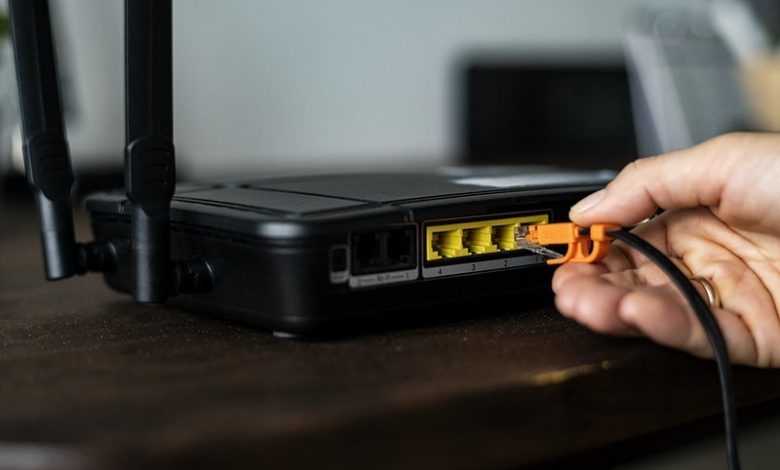
A Fibre Network Owner (FNO) manages and owns your fibre optic connectivity infrastructure. Your Internet Service Provider (ISP) manages how you receive the internet services over the FNO’s infrastructure, and further manages the speed and data frequency.
What differentiates a Fibre Network Owner from an Internet Service Provider?
Fibre optics are super-fast, stable network mediums (infrastructure) that can carry data along light to and from its originating point to its end-point. It involves using glass or plastic cables instead of the traditional copper cables that have provided regular connectivity for so long. These glass or plastic cables allow for data to travel at high-speed and provide uninterrupted connectivity to internet users, regardless of how far from the exchange they are.
In order to complete a successful internet connection over fibre optics, both an FNO and an ISP are required. The FNO is the company that supports the network infrastructure, whilst the ISP is the company that provides you, as the customer, an internet service to your required devices. This means an FNO installs and maintains its own fibre network infrastructure, which is then used by the ISP to give the customer access to internet connectivity solutions.
As we are moving into an age where we stream everything online; where all games need an internet connection and where business delivery expectations are shorter, fibre is fast becoming the norm and will become the standard measure of internet connection for the future. In short, without an FNO and an ISP, a stable fibre connection would not be possible.
DNATel is an FNO, bringing super-reliable, super-fast direct connectivity infrastructure to homes and businesses across South Africa. If you’re looking to get connected, or you’d like to find out more information, get in touch with a DNATel expert today, we will walk you through the connectivity process from start to finish.
The difference between Internet and Wi-Fi

An Internet Service Provider (ISP), provides you with an internet connection and service, while Wi-Fi is a wireless connectivity tool that connects you to a local network that is connected to the internet.
Wi-Fi and internet are words often used interchangeably, however what people don’t realise is that they are actually two different services. With just a little bit of background on each, you’ll be able to differentiate between the two.
Wi-Fi: A wireless transmission facility, allowing electronic devices to be connected, to transmit data such as internet services or communicate with one another without the use of wires. Communication happens using radio waves and signals picked up from the devices.
Internet: A global computer network providing a variety of information and communication facilities, consisting of interconnected networks that use Internet Protocol to link devices worldwide.
With this understanding and insight into what defines each, we can now move to really understanding the difference.
The internet uses a language called Internet Protocol that allows devices all over the world, to send and receive data and information between each other. Without this language, the devices would not be able to understand each other – similar to the concept of two people speaking two different languages, you are connecting, but not on a level that is understandable to both parties.
Wi-Fi on the other hand, is considered more of a type of radio signal that allows devices to connect to each other wirelessly, to be able to transfer data. Compared to physical network cables which used to be the only way to connect devices, Wi-Fi is a convenient way to connect multiple devices in an area network, which enables the devices to ‘speak’ to each other. Generally, a Wi-Fi network is made possible through a router, which then allows all devices connected to the network to share data and participate in other local activities that require no internet connection.
Where Wi-Fi connect devices locally, the internet connects devices from around the world. Simply put, the internet connects networks together using millions of routers. While you have full control of your Wi-Fi network, you don’t have much control over an internet connection – this is up to the ISP, who you pay a monthly fee to, for an internet connection of a certain speed to match your needs.
By having a good understanding of the difference between Wi-Fi and the internet, you will be better informed when trying to solve any issues with your home or business connections and you will also have a better idea of what equipment you need to purchase to set yourself up an internet connection.
If we sum up the difference between Wi-Fi and internet into one sentence, Wi-Fi serves as a gateway for devices to be able to share information, while internet allows devices all over the world to communicate with each other.
Fibre and other Internet solutions

There are several types of internet solutions available today, each with their own benefits and draw backs. Some of the most popular are:
- Fibre optics
- LTE/3G
- ADSL
- Wireless/Microwave Link
Fibre optics is the most stable and reliable connection available enabling you to transmit data at extremely high speeds.
As people, we constantly want to grow and make our lives more convenient. The information we are able to gain through our use of the internet drives our ever-changing lifestyles by ensuring we have the information we seek.
The internet has become a necessity to daily life and choosing the right internet connection is as important as ever. We need internet that can work faster than we can think.
Fibre is one of the fastest internet infrastructure connections available. It can be used to stream online shows, play online games and download data all at the same time. Although providers are recommending fibre as the way to go in terms of internet connections, it is unfortunately not yet as readily accessible for all consumers as other internet connections.
Fibre optics use plastic or glass cables that go directly from the exchange to your home. Fibre optics hold a higher capacity, allowing a larger amount of data to be transferred without compromising on speed and quality – an all-round brilliant connectivity solution.
How does fibre compare to other internet connections?
Long Term Evolution (LTE or 4G) can go up to speeds of 50Mbps – not nearly as fast as a fibre optic connection, but as it is delivered via a cellular connection, it is ideal for users who require a mobile internet service. LTE is an air “floater”, which means external factors such as bad weather can cause connection interruptions.
3G refers to the third generation phone standard (just before LTE). It uses bandwidth more efficiently than 2G and is faster and less costly.
Asymmetric Digital Subscriber Line (ADSL) is one of the slower connectivity solutions, however, its advantage lies in the fact that it is more widely available across South Africa than fibre. ADSL relies on copper cables to transfer data, the capacity is much lower than that of a fibre connection, which can compromise speed and quality. As a whole, ADSL is still a great internet solution for those who do not yet have access to fibre.
Microwave/Wireless Broadband provides internet access to one location using radio waves, which mean you no longer need telephone lines or cables. This solution offers extremely low latency and is great for rural areas, where the fibre/ADSL infrastructure is less available.
It is safe to say that connectivity solution have jumped leaps and bounds in the last few decades and as the demand for faster, more reliable connections increases, the technology will get better and better. If you are looking for the best in internet solutions, get in touch with a reputable FNO (Fibre Network Owner) and ISP (Internet Service Provider) who will set you up with a fibre line.
Current state of Internet connectivity in South Africa

Increased Connectivity
The surge of enhanced internet access within South Africa has reached levels never seen before, with growth projected to continue for years to come. By the year 2020, it is predicted that for the South African market, the Internet of Things (IoT) and Machine-to-Machine’s (M2M) installed bases will reach 35 million users according to the Electronic Communications Network.
This growth in internet connections will have a positive impact on the country bringing with it a rise in accessibility to information for education, access to employment opportunities, and overall improved economics. The South African government, partnered with the World Economic Forum, launched an initiative ‘Internet for All’ in 2017 which aims to make internet accessible to every South African by the year 2020 as stated by the South African Government News Agency.
According to the 2017 Internet Access in South Africa study by World Wide Worx, it was found that there were around 22.5 million online users in South Africa – almost half of the population at the time. As more people are looking towards faster internet, the call for fibre connectivity has far surpassed the need for ADSL. A high demand for faster streaming services in television and music will further aid in the growth of fibre connections across South Africa
Information Gap
According to Arthur Goldstruck, managing director of researchers at World Wide Worx, the cost of data in South Africa is a major factor affecting the amount of active internet users as our prices for data are among the highest worldwide. The amount of people who own mobile devices is greater than the amount of internet users by over 8 million people as stated by Goldstruck. Internet connections can therefore be limited due to these data costs.
Infrastructure
Distributing fibre optics throughout the country tackles the telecommunications infrastructure problem we are facing, however, it is clear to see that there is still a vast digital divide between metropolitan areas and smaller towns.
South Africa is quickly on its way to having fibre optics as its chosen solution to the connectivity problems it faces. If the rise of internet connectivity is implemented correctly, there is no telling the benefits we could gain.
What does ‘open’ access mean
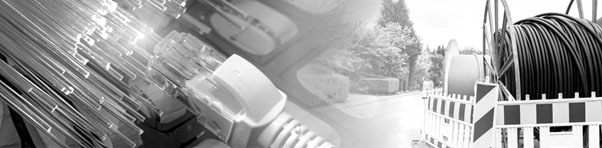
The ‘open access’ nature of DNATel means that it is made available on equal terms to multiple Internet Service Providers (ISPs).
Although DNATel provides the infrastructure for the network, it is the purpose of the ISP to provide the internet services over our infrastructure/network. This means that we work with a wide range of service providers who will be able to set you up with the internet service you need.
As the market is saturated with these service providers you, as a customer, are able to research the most suitable service and competitive advantages from each ISP.
Open access networks also avoid unnecessary infrastructure development in your particular area. ISPs are able to use this already developed infrastructure to provide their products and services, creating a more economic solution for their businesses.
DNATel’s fibre network is available to a wide range of trusted ISPs in order to provide you with the best internet solutions.
While we supply the vital infrastructure needed, the ISPs compete for your business allowing for the best services to be supplied right to your front door. The separation between the infrastructure and ISP is what allows for the most beneficial service to be provided for your needs.
How Long Will Your Fibre Last?

Optical Fibre is made of a particular type of glass (fused silica) which is inherently more fragile than copper internet cables. However, even though the fused silica may look and feel brittle, if used and processed correctly, these fibre cables have proved to be extremely durable.
Certain attributes are assessed when measuring the material’s durability, these being:
- Initial strength
- Rate of degradation
- Any flaws that can weaken it
- Reagents that can weaken it
- Its optical lifetime – as the silica must still be able to function satisfactorily
With this is mind, there are essentially four factors that will affect the longevity of your fibre network:
- Surface flaws
Silica glass is highly resistant to degradation when its surface is free of defects, however, surface flaws can arise and reduce the material’s longevity under certain conditions. The degradation starts off slowly but can eventually lead to failure. To avoid this, fibre suppliers carry out ‘proof testing’ where they stretch the fibre to deliberately break the larger flaws.
- Reducing degradation
Once the flaws have been diminished, the remaining smaller degradations need to be protected by coating the fibre with a protective and durable material which will prevent new flaws from forming.
- Installation strains
Stress is a major factor of fibre degradation. Executing techniques of pulling, pushing and blowing are done in order to strengthen the wires and prevent further damage.
Through this process, stress applied to the cables is limited by the strength elements in the fibre. The tensile stress caused through elongation does not damage the cables but rather helps build up the cables strength and resistance to damage.
- Environmental factors
The local environment has a large effect on the lifespan of a fibre network. These elements, such as high temperatures, cause the cables to crack and can lead to overall failure. However, water is the largest threat to the lifespan of fibre cables as the growth of cracks under this type of stress causes “stress corrosion” which could eventually lead to general failure.
Overall, fibre is a highly durable substance which is resistant to many forms of stress. Provided that fibres are stored and coiled correctly, these connections will be able to last many years to come as original flaws begin to heal with time.
What line speed do I need?

How to choose the Correct Fibre Line Speed for your home.
Fibre has changed the way we interact with the world on a variety of levels. We are able to work, shop, socialise and entertain ourselves in ways never before seen.
Fibre is changing the way we use the internet in manners highly beneficial to you, the user.
How do you figure out which is the correct line speed for you?
Line speed refers to the amount of data sent through fibre optic cables traveling at the speed of light with fibre speeds ranging from 10Mbps to 10Gbps.
Under 10 Mbps:
These speeds are similar to those on ADSL lines but with a higher reliability percentage. These speeds are best used for simple home practices and can be utilised by up to three people on the internet at one time for web searches, checking email as well as social media enjoyment. Occasional media downloads and streaming can be used by one or two people at a time in HD.
Suited best for:
- Two to three devices
- Checking email
- Browsing online (including social media)
- Occasional media downloads (photos and music)
- Occasional streaming on YouTube, etc.
- Streaming for one user at a time
10Mbps – 40Mbps:
This speed bracket begins to show the differences between fibre and ADSL lines. Possibilities begin with 4k video streaming for one device unrestrictedly with HD streaming of videos being used by up to five devices at a time. This bracket is ideal for less serious gamers who need reliable and fast speeds. These speeds are more capable of web browsing, social media as well as voice and video calls.
Suited best for:
- Three to five devices
- Media-rich data downloads
- HD Streaming
- Working online in real time
- Browsing
- Social Media
- VoIP calls
- Video chat
50Mbps – 100Mbps:
These speeds show the true capabilities of fibre. The only comparable communication technique would be talking to someone face-to-face. These speeds are highly beneficial to homes with heavy internet use and multiple users. You are able to stream HD videos on multiple devices as well as high speed media downloads. Video chats with zero lag time are experienced by many users at the same time.
Best suited for:
- Multiple data-intensive devices (as in a big company)
- Media-rich data downloads at High Speeds
- HD Streaming by multiple users
- Working online in real time
- Browsing
- Social Media
- VoIP calls
- Video chat with zero lag times by several users at once
What are Fibre Optics?

Fibre optics are the materials used to send information in the form of light down a glass or plastic pipe. First developed and utilised in the 1950s to assist medical doctors in seeing inside a human body, these cables soon advanced and the technology was improved upon by the engineers at the time. In the 1960s, they began using fibre optics to transmit telephone calls at the speed of light (around 300, 000 km/second).
A fibre optic cable is composed of extremely thin strands of glass (fused silica) or plastic which are known as optical fibres. In a single cable, there is the capability to house as few as two strands and as many as a several hundred strands of optical fibres. The thickness of each strand is around a tenth as thick as a human hair and can carry as many as 25, 000 telephone calls entirely through optical (light based) technology meaning that an entire fibre optic cable can easily carry several million calls.
As light travels down the fibre-optic cable, the photons continuously bounce off the walls at extremely high speeds. In order to keep the light inside of the pipe, it bounces off the edges at shallow angles (less than 42 degrees) and reflects back again. This is known as total internal reflection.
The cable’s structure also allows the light to be kept inside. This structure is made up of two separate parts: the core (found in the middle of the cable and the area where the light travels through) and the cladding (the layer found housing the core used to keep the light signals inside). Both the core and the cladding are made up of different types of glass which allow for the cladding to have a lower refractive index when compared to the core.
Importance of the ICT Sector during Covid-19 lockdown

To stop the spread of coronavirus COVID-19, the National Government have announced a lockdown across South Africa which will began at midnight on Thursday 26 March, and will currently continue until the end of April. All citizens are required to stay indoors for the duration of the lockdown with certain vital exceptions.
This lockdown has forced majority of South Africa’s workforce as well as schools, universities and other education-based institutions to work and/or study from home or their place of quarantine. In order for the economy to remain active and scholars to continue their important education, companies are working from home in order to maintain their businesses workflow and schools are educating their scholars online. Certain exceptions have been made for ‘essential services’ to meet these objectives.
By keeping the telecommunications sector open and functioning, people will thus have access to social platforms allowing them to be included in the dissemination of accurate information. Through this, government and society alike will have the opportunity to be proactive in measures which reduce the curve. School and university learners will be able to continue with their studies from home on a stable Internet connection which will thus keep their education intact.
It is imperative during this time that the education sector is fully functioning so that your children’s education continues without halt. It is of the utmost importance that South Africa’s youth continues with their studies.
‘Minister of Basic Education Angie Motshekga announced in a press statement that schools will be closed for the duration of the lockdown and that online and broadcast support resources would be available catering to subject content for all pupils. She also stated that virtual classrooms have been arranged in partnership with Vodacom to provide content to pupils for free. The Education Department’s website also has information on the television channels, radio stations and websites where learners can access lessons.’
The South African Government has announced that school lessons be available on radio channels throughout the country. For a list of the channels, dates and subjects, visit https://www.education.gov.za/Programmes/SecondChanceProgramme/RadioLessons.aspx
DNATel will therefore help any and all citizens who are in need of fibre optic connectivity for remote working and continuity of education to the best of our ability as described by the essential services guidelines.
As Nelson Mandela stated, “Education is the most powerful weapon which you can use to change the world.”
Side Hustles – How to Supplement your Income During the COVID-19 Lockdown

It is no surprise that businesses and individuals are feeling the financial stress during the COVID-19 pandemic. As businesses which have been deemed non-essential are to continue working from home if possible, tensions run high regarding income.
Although there is a high possibility that businesses of all sizes are going to be experiencing a loss in revenue, there are alternate ways in which individuals can earn money during this time.
Teach online
There are a variety of different platforms which can help you on your way to becoming an online tutor. There are specifications for the fields you are able to teach in and it is highly beneficial if you have a background in those specific subjects. Those who are studying or have studied a certain field will be favoured over those with less experience or knowledge.
Here is a helpful link for online English teaching for South Africans: https://teachandgo.com/blog/teach-english-online-south-africa/
Animation/graphic designer
These fields can be completed easily from the comfort of your own home. If you are passionate and have a talent for art and design, start looking for freelance work from companies and individuals who are in need of such services during this time.
Here is a link to Adobe Creative Cloud’s YouTube page for some helpful tutorials: https://www.youtube.com/user/AdobeCreativeCloud
Copywriting
Businesses are constantly looking for people who are able to write and edit copy for their companies. If you are able to edit copy in the language of the company’s choosing, start looking for freelance work for businesses who are in need of copywriting during this time.
For an online teaching and learning marketplace, visit: https://www.udemy.com/
Handmade crafter
If you have a knack for creating homemade products such as beauty products, furniture or jewellery, there are many online platforms which allow you to sign up as a seller and promote and sell your creations online.
Here is a link to one of South Africa’s major online shop for handmade products: https://hellopretty.co.za/
Programming
Many businesses are in need of all level programmers to aid in their online coding. IT companies could be looking for those who may know how to code websites to help introduce more of an online presence for businesses looking to continue work online during the lockdown. Try getting in touch with IT companies and enquire about part time remote jobs for programming.
Here is a list of programming courses you can take for free online: https://alison.com/tag/programming
Social media manager
There are a lot of organizations who need someone to manage their social media accounts, and some may even want you to completely develop a social media strategy for them.
Here is a link to a blog outlining some of incredible social media marketing courses: https://blog.hootsuite.com/social-media-training/
Virtual assistant
Businesses are constantly in need of people who are organised and who can handle office duties like replying to emails, calendar management, entering data and assisting with social media.
Amazon FBA
Here is a helpful video on how you can get started with Fulfilment By Amazon (FBA): https://www.youtube.com/watch?v=m5pwleJmGS8
Benefits of Fibre to Schools

The digital age has started to make an impact in the South African educational system. Schools are increasingly beginning to move into the online sphere and adapting to the new age of telecommunications. Interactive devices used in everyday lessons have become vital to the success of learners in the classroom.
A problem comes in when a large number of devices are connected to one connection type which does not deliver the high bandwidth delivered through fibre. This causes a lag in the connection which often leaves staff and learners without stable access to information. As this problem progresses it has a larger effect on education. Many schools are looking towards fibre as a solution to overcome this problem.
Here are some of the many benefits fibre can have for schools:
- Information is available within a few seconds for teachers and learners due to speed-of-light fibre glass cables.
- A move towards pupil-driven learning will be implemented through the teaching instructions available online.
- For educators and learners alike, having a stable Internet connection means that their information can be accessed easily and hassle-free.
- Fibre is cost effective for those responsible for school fees.
- A large number of devices are able to be connected at any given time due to fibre’s high bandwidth.
- Fibre cables will shut down if tampered with and so secures account information, personal details of minors, sensitive exam papers and school records.
Online Education Resources for Learning and Teaching at Home

Many schools across South Africa have asked parents to ensure that learning continues at home during the COVID-19 national lockdown. Online learning is a powerful tool students and teachers can use to carry on with learning and teaching. Here are a few helpful resources students, teachers and parents can use to continue working and learning from home.
Mindset Learn
Mindset Learn delivers free educational material on the internet. Mindset Learn provides a host of channels, focusing on high school and primary school. Expert educators have developed these resources to introduce content, concepts and skills. The videos are short enough stream at home for use during class or for homework. Find their page here.
The Learning Channel
Learning channel develops high quality curriculum compliant material that benefit both learner and teacher. In line with the new curriculum requirements, they have developed brand new CAPS compliant products for grades R, 1, 2, 3, 10, 11 and 12. Find their page here.
SABC Education
Homepage of the SA Broadcasting Corporation’s education division. User-friendly site providing information on the SABC’s various educational programmes, plus details on school competitions, school TV, games and colouring-in exercises for kids. Find their page here.
Study South Africa
Comprehensive information on studying at South Africa’s higher education institutions. Find their page here.
Smart-Kids
The Smart-Kids series provides relevant South African educational material based on CAPS for Grades R – 7. The series is aimed at developing young learners’ skills in languages and mathematics in a fun and interactive way. On the Smart-Kids website parents will find fun worksheets for their child to practice their maths and languages skills. There are also extra online activities, such as readers, flashcards, worksheets and tests in mathematics, English and Afrikaans. Find their page here.
How Technology is Shaping the Future of Education

The ever-changing world of technology is making huge strides in classrooms worldwide. With advancements in machine learning and educational software, the roles of educators and students alike are being remodeled to fit into this constantly evolving educational world. Here are some ways in which technology is aiding in the successful development of learning:
- No two students learn in the same ways and so this new developing technology allows educators to accommodate to each student’s learning style so as best to benefit their education. Students are able to use specially designed software which adapts to their skill level and learning pace.
- Technology is aiding in student’s into own and forward thinking. With workforces being highly technologically-saturated, students are being taught more how to learn on their own and develop skills that coincide with technological advancements.
- One may think that, with these advancements in technology, teachers and educators will become obsolete: this is not the case. Student’s progress is now able to be easily tracked in a classroom setting and so teachers and educators have the ability to see when students are struggling and what with and so are able to help in the best ways possible. Teachers and educators are now also able to use technology available to them to teach in the most effective ways possible.
- Tailor-made learning groups will be created to match learners with similar skill sets and learning paces based of these technological advances. Creating agency in a classroom setting will aid and improve students’ motivations. Students are now able to take ownership of their studies and become independent in the classroom.
The real advancements to education in a technologically growing world will centre around the structure which can now be created off of data collected so as to enhance classroom and learning setting for maximum benefit.
Benefits of Fibre for your Business Automation

In today’s digital corporate landscape, having access to high speed internet over a Fibre connection is vital for any organisation. True high speed internet allows organisations to optimise efficiency with staff by allowing un-paralleled access to e-commerce and cloud based services, ensuring their organisation is on the forefront of the digital revolution.
DNATel is proud to have Daisy Business Solutions on board as one of our Internet Service Providers. Daisy offers a range of customised business telecoms solutions that will propel your business into the digital future.
By Moving to New Generation Fibre Solutions, organisations are assured of the optimum uptime. By incorporating a redundant connection to the primary service, should this primary service fail, the redundant service will initiate immediately, allowing the organisation to focus on their operations whilst engineers resolve any issues. This offers an organisation piece-of-mind, affording full productivity without the hassle of unnecessary downtime.
Daisy Business Solutions has a great range of Internet telephony. This telephony enables the user to integrate software programs, such as e-mail, e-fax, and remote conferencing over the Internet via the telephone. This means that a VoIP user can speak to somebody over the phone while accessing other applications, including the Internet, simultaneously. Long distance VoIP calls are also relatively cheaper than traditional cell phone calls.
Daisy also has solutions in business software. With the use of fibre Internet, you are able to convert paper into an electronic filing cabinet for digital archiving and retrieval. Taking old paper processes and converting them to digital, fast.
Fibre and office automation work hand-in-hand to give you one of the best business services. Through business telecoms, connectivity, security, printing and software, Daisy Business Solutions can cater for all your office needs.
Accelerit’s Netflix Recommendations

Accelerit Fibre has put together a list of must-watch Netflix series. All of the below named have intriguing plotlines, all-star casts and incredibly talented female leads! But do not only take their word for it, feel free to binge out on the below recommended series on a high speed fibre connection:
Blood and Water
Blood and Water is an African series which mixes coming-of-age with investigatory work as Puleng (Ama Qamata) navigates high school while unlocking her family’s secret past. The lead character, Puleng is a cool and collected person. Puleng’s story brings forth a family dealing with complex grief; her sister was kidnapped as part of a human trafficking network when she was younger and for 17 years, the family has continued with the birthdays in the hope they will one day find her.
Dare Me
Dare Me is a 10-part teen series about high school cheerleaders who become entangled in a series of dark secrets after a new coach, who used to be a hot-shot cheer star, comes in to take over their squad. On paper it might sound a little PG, but don’t let this simple plot fool you. Dare Me is bonafide insane.
I Am Not Ok with This
For Syd (Sophia Lillis), the repercussions of her rage are even immense. When Syd loses her temper, people can die — literally. You see, I Am Not Okay With This isn’t just a story of teen angst, but of superpowered teen angst. Over the course of the seven-episode first season, Syd discovers that she has abilities more like a character out of a comic book, and that they tend to manifest themselves most often — and most dangerously — when she gets angry.
Never Have I Ever
Never Have I Ever is a new coming-of-age comedy about the complicated life of a modern-day first-generation Indian American teenage girl. The series stars newcomer, Maitreyi Ramakrishnan as Devi, an overachieving high school sophomore who has a short fuse that gets her into difficult situations.
On My Block
On My Block takes place in a Los Angeles neighbourhood where kids can get drafted into gangs the minute they graduate junior high. What keeps the coming-of-age dramedy from getting too dark is its characters, a group of brainy misfit freshmen on a mission to save their friend from following in the footsteps of his gangster brother. Sierra Capri’s Monse Finnie is a fascinating heroine, a tomboy faced with unwanted male attention as she grows into a woman.
Sex Education
Otis (Asa Butterfield) is a teenager living in a geographically indistinct community that looks like New England. The bane of his life is that his mother (Anderson) is a sex and relationships therapist who festoons their house with phallic art and warns his school friends about marijuana use leading to early-onset impotence. Otis has a long-burning crush on Maeve (Emma Mackey), an enigmatic rebel living alone in a caravan site (British for trailer park) who wants to use Otis’s parentage for profit: She sees his potential as the school’s sex guru.
Spinning Out
Spinning Out is a complex and deeply felt family drama about how ambition, mental illness and athleticism grind against each other and wear each other down. At its drippiest, the show is a histrionic “emerging adult” (aka gritty YA) melodrama drowning in superfluous love triangles. Uneven but mostly engrossing, it combines the unflinching class struggles of I, Tonya, the star-crossed romance of The Cutting Edge and the disability-as-tragedy goopiness of Ice Castles. This series would be totally at home on Freeform were it not for the free-flowing sex, drugs and profanity.
The Society
“The Society,” a series constructed around the premise of what happens to 200 teenagers who think they’re going on a school field trip, and are instead deposited in a carbon copy version of their small town, except with no adults and no younger children around.
Unbelievable
Unbelievable — overseen by showrunner Susannah Grant and based on Pulitzer-winning investigative reporting by ProPublica and The Marshall Project, as well as an episode of This American Life — is concerned with the victims of rape, how they are treated by an inconsistent criminal justice system, and what a difference it makes when a woman who says she’s been assaulted is not only heard, but treated with compassion.
Fibre bringing convenience and comfort to your home
South Africa has been buzzing with the introduction of fibre to residential areas. It’s time to take the plunge into the world of high speed internet connectivity and the synergy which fibre brings to the home. Not only can fibre tackle your internet frustrations, but it has become a vital ingredient of turning households into smart homes, creating an efficient and harmonious home environment.
What is Fibre?
Fibre optic technology delivers high-speed data through glass cabling, unlike ADSL, which uses copper cable.
Fiber to the home (FTTH) is the installation and use of optical fiber from a central point directly to your household providing unparalleled high-speed Internet access.
What are the benefits of FTTH?
• Internet at the speed of light
• Reliable connection
• Signal strength does not degrade over distances
• Equal upload and download speeds
• Secured technology
• Affordable packages
• Increases your home value
What is a Smart Home?
A smart home makes use of fibre connectivity to not only monitor itself, but provide information to the owner on what is happening within it.
It allows for home automation, giving residents the opportunity to remotely control household appliances from their smartphone –whether they are at home or not.
It improves home security systems, providing the ability to control CCTV monitoring, motion sensors, smoke and fire alarms right at your fingertips. With crime rates soaring, this has become critical in the control we have over the contents of our homes.
Fibre Connectivity offers residents the chance to take control of their energy management. Smart thermostats allow you to regulate and monitor the temperature of your home so that it is at a constant optimal temperature. This not only increases energy efficiency, but saves money in the long run.
The variety of smart appliances which one can deploy within the home are endless. From coffee machines brewing a steaming pot just before you get out of bed, refrigerators that manage your grocery lists, washing machines notifying you that you need more detergent, to ovens that inform you when your roast is perfectly cooked!
How to get in touch:
Convinced yet?
The world is forever changing, growing and expanding – and so us as its inhabitants have to change, grow and expand within it. Fibre connectivity allows us to not only improve the comfort and convenience of our home spaces, but it allows us the opportunity to connect to the world around us.
At the touch of a button we are connected to a world of knowledge, opportunity and experiences. With Fibre, it only makes the experience faster, cheaper and much more reliable.