An overview of the first European explorations of the region: Chapter 2
This is the second in a series on the history of our region, the Onderberg.
What is known as the Onderberg also includes places like Louisville, Schoemansdal, Buffelspruit, KaMhlushwa and, closer to the eSwatini border, places like Masibekela and KaMaqhekeza.
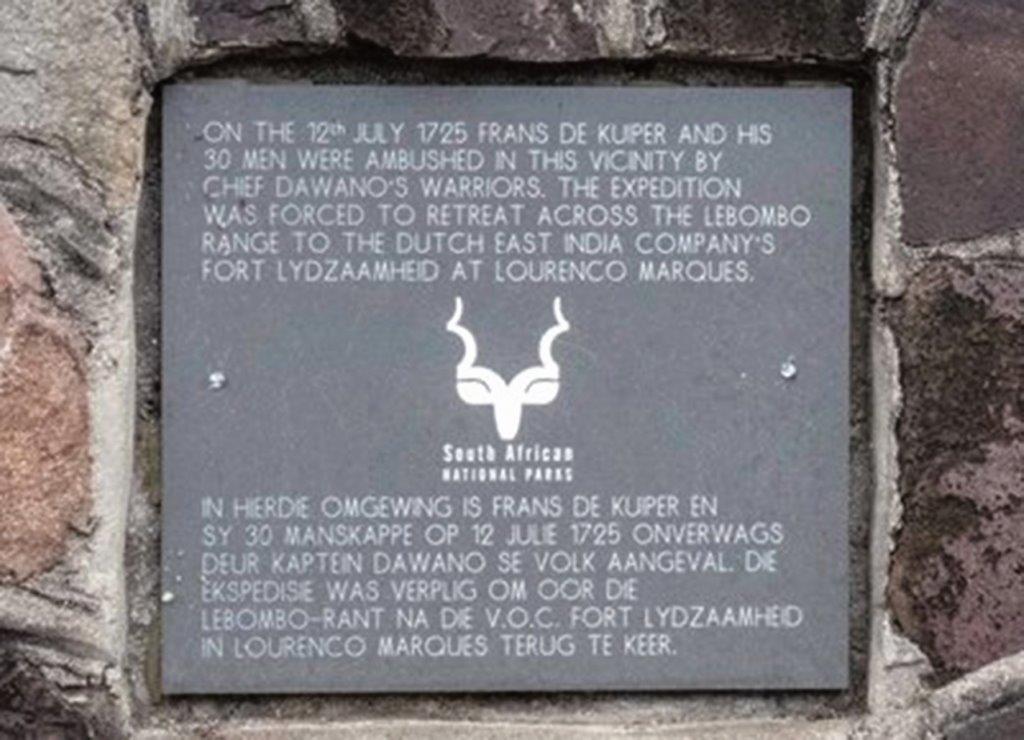
In the Kruger National Park, at the latitude -25°16’28.77″ and longitude 31°50’54.32″, along the tar road between Crocodile Bridge and Lower Sabie, one finds an unassuming plaque in a stone column.
It is here in the bush at Gomondwane where, on July 12, 1725, an expedition of the Dutch East India Company, led by Frans de Kuiper, was ambushed by the local chief and his warriors.
The Dutch East India Company at that time was one of the most influential trading organisations worldwide, controlling the major sea routes from Europe around Africa to the Far East.
Competing against them were the Portuguese, who were the first to settle at Delagoa Bay, today known as the harbour city of Maputo. This was one of the expected gateways to the enigmatic riches of Motapa, the gold reaches of Southern Africa, at this stage yet undiscovered by the Europeans.
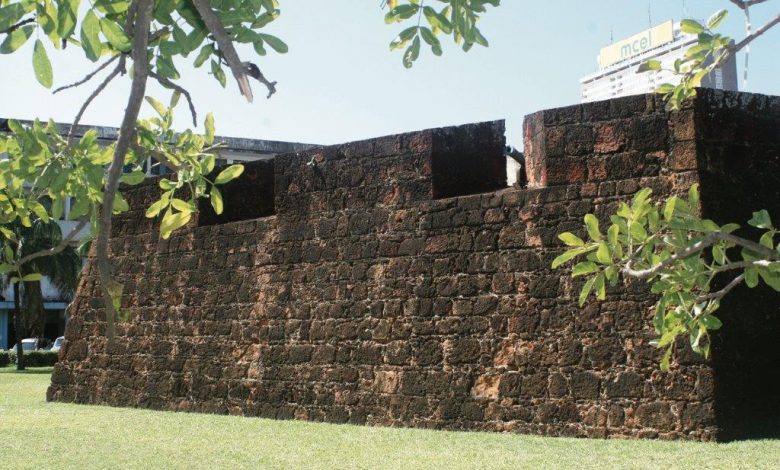
The first European to reach the bay was Portuguese navigator António de Campo, one of Vasco da Gama’s captains, in 1502. In 1544, the merchant trader Lourenço Marques explored the upper reaches of the estuaries leading into the bay. Subsequently, King John III ordered the bay to be named Baia de Lourenço Marques.
Lourenço Marques is reputed to have named the bay Baía da Lagoa (Portuguese “bay of the lagoon”). In English, the Portuguese “Baia da Lagoa” then was translated and slightly transformed to “Delagoa Bay”. A fortification, Fort Lagoa, was erected, but later abandoned.
It was in 1721 to 1730, a mere 70 years after the first Dutch settlement at the Cape of Good Hope, that the Dutch East India Company took occupation of Delagoa Bay. The fortification was rebuilt and christened Fort Leijdzaamheid. A small Dutch garrison was based here and on August 9, 1723, 19 men under the command of one Christoffel Steffler set out to explore deeper inland.
ALSO READ: Covid outbreak at Maartinshoop SAPS
Shortly after their departure, they were atttacked by a local tribe, and the survivors quickly retreated to the safety of the fort.
Two years later, in 1725, another brave explorer, Abraham de Kuyper, attempted a much better organised venture into the hinterland. They crossed the Lebombo as well as the Crocodile River, and got as far as Gomondwane when they were ambushed, after which they also returned to Delagoa Bay and the safety of the garrison at Fort Leijdzaamheid. De Kuyper and his gang of 30 men were the first Europeans recorded ever to enter the area today known as the Onderberg.
This is a public forum. Corridor Gazette’s readers are invited to take part in our search into the history of the region. More information and knowledge will be highly appreciated and shared here.
Contact marius@lowveldmedia.co.za.