CANSA closes the gap in cancer care
This World Cancer Day on February 4, the Cancer Association of South Africa (CANSA) and the Union for International Cancer Control (UICC) are calling on everyone to use their influence to help ‘close the gap in cancer care’.
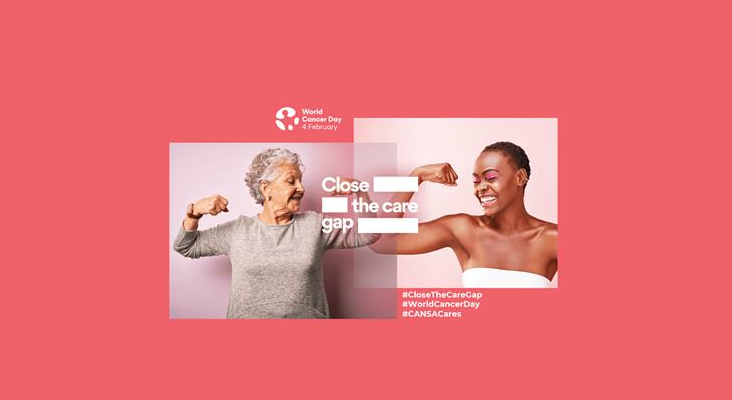
The new three-year campaign calls for action to address the issue of unfair access to cancer services. The campaign aims to promote greater equity in healthcare provision for all people affected by cancer.
#CloseTheCareGap #WorldCancerDay #CANSACares
Elize Joubert, CANSA CEO, explains how the association is actively working to close the gap in cancer care, “Cancer patients in our country may have a very different experience regarding access to cancer screening services, receiving timeous diagnoses, cancer treatment and support, depending on their socioeconomic status and where they live. This may lead to wide differences in the risks of developing and surviving cancer. This gap needs to be overcome and the association is tirelessly working towards reducing this inequity.”
Early detection is key to overcoming a diagnosis, but people who live in remote areas don’t always have access to information on how to lower their cancer risk or to cancer screening.
CANSA helps close the gap in cancer care by partnering with organisations such as Hollard Daredevil, Avon Justine and ILoveBoobies to sponsor mobile health clinic visits in remote areas to offer these services, which would otherwise be inaccessible.
ALSO READ: PCA’s first outreach of the year brings smiles to informal settlements
Joubert adds, “Many patients can’t afford transport to or accommodation near treatment centres and live far away. Our care homes meet their needs by providing a home-away-from-home, including meals and transport, making it possible for patients who would otherwise not be able to, to receive treatment. And our TLC lodges accommodate parents of children receiving treatment, providing families with food and care packages to help them cope with the costs associated with treatment.”
CANSA offers free counselling through its tele counselling service, in seven languages, as well as tele stoma support making counselling and stoma support accessible to all. The website also provides free online resources and links to support groups for cancer patients, caregivers and loved ones.
Fighting cancer together
Lorraine Govender, the national manager: health promotion, agrees that partnerships are critical in helping CANSA to close the care gap by spreading the message of awareness of symptoms, early detection and lowering cancer risk effectively.
“We provide information regarding the top cancers affecting men and women in South Africa and we’re grateful to partners who help us do so. Cervical cancer is the second most common cancer among South African women, but the one women die of most in our country. Stigma and ostracisation surrounding cervical cancer can make women reluctant to seek cancer screening. We help break down the stigma through educational campaigns that include radio spots and a video.”
ALSO READ: Seed and Feed Drive empowers communities
Lung cancer, another prevalent cancer among men and women, is often diagnosed too late. This concern led to CANSA forming a partnership with the University of KwaZulu-Natal for a Multinational Lung Cancer Control Programme (UKZN-MLCCP).
The goal is to improve local communities’ knowledge and awareness of lung cancer, its risk factors and symptoms, through CANSA trained MLCCP volunteers and to positively impact attitudes towards lung cancer, screening and palliative care.
A lung cancer awareness video was produced to reach a wider audience with information to promote early detection.
“Men also face the negative effects of gender discrimination and societal and cultural taboos. Social norms surrounding masculinity may make them less willing to discuss health concerns and consider available life-saving procedures, for early-stage prostate cancer. The association recently launched a monthly Men Supporting Men online support group to help men cope with a cancer diagnosis and treatment, added Govender.”
Training to close the care gap
CANSA’s head of advocacy, Zodwa Sithole is presenting training to traditional health practitioners nationally from January 26 to March 23 to provide education around prevalent cancers, treatment, side effects, and the importance of early detection and quick referral for treatment.
ALSO READ: New drilling project in Barberton launched to uncover the history of Earth
In this way the association aims to close the care gap regarding delays in diagnosis and receiving timeous treatment in communities who depend upon traditional Health practitioners for advice. Course materials will be provided in the official languages of South Africa to make this information accessible to all.
WCD 21 Days to Impact Challenge:
Sign up to one of three 21 day challenges to receive daily inspiration and practical guidance per email for close the care gap, focus on your health or eliminate cervical cancer. Throughout the 21 Days to Impact Challenge, you will be encouraged every single day to make an impact through small, but meaningful actions.
Visit https://cansa.org.za/category/world-cancer-day-4-feb/ for more details about WCD and activities CANSA will be participating in.
Do you have more information about the story?
Please send us an email to editorial@lowvelder.co.za.
For free breaking and community news, visit Lowvelder’s website: Lowvelder
For more news and interesting articles, like Lowvelder on Facebook, follow us on Twitter or Instagram