Beekeeper tastes sweet success
On May 25, he obtained the first spot in the Cut Comb class in the Royal Show 2022 Honey Competition in Pietermaritzburg.
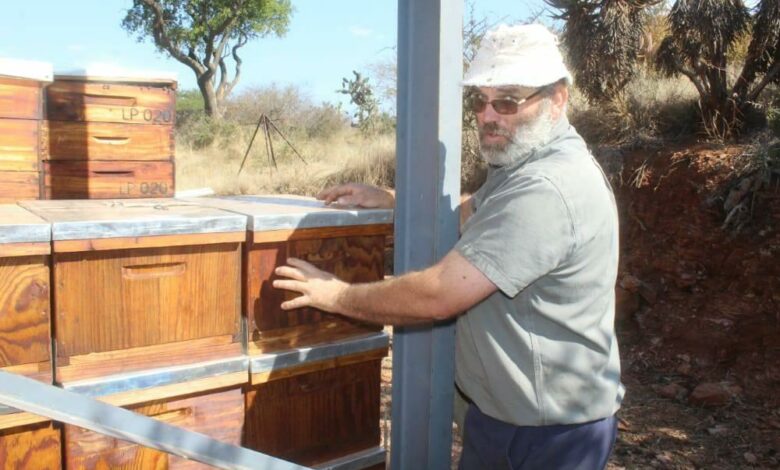
OHRIGSTAD – Local beefarmer Frans Labuschagne continues to fly the Tubatse flag high.
He had previously won an avalanche of awards for his honey production. Now he has once again clinched another big award.
On May 25, he obtained the first spot in the Cut Comb class in the Royal Show 2022 Honey Competition in Pietermaritzburg.
Labuschagne thanked his family, friends and clients for their support. He is known for producing tasty raw
honey. Due to his success in the field, locals have nicknamed him the “Honey Man”.
In May 2021, he was honoured with the first prize in the class 1 liquid light category at the KwaZulu-Natal Honey Show.
“My passion for beekeeping started years ago. I saw a gap in this field and was determined to succeed in it. I read books and surfed the internet on how to master this art,” he said.
Entering the farm, one is greeted by a bee-friendly garden with indigenous plants. There are several unique plants rarely seen in and around Tubatse. Among the plants kept in the farmer’s garden are Margaret
Roberts, English and French lavenders, basil, rosemary, aloes, sage plants and many more.
“Bees play a major role in our ecosystem and creating a bee-friendly garden is a must, given the decline in their population, which is mainly due to climate change and industrial agriculture,” said Labuschagne.
The plants in the garden not only attract bees, but are also used in manufacturing perfumes and soaps. “In the future we will trim the plants and extract oils, which we sell for manufacturing various perfumes.”
He often gets calls from nearby farmers asking him to come and collect bees. “I don’t like it when people just kill them. Bees are life,” said the Limpopo farmer, who is registered with the South African Bee Industry Organisation.
In producing the honey, Labuschagne also designs the beehives in his yard. “I work with two assistants to design the hives. We use different wooden planks; they can be pine or even jacaranda.
“We carefully select the frames ready to be harvested. We remove the bees and we transfer those frames to an interior space where honeybees or other insects cannot enter. We then carefully remove the wax off the frame.
“We put our frames in the honey extractor and pure honey flows into our containers.”
He reiterated that his honey is among the best in the market.
“I can guarantee that my honey hasn’t been tampered with and our bees were not fed artificial nutrients.”