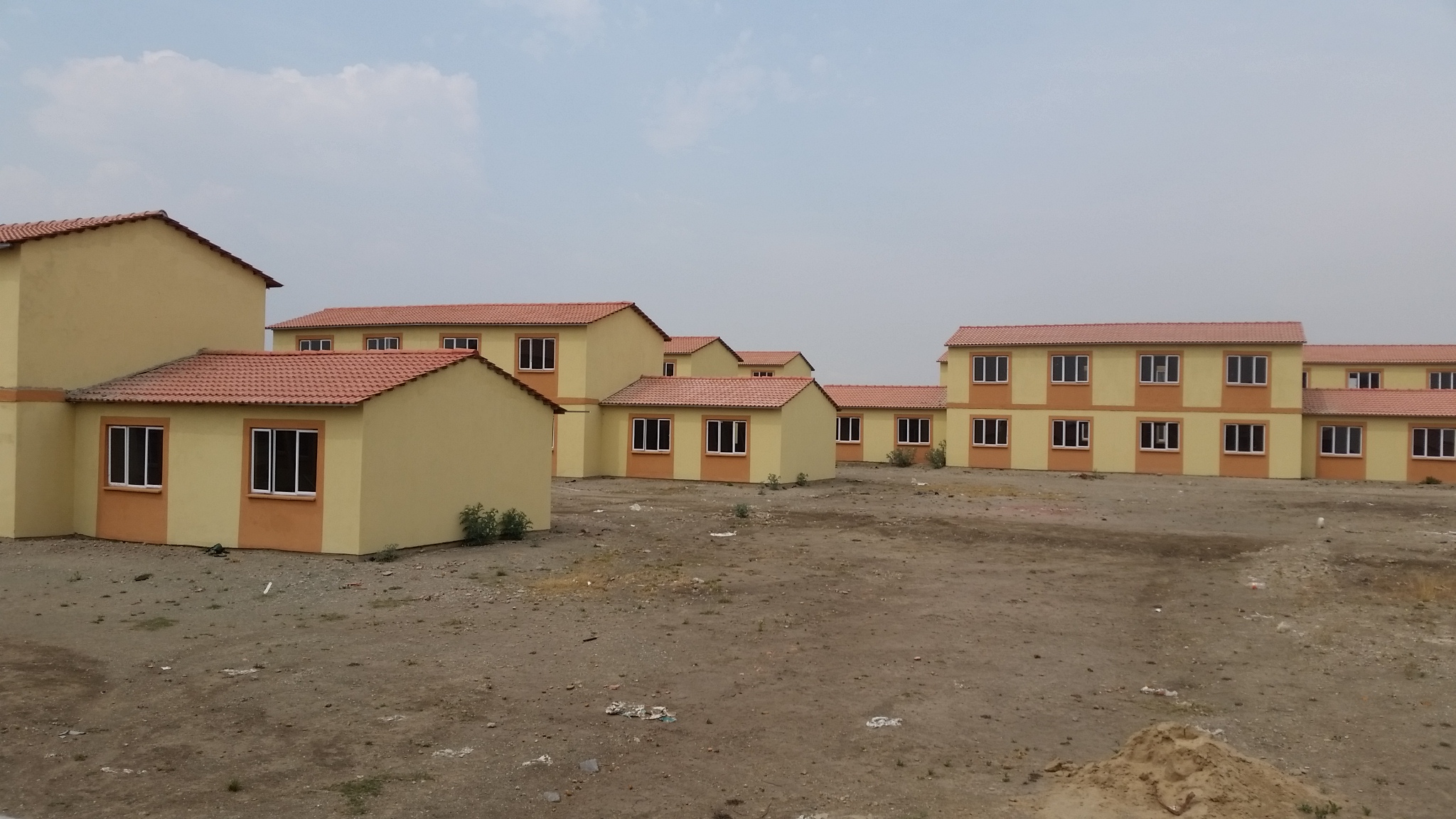
MBOMBELA – The Department of Cooperative Governance and Traditional Affairs (Cogta) has been tasked to intervene in the delivery of government houses to beneficiaries.
A total of 1 000 houses in the City of Mbombela and Lekwa local municipalities remain unoccupied while the rightful occupants continue to live in squalor.
Of these houses, 500 are located in Mbombela. The municipalities were tasked with allocating the units after the provincial Department of Human Settlements constructed them.
The municipalities also had to roll out basic services such as water, electricity and sanitation to the units.
The Department of Human Settlements recently reported that many of the homes it had built had been unoccupied for a while and there were concerns about possible vandalism.
The department said it spent R1,3 billion to build 9 247 units and service 7 578 others in 2015/16, another R1,3 billion to build
8 293 houses and service 7 000 in 2014/15, and R1,1 billion in the 2013/14 period to build 7 551 units and service 5 990 in the province.
Also read: More houses in Mbombela now have running water
The premier, Mr David Mabuza, recently demanded answers from the leadership of the two municipalities on the issue.
“People are waiting for their houses and we are even failing to explain to them why they cannot rightfully occupy their homes. If this is how we work as government, it is disgusting and cannot be tolerated,” he said.
The premier’s spokesman, Mr Zibonele Mncwango, said Mabuza blamed City of Mbombela and Lekwa for poor planning. According to Mncwango, the municipalities did not allocate the houses because there were no basic services provided to the structures.
“The premier concluded that there was not much planning from the municipalities’ side because they did not make plans for the provision of services such as water, sanitation and electricity that are needed for human survival,” he said.

In some of the houses there also seemed to be no plans in place to install electrical boxes and cabling.
Also read: Integrated human settlement scrapped – houses to make way for houses for MPLs
“There were no signs in the walls to show that the contractors planned to install electricity cables in the houses as they have already been completed,” DA leader, Mr James Masango, said.
He added that drug users had since started using the structures as rendezvous points.
“The houses were completed two years ago already and were likely to be vandalised. On our inspection of the site, we were appalled to find that, against a provincial housing backlog of 197 156, which would take 28 years to eradicate at the present rate of delivery, these units have remained unoccupied for the past three years as there are no water, sewerage and electricity infrastructure,” said Masango.
The premier has tasked Cogta to work with the two municipalities to find a solution, even if it meant drawing up a new budget.

Human settlements said it was engaging with Cogta to assist the municipalities to provide water and sewerage infrastructure to mitigate challenges affecting the project.
“The broadened mandate requires government to facilitate the development of integrated human settlements which will ensure the delivery of houses, serviced sites, basic services, socio-economic facilities with access to transport and economic opportunities,” said spokesman, Mr Freddy Ngobe.

“It is therefore paramount to understand, in context, that addressing the housing demand does not only require input by government, but also the private sector, business and every stakeholder within the built environment.”
Spokesman for City of Mbombela, Mr Joseph Ngala, did not respond to the newspaper’s questions at the time of going to press.