Fishing for science: Saving an endangered bream in Mpumalanga
The flashy-looking orange-fringed largemouth bream has virtually been wiped out by the predatorial Florida bass.
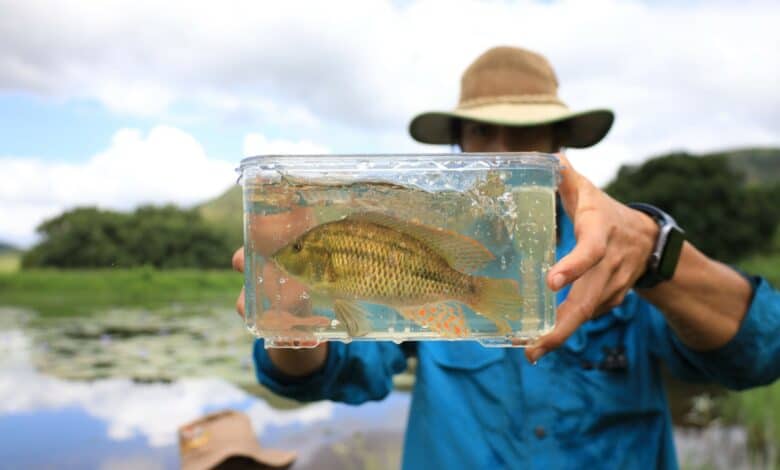
A team of scientists is working closely with local farmers to restore the endangered orange-fringed largemouth (OFL) bream (Chetia brevis) in the lower Mlumati/Lomati River system.
Few anglers would have had the pleasure of landing one of these beauties, easily known by their showy orange egg spots on the anal fin in males, in recent years as they have been virtually wiped out by Florida bass (Micropterus salmoides) since the turn of the millennium.
Understood to have been introduced to the river system around 2001, Florida bass is classified under the National Environmental Management: Biodiversity Act as a category 1b alien invasive species, which ‘must be controlled’. A favourite among recreational anglers, Florida bass pose a major threat to aquatic biodiversity in South Africa due to their unmatched ability to hunt, kill and eat other fish species, including the Chetia.
Endemic to an 82km stretch of the Mlumati/Lomati River system above and below the Driekoppies Dam in the Kingdom of eSwatini and South Africa, there appears to be a direct correlation between the decline in Chetia and other fish numbers and the proliferation of Florida bass.
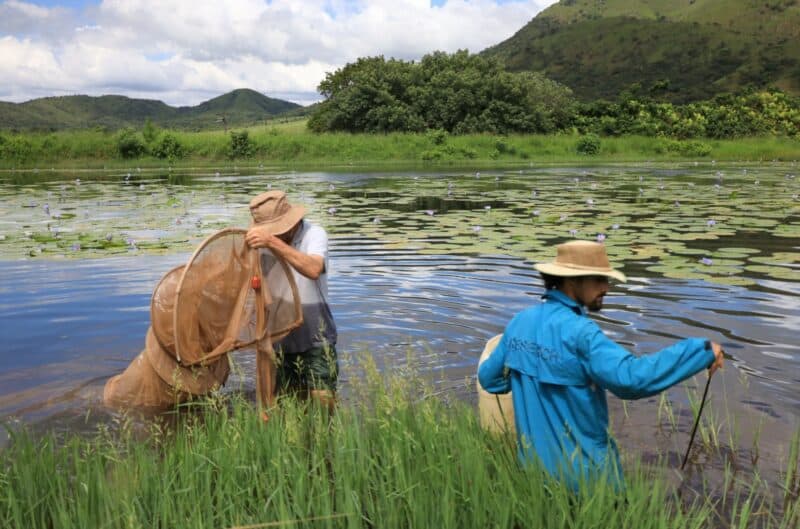
On Friday, January 10, Lowvelder tagged along with three project officers working on the OFL bream conservation project. They were the senior curator at the South African Institute for Aquatic Biodiversity (SAIAB), Roger Bills, Mpumalanga Tourism and Parks Agency’s (MTPA) fisheries specialist emeritus, André Hoffman, and natural resource management honours student at Nelson Mandela University’s Saasveld Campus, Veer Bills.
Following a brief meeting at Driekoppies Dam, the expedition meandered down a spectacularly scenic route to a small pump dam on the farm Laughing Waters where a batch of Chetia were released in September.
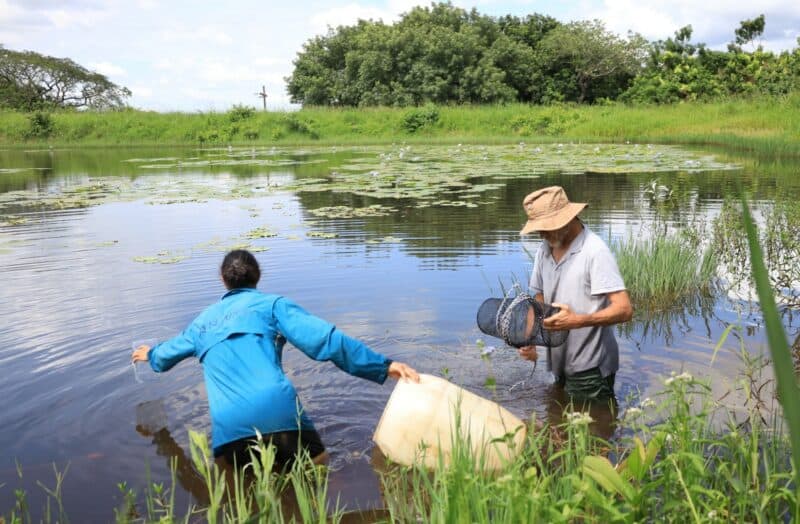
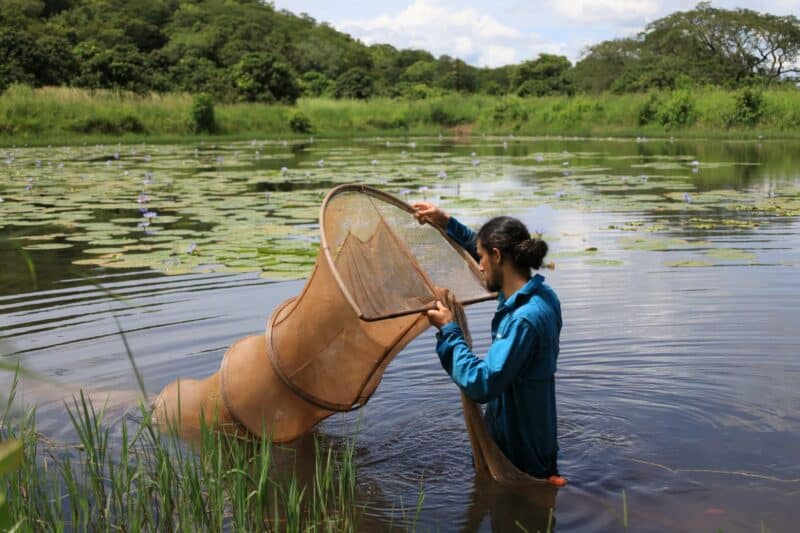
Prior to the visit, the team had placed two fyke nets in the dam in order to capture a sample of fish species found in it and to assess the progress of the Chetia released there last year. They were delighted to discover that not only had the male and female breams grown significantly larger, but they also appeared to have spawned. The breams in the dam had also, for unknown reasons, grown larger than any the team has seen in the river system. While a number of other local species were also sampled, there were no bass – good news for the success of the project.
Sadly, two male Chetia were found dead in the fyke nets. However, these did not go to waste as they went under Veer’s dissection knife to further the team’s understanding of the species’ ageing and growth.
By removing and studying otoliths from the inner ears of dead fish, the team is able to learn how fast the fish grow, how long they live and at what age they reach sexual maturity and start breeding. The rest of the fish’s body is preserved in formalin and put into the National Fish Collection at the SAIAB where they are available to scientists in the future.
ALSO READ: South African conservationist nominated for prestigious award
About the project
Funded by the Mohamed bin Zayed Species Conservation Fund and permitted by the eSwatinian fisheries department and the MTPA, this cross-border project was initially aimed at reassessing the species conservation status, but quickly evolved into something far bigger when the team could not find any Chetia below the water affairs’ gauging weir near Matsamo in eSwatini. The only Chetia they were able to find in the wild were in a small 2.4km stretch of river above the weir. This, the team believes, is because the weir keeps the bass out of that stretch of river, providing a safe haven for the bream.
Sadly, a gold-mining project that operators seek to expand in the upper Mlumati catchment poses a pollution threat. “Our worry is if their tailings dams break this could spill toxic water and sediments down the river through the current area where Chetia remain,” said Roger.
Although the species has been listed by the International Union for Conservation of Nature as endangered since 2016, Roger believes their research findings may lead to it being reclassified as critically endangered due to reduced population size and increasing threats.
To turn the tide on the species’ impending extinction, the team are supplementing wild collections with specimens bred in captivity. This not only increases numbers for stocking, but also helps with varying of age classes.
Thanks to the co-operation of local farmers, who not only allow the use of their dams, but also assist with conservation, 15 out of an identified 40 to 45 dams within the fish’s natural distribution area have been successfully stocked since 2023. The fish are mainly released into small upper catchment dams free of alien fish, such as bass, and protected from fishing.
While the team’s aim is not to stop bass fishing, they are working to find a viable compromise. Hoffman refers to the introduction of triploid (sterile) bass as a possible long-term solution. Although nowhere near reality yet, sterile bass would prevent bass numbers from growing rampantly and end the choking of aquatic biodiversity.
Roger explained how casting a pull net in the Driekoppies Dam in the early 2000s would typically yield 15 to 20 fish species. Today, the same effort yields as few as one or two.
ALSO READ: Malalane’s VulPro conservationist proud to be nominated for international prize
How can farmers help?
Any farmers who have Chetia in their dams or have dams where Chetia can be stocked are urged to let the team know.
Criteria for stocking Chetia include:
• Permission from the farmer.
• Long-term commitment to protect these fish from bass introductions and fishing.
• Access to land to do assessments of dams to monitor the project’s success.
• Dams being ideally situated at the tops of catchments with no bass.
These dams can be drawn, but if they are likely to go dry, the team needs to be advised so that they can come and save the fish first. The dams will be harvested to stock new dams and to mix genetic diversity.
Anyone who has information about this species or general aspects of conservation in the Mlumati/Lomati catchment, or who would like more information on this project, can contact Roger at r.bills@saiab.nrf.ac.za, or on 073 726 9744, or Hoffman at 27824125756@vodamail.co.za, or on 082 412 5756.