Be kind, everyone faces their own battle
After being diagnosed with Guillain-Barré Syndrome (GBS) in 2012, Alma Pieterse never fully recovered.
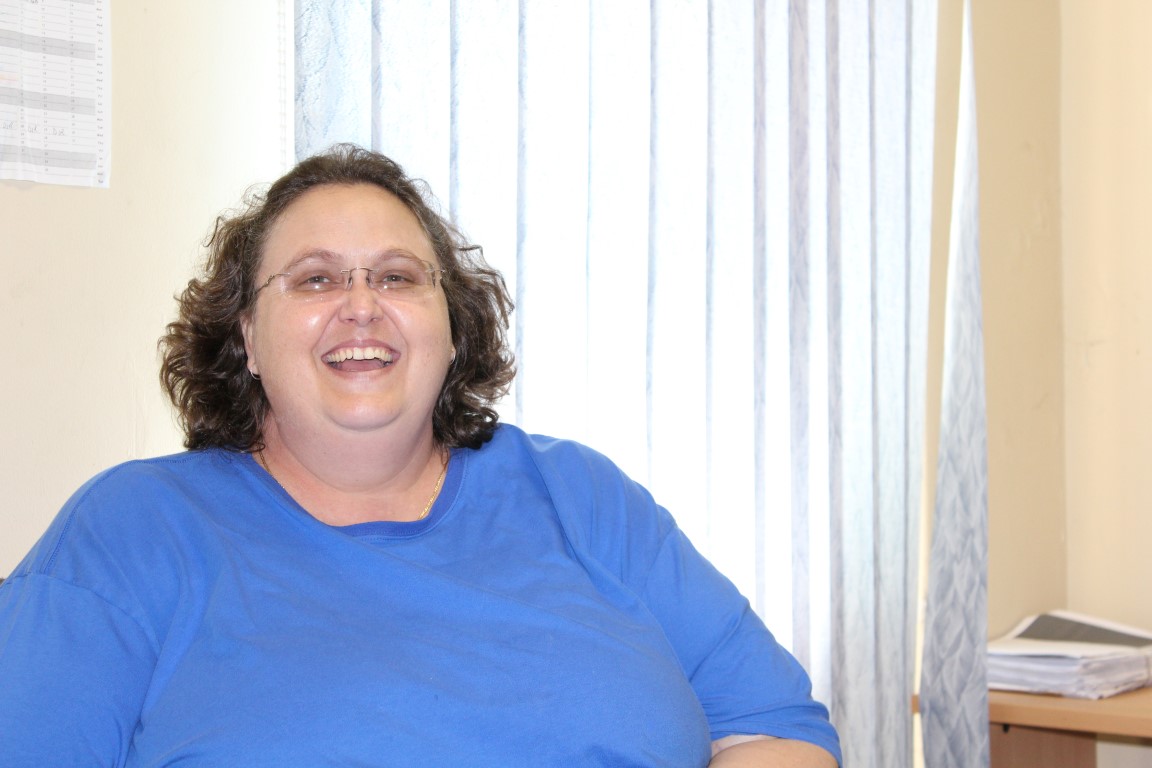
MBOMBELA – “Be kind, for everyone you meet is fighting a battle you know nothing about.” This quote has been stuck on my grandmother’s fridge for years. The meaning never struck me until local Guillain-Barré survivor, Alma Pieterse opened her heart up to Lowvelder on Friday. Alma spoke out to drive a very direct message home, which she articulated prominently as I walked through the door: “Not all disabilities are visible. I don’t know how we are going to create awareness about invisible disabilities, but we need to make a plan.”
At first, I had no idea what disabilities had to do with Alma. Those who know this efficient woman, who has been employed at the Department of Justice for 23 years, have often described her as the tornado. As clerk of the civil court, she works at a speed that almost makes one question one’s own efficiency. Alma doesn’t take kindly to sloppiness and knows the civil law as well as most lawyers do.
On Friday she revealed that she suffers from an impairment, one that she has to overcome daily. After being diagnosed with Guillain-Barré Syndrome (GBS) in 2012, she never fully recovered. Her nervous system does not function normally, making several everyday tasks challenging. This is not limited to one level of neuron functioning. It impacts all of her movements from walking to writing and everything in-between.
Alma remembered the day GBS hit her. It was the Saturday morning after her brother’s birthday party. “My hands just stopped working. I tried them at crocheting, but couldn’t hold on to the ball of wool. The next day my legs felt wobbly. The Monday morning my legs just stopped working.” She was rushed to Unitas hospital in Pretoria where she was admitted to the high-care unit. She could barely move, let alone do anything for herself and had to be bathed and dressed. “When that happens to you, you lose every form of dignity, because you just can’t hold onto it anymore.”
After more than a week, the illness had still not plateaued. When this finally happened, she underwent gruelling plasmapheresis treatment for seven days before she was discharged and admitted to a rehabilitation facility. There, Alma had to learn to walk again. “I had to learn to appreciate every step. And I really did, after having gone through what GBS does to you. You celebrate being able to sit, stand, use a wheelchair, walker and walking stick.” After six weeks at the rehabilitation centre in Vereeniging, Alma recovered at her father’s home, with the help of her father and sister.
Back in Mbombela, she had to start life all over again. She never regained complete control of her limbs. She illustrated this with her morning shopping routine. Alma has to do grocery shopping in the morning as the stores are not as crowded then. The first challenge she faces, is parking. “When getting out of my car, I need ample space. I still struggle to get out of my seat and to balance myself once I get up. A walking stick helps me with this. If a car is parked next to me and that car’s passenger opens his door and hits me, I will lose my balance. Getting up from the ground is almost impossible.” Once Alma makes it out of her car, the next challenge arises – making it into and out of the store. Every step she takes is a deliberate and planned one. “My nerves don’t work. If I don’t plan and execute each move with utmost concentration, I fall. I touch wood with my walking stick and get there in one piece. In the store, I can lean on the trolley.”
Alma doesn’t usually make use of wheelchair parking spots, but her car carries a wheelchair sticker, for days where she has thoroughly scanned the parking lot and cannot find any other suitable spot. “One day I stopped in such a spot. A lady in a wheelchair was parked next to me, accompanied by her father.” Alma remembered that the man asked her whether she was disabled. He then screamed, “Are you stupid?” She walked her slow, deliberate walk into the store. On her return, her car was covered with stickers stating that stupidity is not a disability.
“I’ve never asked for sympathy and I’m not doing so now. That day just made me realise that, although we need to have sympathy for those in wheelchairs, we also have to keep invisible disabilities in mind. My sister is deaf. I have serious impairments. Think of a blind man without a walking stick. Just think of others.” That is all Alma asks. That we do to others as we would want them to do unto us.