Avoid the circus and check food labels to save chimps
Five plans to make sure you help to save the chimps.
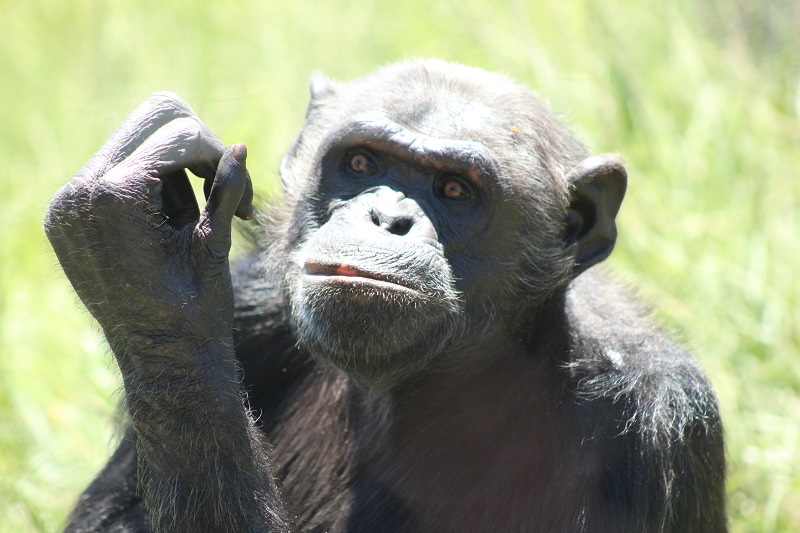
BARBERTON – The Jane Goodall Institute South Africa (JGISA) cares for 32 chimps at Chimp Eden close to Mbombela. All of these chimps, except Thabu who was born at the Institute, have been abused, neglected or orphaned.
Read in this week’s Tuesday Lowvelder how Thabu is now four years old and because of his dominant personality, is becoming leader of Group Two. Thabu was born at Chimp Eden after his mother’s chip to prevent her from becoming pregnant, somehow did not work.
Chantell Greyling, guide at Chimp Eden explains in the article why Thabu is becoming so headstrong and what is the reaction of the rest of the group to his behaviour. There is also a tribute to the group’s previous leader, Charlie, who passed away in December.
At Chimp Eden the dedicated staff like Greyling is doing their best to make the sanctuary a safe place and loving environment for the chimps. We should however not only leave it to sanctuaries like these to help chimpanzees.
There are many things we can do to improve the well-being of chimpanzees whether in the wild or captive. Here are a few plans:
Don’t go to the circus!
Charles and Jessica at Chimp Eden are the leaders of group one. Their lives have not always been so bright said Greyling. Rescued years ago from a well-known circus, these chimps were subjected to years of abuse. Jessica’s body still shows signs of over-grooming as a result of her babies being taken away from her in her circus years. She habitually regurgitates her food, which a sign of once starved chimps who do this to make their food last longer. By supporting circuses you might just be supporting animal abusers like those who were cruel to these two chimpanzees.
Adopt an Animal
Chimp Eden has an adoption program by which you can adopt an individual and help to look after them by giving a donation. The sanctuary also needs practical help in the form of donations like fruit and vegetables. Phone Philip on 0832316309 if you can help with these. When they need to be consoled, the chimps also like a cup of rooibos tea with honey! Perhaps you can help by stocking up a few groceries for them or donate some hay for their sleeping quarters. Chimp Eden recently suffered a huge blow when part of the building housing the restaurant was ruined in a freak storm when a tree fell on the roof. The chimps are now also without their favourite shade tree and need a Jungle Gym with open shade corners to help keep them out of the scorching Lowveld sun in camp one.
Report any rumours or advertisement about available chimpanzee meat
Mowgli at Chimp Eden is a charmer. “He was rescued from the pet trade,” said Greyling. His original troop was cut up for bush meat to feed a global demand. You can even find chimp meat in South Africa. Users erroneously believe it can cure Aids and cancer. Speak out against chimpanzees being cut up for bushmeat. More than 3000 great apes are lost yearly in illegal wild life trade according to the UN’s Environment Program. The babies are sold as pets. For every one baby sold, ten family members are usually killed for the hunters to get access to the baby and sold as bush meat.
Avoid products with palm oil
Dr. Matt McLennan, of Oxford Brookes University has been studying a group of chimps in Uganda. Over a period of about 10 years he saw nearly complete conversion of forests to agriculture. He documented how a group of chimps that numbered about 30 to 35 in 2008 had been reduced to only 20 individuals.Palm oil production results in over a million hectares of chimp habitat being cleared every year. Palm oil is in just about everything we eat. If consumers can put pressure on producers, deforestation as a result of palm oil production, might be slowed down. Opt for products without palm oil advises JGISA. So read the labels of the food, and even the soap, that you buy and reject palm oil products.
Take a stance against keeping exotic pets
The head quarter of the South African SPCA’s office for wild life warns that most owners don`t realise the huge responsibility or costs involved when they purchase exotic pets like chimpanzees. Nor do they consider what is going to happen to these animals when the novelty wears off. According to the Humane Society of the United States, the exotic pet trade is a multi-billion dollar industry, second only to the drugs and weapons trades in terms of its gross worth. The SPCA asks animal lovers to speak out against the buying and trade in exotic pets and educate friends, family and children why the chances of survival for these animals are small. To the SPCA is not only about owning one. They warn that some of these animals die at the time of capture. More will die because they are not given time to recover from the trauma of capture. More will die due to bad transport and depot handling conditions in exporting countries. More will die when they are badly packaged and despatched, mainly by air to overseas countries. And even more will still die when they actually get to pet shops.