Storm brewing on social media about alleged cloud seeding
Cloud seeding involves modifying a cloud’s structure to increase the chance of precipitation.
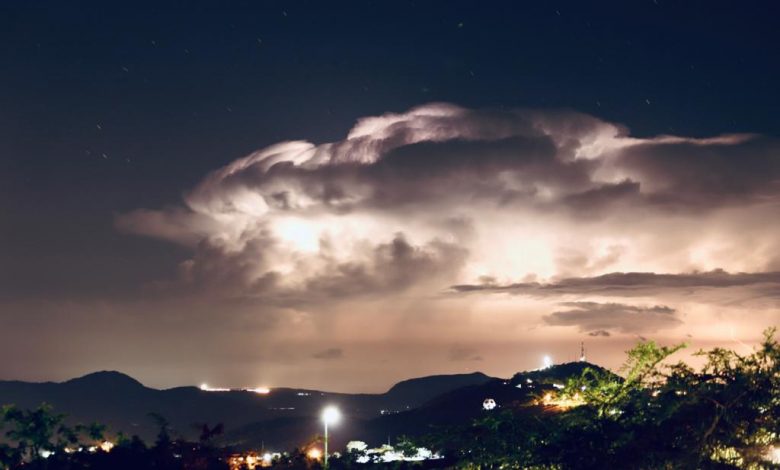
MBOMBELA – Cloud seeding is, and has always been, a controversial issue among Lowvelders. The absence of rain has caused speculation on social media over its existence above the city and surroundings again.
Lowvelder consulted with Dr Deon Terblanche, an atmospheric scientist specialising in weather and climate science with specific emphasis on cloud microphysics and dynamics, aerosol-cloud interactions, and weather radar hydrometeorological applications, to find out more. He explained that cloud seeding involves modifying a cloud’s structure to increase the chance of precipitation. It adds small, ice-like particles to clouds. Usually, silver iodide particles are used.
There are two ways of adding particles to clouds. One is using large cannons that shoot them into the sky, and the other is aircraft that drop them from above.
Over the past couple of days, locals claim that the latter has been happening. “Clouds start to build and look promising, before they disappear into thin air as a result of an airplane spraying a vapour on them,” one of Lowvelder’s readers, who farms in the Kaapsehoop area, reported, adding that the plane takes off and returns to the Old Nelspruit Airport.
Also read: What is the deadliest snake in Southern Africa?
Upon enquiry, the manager of the airport said at the specific time, during which the reader allegedly witnesses two planes seeding clouds, two junior pilots of the local flight school had used this popular route through Barberton Valley for training purposes. He said none of the aircraft at the old airfield are equipped to do cloud seeding. To the reader who claims that a crop duster was used on Tuesday, he confirmed that all firefighting airplaines have been deployed to the Western Cape.
The supposed reason, is to keep hail at bay as some crops are in a sensitive phase of growing and other are ready to be harvested. Social media users claim that insurance companies pay a substantial amount of money to those involved.
Terblanche said the last known cloud-seeding project in South African of which he knows, was in 2001. He said it is therefore “highly unlikely” to be done in a legal matter. Should such an activity be carried out, the South African Weather Services (SAWS) would know about it.
Upon enquiry, Hanelee Doubell of the SAWS confirmed that they are not aware of any cloud seeding taking place in the country. “Should it occur without the knowledge of SAWS, it would be illegal,” she said.
Proof of cloud seeding can be sent to editorial@lowvelder.co.za