SANParks clarifies incident of dead rhino being dehorned
After a number of comments in the press and on social media, SANParks issued a statement that an incident in which a ranger dehorned a dead rhino in view of some passing tourists, was unfortunate.
SANParks said, “There have been a number of disturbing comments in the press and social media regarding the work of SANParks rangers in the Kruger National Park (KNP) and an incident with a rhino dehorning that took place on May 11.”
In a statement issued, SANParks said it would like to clarify the situation as follows: “Satara section ranger, Wilson Siwela, received a report from Don English, Marula regional ranger, that he had received a report of a rhino carcass at a distance of approximately 20 kilometres from Satara, that still had it horns.
“English reported the carcass’s location to Siwela and asked him to investigate. Ranger Siwela immediately left to investigate and remove the horns.” SANParks said it operates in a high crime environment in which there are daily incursions by poachers.
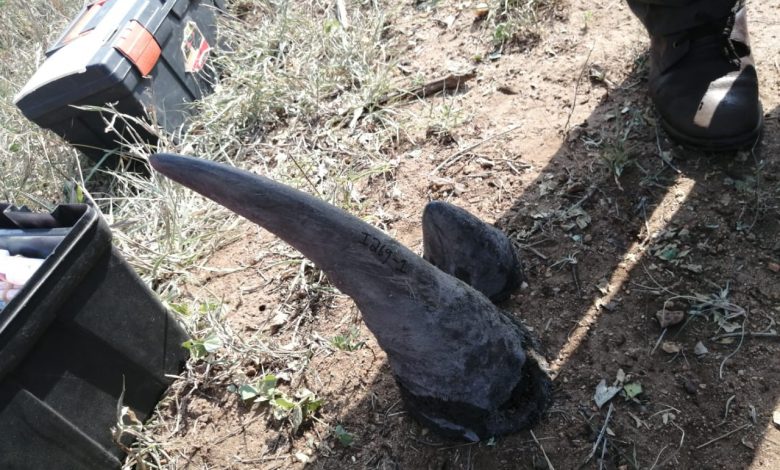
“The removal of horns of a dead animal is standard practice. On the death of a rhino, rangers move to remove the horns as soon as possible.” Due to the fact that the dead rhino still had its horns intact, SANParks said the ranger required someone to assist, and approached a general worker whom he took straight to the carcass.
“The general worker, who was off duty, asked if he should return to his residence in the camp to put on his uniform, but Siwela requested that they leave immediately as it was a rhino and he did not know the cause of death (natural or poached).
“He put on his hazard lights and went to the area, overtaking a night drive vehicle en route. It was dark when he arrived at the scene, so he drove his vehicle (his official work vehicle) into the bush to see if he could find the carcass.
“On arriving at the scene, they saw a hyena and alighted from the vehicle with a torch to look for the carcass. They found the carcass and started to remove the horns.” At this point, the night drive vehicle arrived.
“Once the horns were removed, the closest and safest way to get out of the bush where the carcass lay was straight out to where the night drive vehicle had stopped. “Siwela asked the guide if the general worker could stand by the guide truck while he went back into the bush to get his vehicle.”
According to the statement, the night drive guests shone their spotlights for him as he walked back to his vehicle. “Siwela retrieved his vehicle, then fetched the general worker from the guide truck and thanked all for their assistance.
“Later that night, at approximately 21:00 or 22:00, Siwela was informed by a colleague that one of the guests wished to meet with him and he intended to do so the next day. “The next morning, however, he immediately took the horns to Skukuza and booked them in with the relevant section and permit numbers.”
According to the statement, it is standard SANParks practice to have the horns stored as soon as possible. “The ranger then received a call from SANDF members who requested him to return to the scene of the rhino carcass. “The SANDF indicated that a member of the public had shown them pictures and video of what had transpired the previous evening.
“The ranger requested from the SANDF that they should not return to the scene as he had not yet been able to undertake a full inspection and therefore did not wish to have a possible crime scene contaminated.
“While it was initially thought that the rhino may have been shot, it has subsequently been established by the post mortem team that it had died of natural causes (fighting). “There was no other evidence that the rhino had been shot at the scene.
“Siwela unfortunately only had an opportunity to follow up with the camp manager on the Thursday regarding the tourist’s query on May 13, but the guests had already left Satara. The complainant had however been contacted telephonically by English on the morning of May 12 where the situation was fully explained.
“He (the complainant) received an email from the communications department reiterating what had transpired, however, he continued with his campaign to tarnish the name of the section ranger and of SANParks.
READ MORE: Slow start for Ehlanzeni’s vaccine roll-out
“He has subsequently been informed that the organisation is considering its legal options regarding his posts and the article which was written by Tred Magill. He will be notified of pending action in due course.”
The managing executive of the KNP, Gareth Coleman, had the following to say: “The death of any rhino in the park is a major loss and hurts all of us. Our rangers are working under very difficult conditions every single day and are under continual attack and on alert.
“The fact that this incident took place in front of tourists is most unfortunate and exposes what our rangers have to confront on an almost daily basis. “We respect and encourage the public to raise any issue with which they have a concern.
READ MORE: Coyotes postpones all planned weekend events
“In this case, we are certain that this situation was handled correctly and was all in a hard day’s work for our rangers. “It is sad that despite the situation having been clearly explained subsequent to the event, the complainant chose to escalate the items to the press and it has been reported in such a sensationalist manner.
“We would encourage the complainant to open a case with the South African Police Services should they believe that SANParks, or any of its employees, have committed any wrongdoing.”