Ornithologist to resume sugarbird research
Dawie de Swardt is a walking encyclopedia on the subject of ornithology.
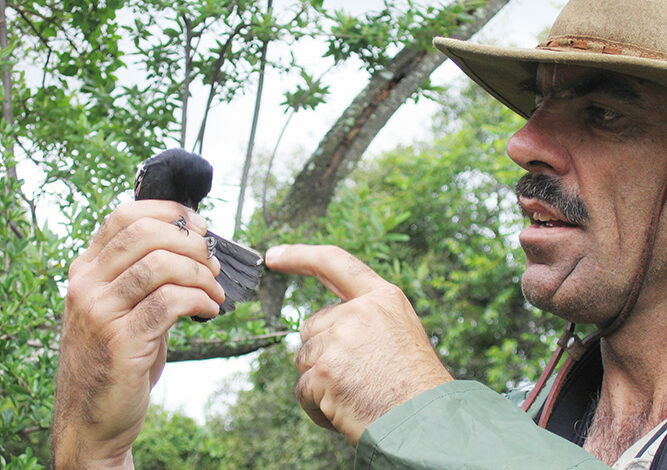
He was born and bred in Lydenburg and this area is still close to his heart.
De Swardt, the head of the ornithology department of the National Museum in Bloemfontein, confirmed that he would yet again visit his home town for his annual Gurney’s sugarbird (Promerops gerneyi) research in February.
It will take place at the Paardeplaats Nature Retreat on the Long Tom Pass. The retreat is home to this sugarbird and is a popular venue for birders, bird ringers and researchers.
De Swardt has been studying the Gurney’s sugarbird at the Paardeplaats since 1986 and has compiled a comprehensive list of more than 200 birds in the area.
Gurney’s sugarbird is a medium-sized passerine endemic to the mid-and high-altitude grassland in southern Africa. 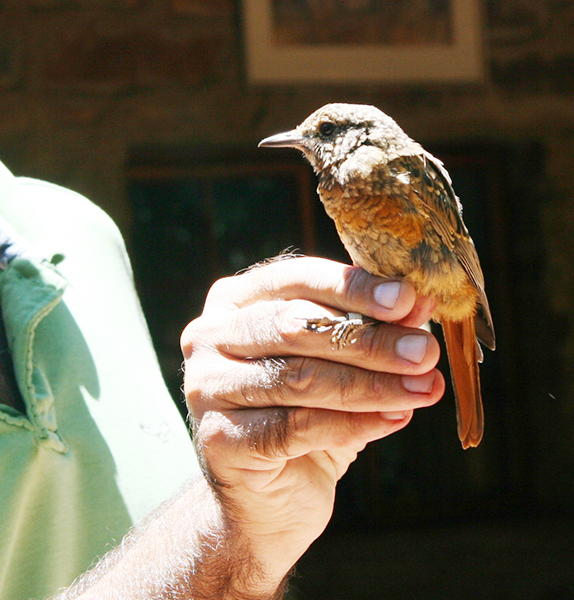
The bird feeds on the nectar of protea bushes as well as on small insects and is characterised by its long, graduated tail and decurved beak.
The twitchers of the Birdlife Northern Gauteng, under the leadership of Janine Goosen, have committed themselves to assist him once again during the two days of monitoring.
“Twitchers measure and weigh each bird carefully, and this information is sent to the South African Bird Ringing Unit to be stored in the database. Over time, this information leads to a greater understanding of the birds, their habitats, lifespan, movements and whether their numbers are declining or increasing.
Measurements are taken of the culmen (beak), head, closed wing, tarsus (leg), tail and weight,” said Goosen.
His love of birds began as a child while on holiday with his family in George. The family loved proteas and also planted them back home in Lydenburg after their visits.
In April 1980, the proteas in the garden started blooming, and for the first time he saw the red-breasted sugarbirds on the flowers.
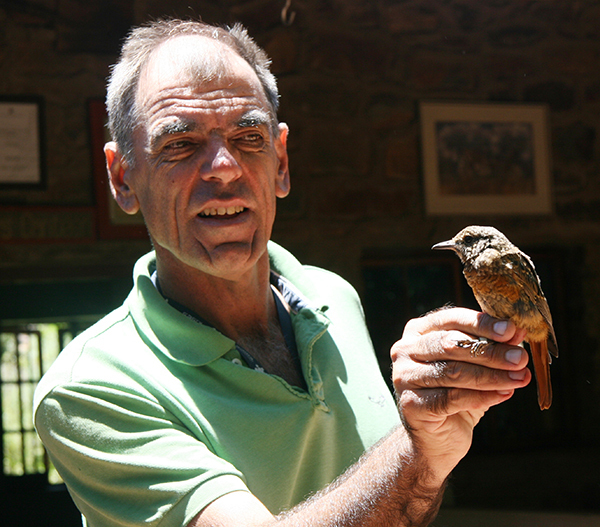
After his military service and studies at the Technikon Pretoria (Tshwane University of Technology) he obtained a permit to ring sugarbirds in Lydenburg and he started working as a research assistant at the National Museum.
His first project in Bloemfontein was a behavioral study on the white-winged korhaan next to the Jagersfontein Road.
Also read: Five alleged robbers appear in Graskop Magistrate’s Court after an interprovincial police chase
De Swardt has been conducting studies on several birds over the years. He has determined that wild birds have their own special dialect in each region and monitor their idiosyncrasies.
“The first bird atlas was written in 1988. There was a gap in reporting findings and research for a few years. A second bird atlas project was started in 2007. We can’t wait to visit Lydenburg again and are already busy with our preparations for the research,” said De Swardt.
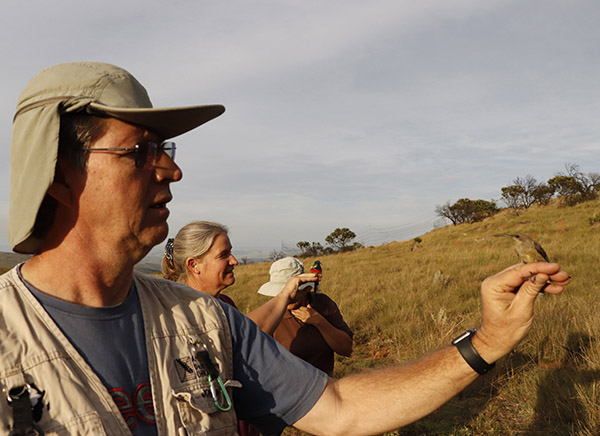
“The Gurney’s sugarbird research now has another ‘wing’, if you’ll pardon the pun. My original research has grown so much and I am busy studying the isolated sugarbird population in the Haenertsburg area in Limpopo as well,” said De Swardt.
He is also one of the leading experts on the northern black korhaan and secretary birds. Although De Swardt has a sincere love of the whole “feathered family”, he has two favourite birds: the red-breasted sugarbird and secretary bird.
Also read: A trench-sized headache