Lowveld dams overflow
People are warned to avoid building houses under floodlines as this makes them vulnerable to floods and being washed away during heavy rains.
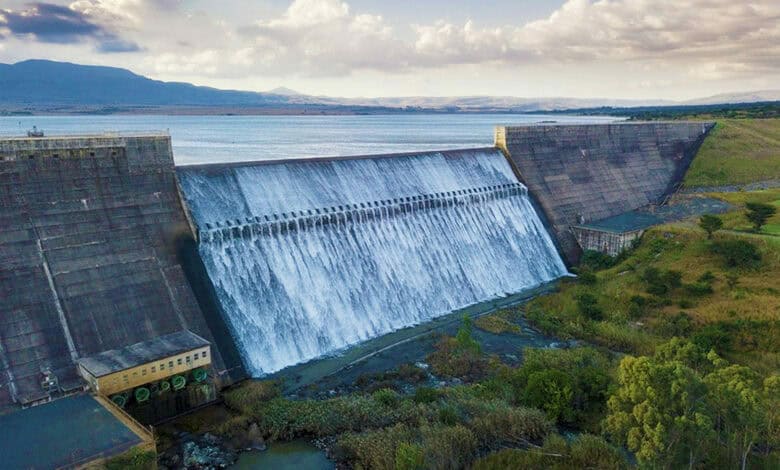
The Department of Water and Sanitation (DWS) calls on the public to exercise extra caution and prioritise safety as dams and rivers overflow in the Lowveld region.
The latest DWS weekly State of Reservoirs report issued recently shows that almost all the listed dams in the Lowveld and Ehlanzeni District are above 100% and overflowing.
The report further shows that the majority of the listed dams recorded improvements in water levels due to the heavy downpours in the past week.
The exceptions are Blyderivierpoort and Longmere dams which recorded slight declines, but remain above 100%, dropping from 106.1% to 105.3%, and 102.7% to 102.5%, respectively. Only Klipkopjes Dam remained unchanged at 101.6%.
ALSO READ: Kruger Floods Wrap-up: Here’s what you need to know
Other dams that recorded improvements include Kwena from 101.6% to 102.9%, Driekoppies Dam from 104.0% to 105.6%, Inyaka Dam from 101.3% to 102.4%, Witklip Dam from 103.1% to 103.4%, Primkop Dam from 105.0% to 106.1%, Da Gama Dam from 97.4% to 100.8%, Nooitgedacht Dam from 99.0% to 101.9%, Vygeboom Dam from 100.4% to 102.2%, Buffelskloof Dam from 100.6% to 101.3%, and Ohrigstad Dam from 100.5% to 100.6%.
ALSO READ: Lowveld dam levels show mixed results
The dam levels report also shows that water levels increased overall in the Mpumalanga Province and in the Water Management Areas (WMA). According to the report, the provincial average water levels increased from 100.9% to 101.5%. The Limpopo-Olifants WMA increased from 94.9% to 99.3% and the Inkomati-Usuthu Water Management Areas increased from 100.5% to 101.5%
As the water resources overflow, DWS encourages the public to avoid overflowing dams and raging rivers and streams to prevent the loss lives and property.
The department also calls on the public to avoid building homes under floodlines as this makes them vulnerable to floods and being washed away during heavy rains.
DWS further reminds the public that despite overflowing water resources, South Africa remains a water-scarce country where water conservation remains key to sustainable and reliable water supply for the current and future generations.
The department also encourages the public to practise safe rainwater harvesting during rainy days.