10 000 runners head to Kaapsehoop Marathon
Dietitians share crucial downhill pacing and carbo-loading strategies as thousands prepare for the misty descent into Mbombela.
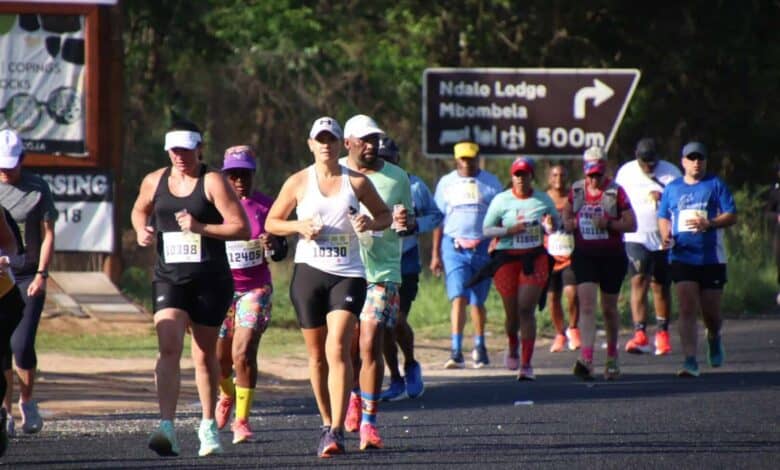
The Tswelopele Funerals Kaapsehoop 4 in 1 Marathon 2026 is around the corner, with an anticipated 10 000 participants set to line up for the event on Saturday, November 7.
Event organisers announced that surprise guest participants will join the celebrations this year, along with representatives from Athletics Mpumalanga.
George Kusche, the Lowveld-native and 2026 Comrades Marathon winner, will be among the familiar faces on the route. With him is Mbuti Mollo, who achieved third place at the 2026 Comrades Marathon.
Although excitement for the Tswelopele Funerals Kaapsehoop 4 in 1 Marathon is through the roof, participants must ensure that they are well-informed about the race, race preparation and essential arrangements and information.
Race pack collection
It is essential for participants to collect their race packs. Without the contents in the race pack, runners are unable to participate on Saturday. Race pack collections are on Thursday, November 5, from 10:00 to 20:00 and Friday, November 6, from 09:00 to 22:00 at Mbombela Stadium.
To collect their race packs, runners need to present a copy of their ID or passport. In the event that someone else is collecting the pack on the runner’s behalf, they must bring a letter of authorisation and a copy of the ID or passport of the race pack owner. Substitutions will also require a letter of authorisation and a copy of the entrant’s ID or passport. The race packs contain the runner’s bib and timing chip, a temporary licence (if purchased), and a T-shirt if the runner was one of the first 500 entries or purchased one. Runners are not allowed to run with someone else’s bib or run a different distance from what they entered.
Carbo-loading and downhill running
The Tswelopele Funerals Kaapsehoop 4 in 1 Marathon serves as an official qualifier for the Comrades Marathon and the Two Oceans and sets the tone for athletes’ 2027 season. Reon van Aardt Inc Dietitians (RVA) compiled a comprehensive report on how runners can prepare and recover for the race.
The Kaapsehoop Marathon is mostly run downhill; the race starts at the Kaapsehoop escarpment at an elevation of about 1 640m above sea level and finishes at Mbombela Stadium, at around 700m. While most would assume that this makes a race a lot easier, in reality, it is the complete opposite.
Downhill runs pose their own difficulties in comparison to flatter runs. It tends to be harder on the quads. With every downhill stride, the thigh muscles lengthen while they brake the body. This loading causes far more muscle-fibre damage than running on flat terrain. Secondly, racers tend to run the first half faster, causing a quicker energy burn, leaving them more exhausted earlier in the race.
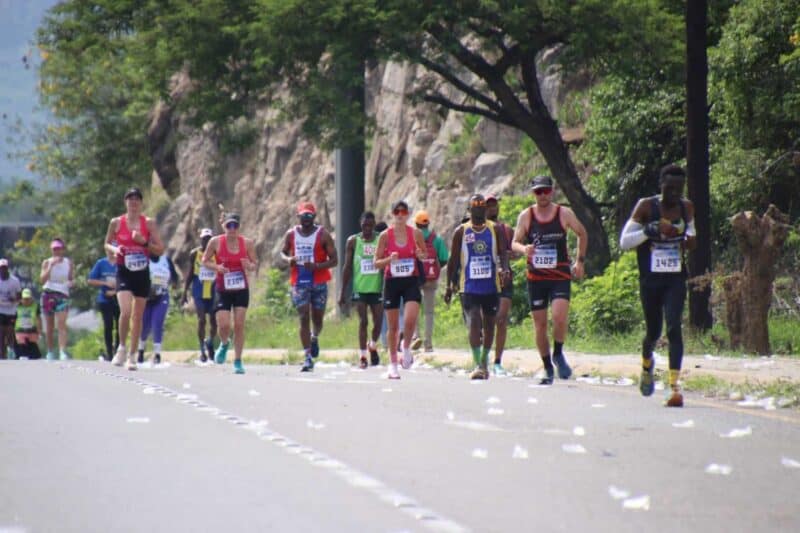
Preparation during the last two days before the race is essential to a runner’s performance. In these two days, athletes are advised to carbo-load, meaning they eat more carbohydrates than they normally would so their muscles start the race with full glycogen stores. RVA recommends 10g to 12g of carbohydrate per kilogram of body weight per day for the 36 to 48 hours before a race longer than about 90 minutes.
On Friday evening, eat the last big meal by 18:00. On the morning of the race, the goal is 1g to 2g of carbohydrate per kilogram of body weight, eaten two to three hours before the start. About 15 minutes before the start, eat a gel or half a banana at the start line. During the race, RVA recommends aiming for 30g to 60g of carbohydrates an hour.
Further, they suggest drinking to thirst, rather than sticking to a strict schedule. From mid-morning onwards, include about 300mg to 600mg of sodium an hour from a sports drink, salty food or electrolyte tabs. Athletes should avoid overdrinking, as it can cause a drop in blood sodium (hyponatraemia).
Transportation to the race
The Tswelopele Funerals Kaapsehoop 4 in 1 Marathon 2026 offers bus transportation to Kaapsehoop. Participants must note that taking the bus is mandatory, since only officials will be allowed on the route. Runners are advised to be on time for their bus. All buses depart from Mbombela Stadium.
The bus departure times are as follows:
• 42km: Buses depart from 02:30 to 03:30.
• 21km: Buses depart from 03:00 to 04:00.
• 10km: Buses depart from 03:30 to 04:30.
Route details
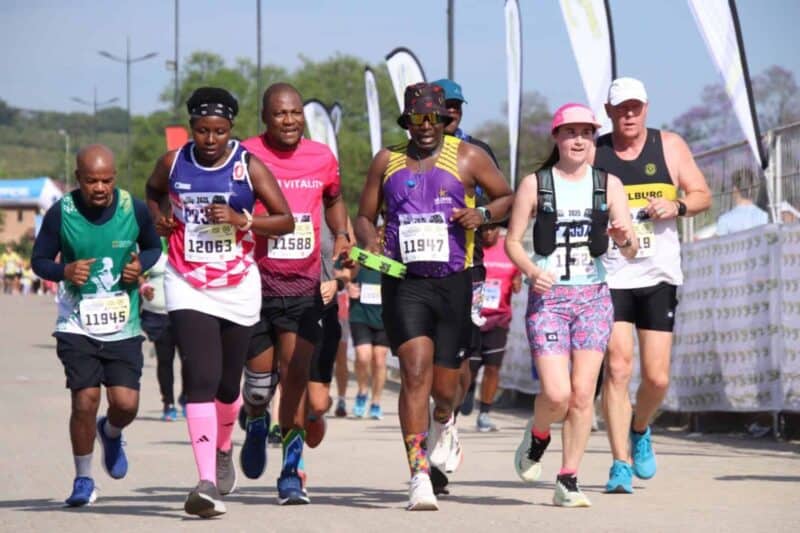
The 42km, 21km and 10km races all start at 05:30.
The 42.2km starts in Kaapsehoop Village, just off Safcol Road near the cemetery. Runners then follow the designated route onto Kaapsehoop Road towards Mbombela.
The 21.1km starts further down Kaapsehoop Road near the Simbo Driving School water point, while the 10km starts near Uniwisp. All distances join the same route towards the finish, continuing from Kaapsehoop Road onto Graniet Street, then via the R104/N4 and Matsafeni Road into Mbombela Stadium.
Some water points may be positioned slightly away from their exact kilometre markers for safety reasons.
Water point locations
The water point placements are measured in kilometres to the finish line at Mbombela Stadium.
Water Points and Sponsors:
• 39km: Pace Car Rentals
• 36km: Pace Car Rentals
• 33km: Kaapschehoop Wild Horse Conservancy
• 30km: Bella’s AC
• 27km: NFi Wi-Fi
• 24km: Forex Institute of Technologies
• 21km: Simbo Driving School
• 18km: Hoga
• 15km: City of Mbombela Marathon Club
• 12km: BUCO Mbombela 10km: Uniwisp (Kaapsehoop Road)
• 8.5km: LabourNet and Ndalo Lodge (Kaapsehoop Road)
• 7km: Seeff Properties and HydraQuip (Kaapsehoop Road)
• 5.5km: Coastal Hire (Graniet Street)
• 4km: i’langa Mall, SAPS and Puma Garage
• 2.5km: MTEK Panel Beaters and Van Heerden Pharmacy
• 1km: Tswelopele Funerals
• Finish: Mopani Pharmacy and Coca-Cola
Final tips for race day
According to the South African Weather Service (SAWS) Saturday will be a rainy and cloudy day in both Kaapsehoop and Mbombela. Madeleine Whitehair, a seasoned runner, shares her tips for running in wet conditions.
Besides using petroleum jelly to prevent chafing on legs, runners can apply it to their toes and feet to create a barrier between their skin and their socks to prevent chafing from wet socks and shoes. Bring a pair of dry clothes to change into at the finish line.
If it is colder, runners tend to hydrate less, running the risk of dehydration. They must monitor their water intake to avoid both dehydration and over-hydration.
Kaapsehoop tends to be misty in the morning and, along with possible rain, can obstruct a runner’s view. Runners must be wary of obstructions on the road that can cause injury and are urged to keep the rain out of their face.