Isuzu brand boasts a rich production history
The Isuzu name is recognised worldwide for its leadership and innovation, particularly in the field of commercial-vehicle manufacturing and diesel-engine technology.
Throughout a production history going back 85 years, Isuzu vehicles have been engineered with passion and dedication to push the limits of capability while redefining the perceptions of value.
Isuzu can trace its ancestry back to 1893 and the establishment of the Tokyo Ishikawajima Shipbuilding and Engineering Company. As the name suggests, this was a heavy engineering company. In 1922, under a joint-venture agreement with British auto manufacturer, Wolseley Motor Ltd, the company began production of the Wolseley A9 passenger car. Over the next eight decades Isuzu experienced a steady rise in prominence to become Japan’s best-selling truck manufacturer and a major innovative force in the global automotive industry.
The name first appeared in 1934 on a mass-produced range. The name comes from the Isuzu River that runs close to Japan’s oldest religious shrine, the Isa Shrine, in Mie prefecture. The name Isuzu Motors was adopted in 1949.
Over the many decades of its existence, Isuzu has accrued a wealth of experience in automotive research and development. Today Isuzu enjoys the position as an established world-class manufacturer of light and heavy commercial vehicles and pickups. The company uses advanced technology to deliver real-world benefits to the international vehicle market. Every Isuzu is designed and built with a focus on functionality and durability.
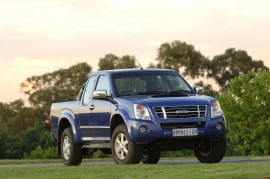
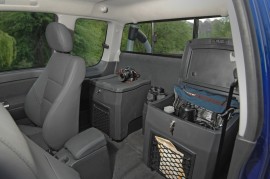
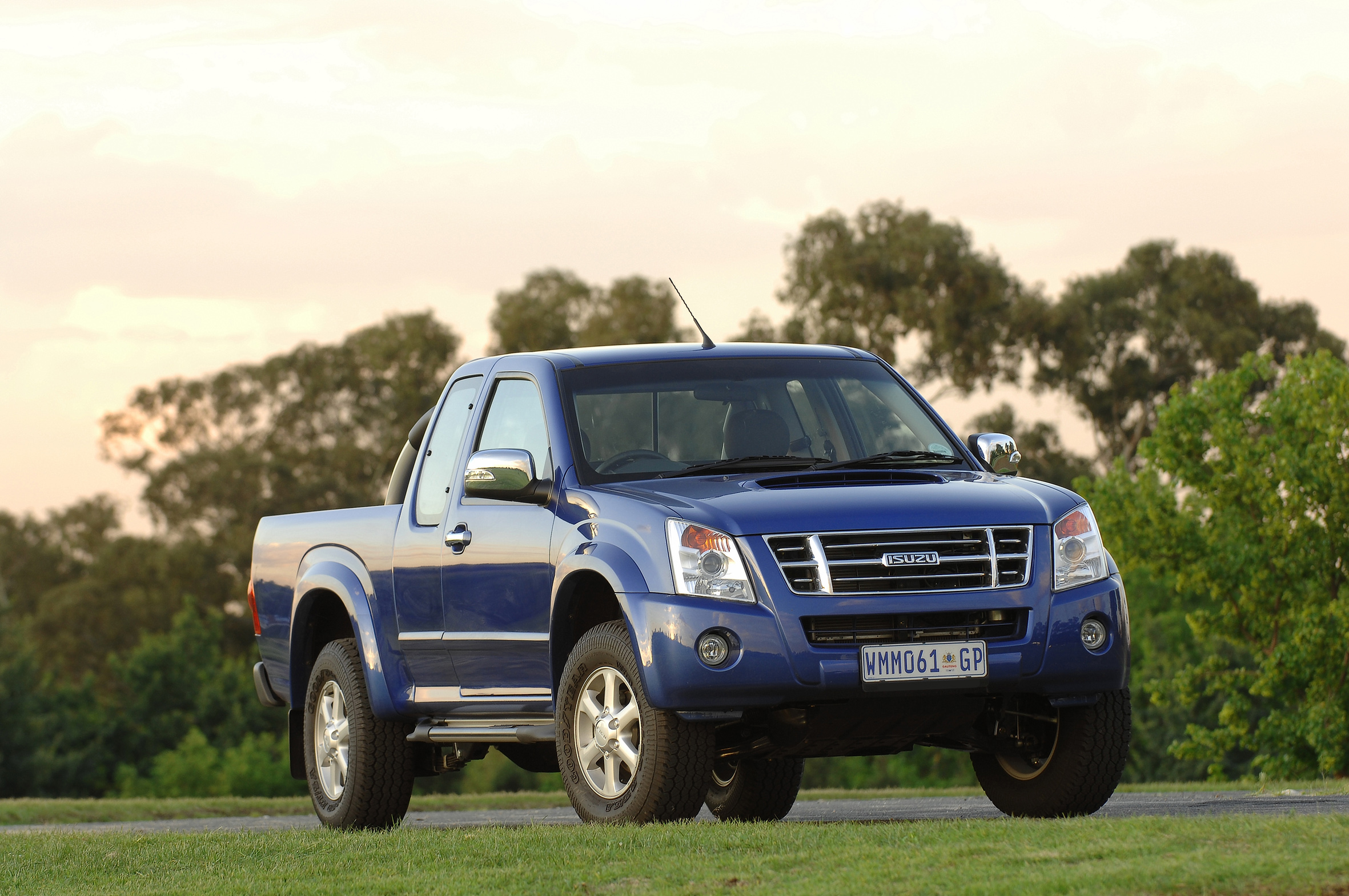
Research showed that an opportunity to grow Isuzu’s penetration in the one-ton market presented itself with an increased level of interest in extended cab models. The extended cab format offers more secure interior utility space, and in the case of our Isuzu KB extended cab models, user friendly lockable load bins, balanced with a well-sized load box.
The Isuzu KB Extended Cab is offered with a choice of three derivatives, all 4X2 models based on the high-ride chassis configuration with torsion bar front suspension. The choice of models is the LE specification level with the new D-TEQ 250 2,5-litre common rail diesel engine.
The 2,5 litre D-TEQ 250 engine produces 85kW@3600r/min with maximum torque of 280Nm@1800-2200r/min. This engine has a radiator-mounted intercooler. The compression ratio is 18.3:1.
A number of styling and specification changes have also been made across the Isuzu KB range at this time. These include new front bumper styling across the range; a new ‘lattice’ type radiator grille; new front end treatment with revised hood, fender and headlight styling; revisions to the outer side panels and tailgate of the load box on double cab models; restyled running boards on LX derivatives and a new rear step bumper on LE and LX models.
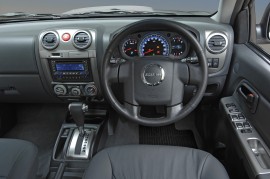
ABS are now standard on all LE specification models. SRS airbag protection is also standard for the driver and passenger on all LE specification and up models. A five-year/120 000km warranty and roadside assistance, five-year/90 000km service plan is included in the purchase price of all new Isuzu KBs. Service intervals of both petrol and diesel models is 15 000 kilometres or 12 months.