Why books still beat digital readers
Digital books have just never really caught up to their printed grandfathers
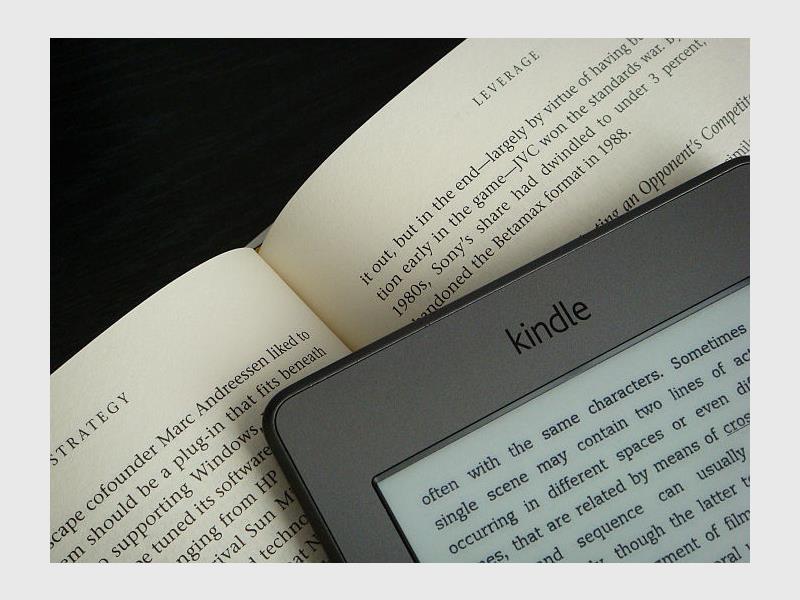
MBOMBELA – When the audio cassette came out in the early ’60s, everyone was convinced that with it came the end of vinyl. Today, billions of cassettes and CDs later, vinyl is back on the shelves and fetching prices double that of CDs.
In much the same way people were sure that printed magazines, newspapers and books were destined to solitude in archives and museums when first the Internet and later Kindle were introduced.
Statistics, however, paint a much different picture as digital books have just never really caught up to their printed grandfathers.
According to PwC Entertainment and Media Outlook: 2015-2019, printed books were expected to fetch a total consumer income of over R1,4 billion in 2015 while digital books only managed to do about R78 million. Projections for 2019 indicate that digital books will gain remarkable momentum with a major percentage growth and expected revenue of R229 million. Printed-book revenue is not expected to grow over the next four years but will still hold the majority of the market by a large percentage. The Media Outlook attributes the lack of growth in printed-book revenue to a couple of basic dilemmas South Africa faces.
“With 11 official languages and issues around literacy, the South African book market is not without challenges. The most commonly spoken language in South Africa is isiZulu, but English and Afrikaans are the most commonly used languages for books.”

Why books continue to dominate the market
Although digital books are showing much greater growth than printed ones, at the current rate it will take many decades before digital become a real force to reckon with.
Scientist have done much research over the past few years to try and discover why so many readers still prefer traditional printed books to digital alternatives. Many seem to agree that even though the reader might not realise it consciously, the way we read digital copy is inevitably very different from the way we read books.
Ferris Jabr bublished an article, “The Reading Brain in the Digital Age: The Science of Paper versus Screens, in Scientific America”, which highlights some of these differences. According to Jabr, recent studies conclude that people understand what they read on paper more thoroughly than what they read on screens. Also, immediate reading comprehension and especially long-term memory is better with books.
Jabr concludes his article by stating that, “When it comes to intensively reading long pieces of plain text, paper and ink may still have the advantage.”
Examiner.com also asserts that digital readers have some very distinct disadvantages. They have to be plugged in or charged. Some of them have display issues in very bright or dark lighting and they are not as robust as books, requiring special care. And finally, for many, digital readers just simply don’t smell like a book or feel like one, and that is not something you can digitise.