Vulture will soon return to the sky
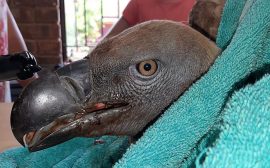
Another endangered Cape vulture has been poisoned. Two week ago Eddie van Niekerk was driving on the Ohrigstad Road near Vlakfontein when he noticed the vulture beside the road.
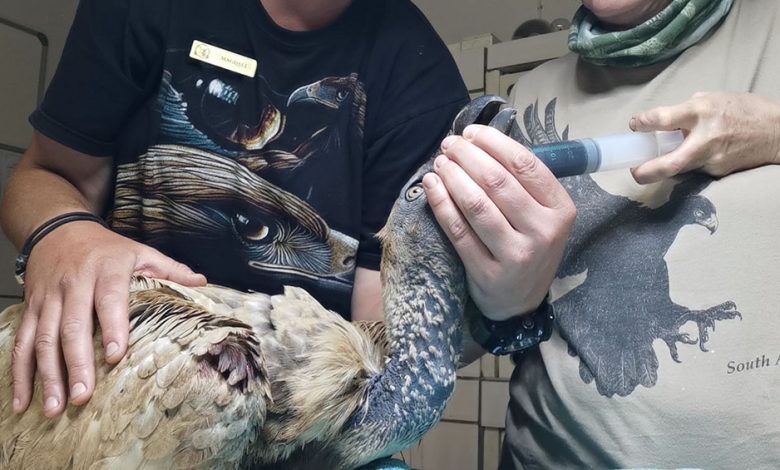
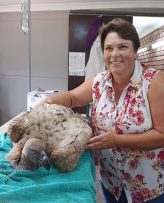
When Van Niekerk approached her she tried to fly away, but she quickly collapsed. He took the bird to his property and put her in an enclosure so she could be monitored. When the vulture started vomiting he rushed her to a local veterinarian, Dr Marietjie Malan, at Longtom Animal Clinic. She and her team stabilised the bird.
“The female Cape vulture was vomiting (rotten meat), had partial paralysis and weakness. I suspect organophosphate or carbonate poison was used. The bird was treated orally with poison binding agents and several other drugs, like atropine, that acts against the poison. After two to three hours she was able to stand and had stopped vomiting. We were able to handle her with a towel and she didn’t even resist us. These vultures are usually not easy patients,” said Malan.
Also read: Flood waters invades town
Dullstroom Bird of Prey and Rehabilitation Centre was contacted and it collected the vulture that same evening. The bird has her own enclosure now and is recovering well. The manager of Dullstroom Bird of Prey and Rehabilitation Centre, Frith Douglas, said the vulture had been very weak and only weighed 8,8 kilograms.
“As with any cases of poisoning the first 24 to 48 hours are critical. We administered medication and fluids every four hours until the vomiting had subsided and only then did we start introducing small amounts of meat. Recovery was slow, but she has built up good strength. We have now transferred her to our large vulture enclosure to build up fitness. “We are waiting for a tracking device that the Endangered Wildlife Trust has sourced for us. It will come and fit it and in collaboration with it, we will release her at a suitable location. It is very important, especially in an endangered species like this, to do as much monitoring as possible as the data obtained can be used to help conserve this amazing species,” said Douglas.
Poisoning accounted for the death of 1 440 of vultures in southern Africa last year. These birds are poisoned for the use of their body parts in traditional medicine. “We do not often get called out for vultures, so of the cases we have dealt with I can say 50 per cent are poisonings and 50 per cent are wing injuries. We also see quite a number of deaths due to electrocution. As was ascertained with this case, she must have been poisoned as a lone bird or she flew a vast distance from the poisoning site,” Douglas continued.
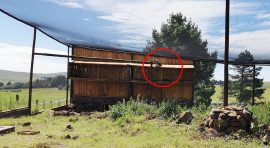
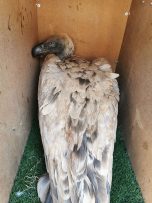
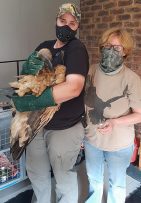
The vulture populations are drastically declining. The Wildlife Act states on its website that of the six vulture species that occur in South Africa, all are either endangered or critically endangered: White-headed vulture (Trigonoceps occipitalis): critically endangered, white-backed vulture (Gyps africanus): critically endangered, lappet-faced vulture (Torgos tracheliotos): endangered, hooded vulture (Necrosyrtes onachus): critically endangered, Cape vulture (Gyps coprotheres): endangered, bearded vulture (Gypaetus barbatus): critically endangered.
Douglas said the past year has been extremely difficult for the centre. “We were closed for five months and so it was just the two managers and one staff member who remained on site to take care of the birds. As our income solely comes for donations, visitors, sponsors and experience days, we had a hard time keeping afloat.
Things are improving slightly, but we can definitely see a major decrease in visitors,” she continued. A sad development is that three African raptors, the secretary bird, martial eagle and bateleur, are also now on the endangered red list of the International Union for Conservation of Nature.
Also read: TCLM: Provincial government requested to intervene