


With the end of the Koleos, the Captur, for now, becomes Renault South Africa's flagship SUV.
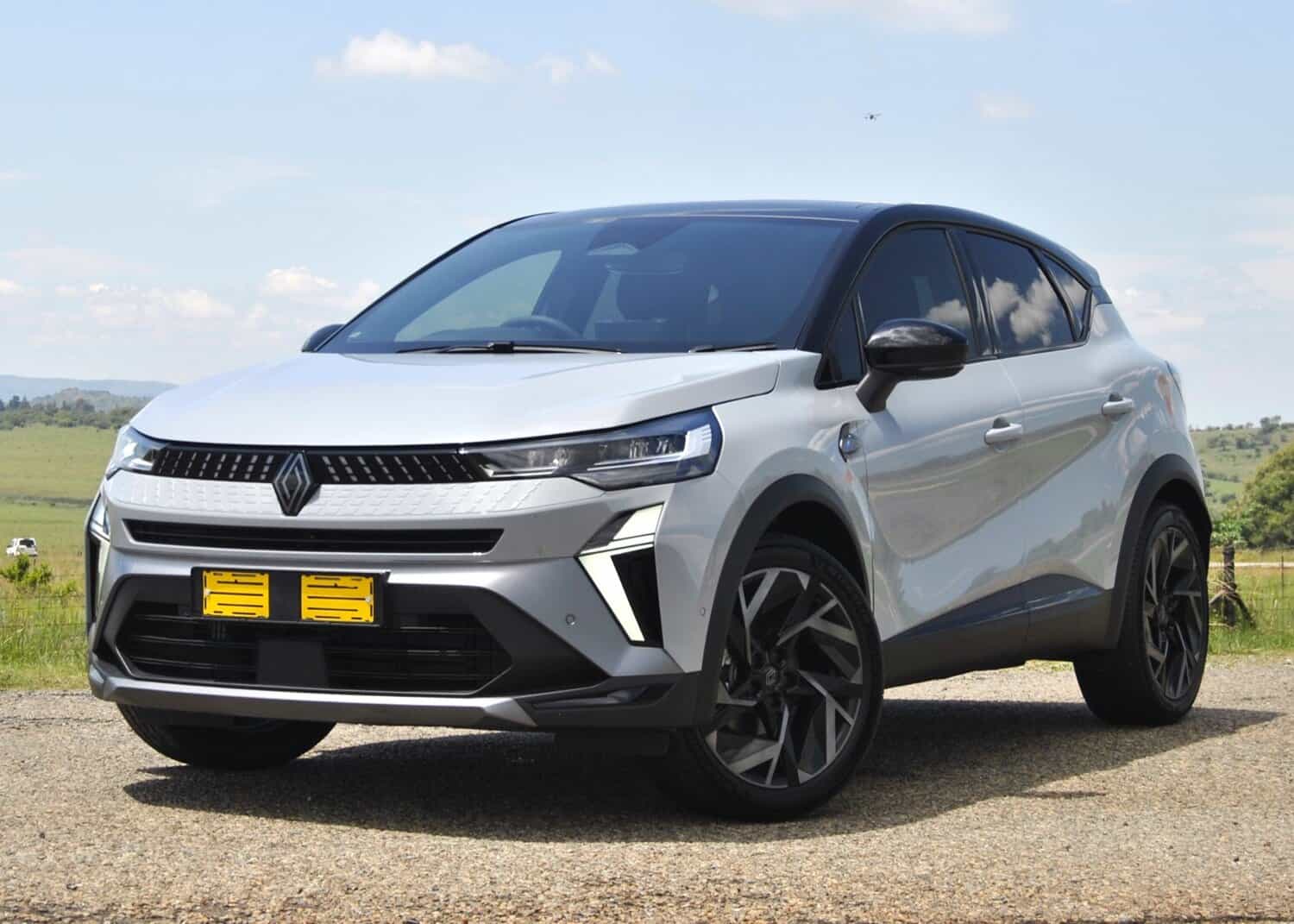
Replacing the Clio, the Captur comes with a completely new frontal design. Images: Charl Bosch


With the sixth generation Clio, for the moment, ruled out for South Africa, the Renault Captur becomes the rhombus’ flagship model following the removal of the Koleos from its line-up earlier this year
Ambitious
A key model for Renault that has amassed global sales of more than two million units since the first generation left the Valladolid plant in Spain 12 years ago, the Captur has also been a seminal product in South Africa since arriving in 2015.
ALSO READ: December launch date penned-in for facelift Renault Captur
Responsible for re-shaping Renault’s local operations and brand perception alongside the fourth generation Clio, it has since morphed into a more premium B-segment crossover with lower-end C-segment ambitions.
An important model
Having, however, seen its market share steadily decline by the influx of Chinese offerings, the arrival of the updated second generation this week represents a pivotal moment for the brand as part of its product offensive started with the reworked Triber two months ago.
Expanded to include the facelift Kiger last month, the revisions to the Captur mark the first for Renault’s premium products until now reserved for its entry-level range.
Forming part of a three-model SUV line-up headed until now comprising the Kiger and Duster, the Captur’s launch sees it arrive just over a year after premiering in Europe, and in contrast to the four-year gap between the pre-facelift’s debut on the Old Continent and then South Africa.
Trim level change
Similar to the Triber and Kiger, the Captur’s changes are more than skin deep, as it now also conforms to Renault’s new nomenclature policy.
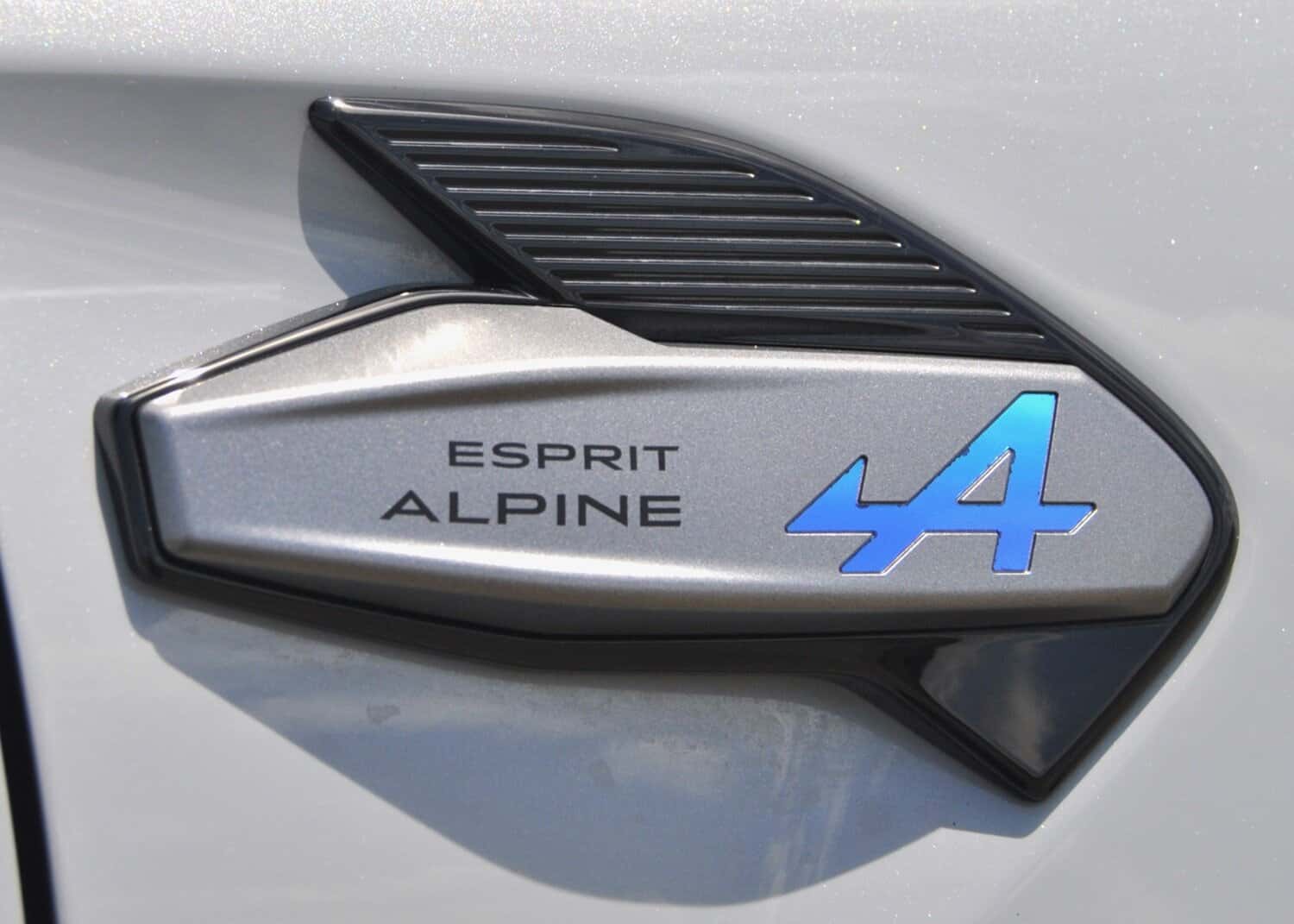
As such, the Zen and Intens grades make way for Techno and Iconic, with a new addition being the Esprit Alpine (pr: es-pree el-peen) that replaces the R.S. Line South Africans never had access to.
Although the first time for the Alpine name in South Africa, Renault executives were quick to point out that this won’t serve as a catalyst for bringing the brand itself to market anytime soon.
Unchanged powertrain
The same applies to a second hybrid powertrain under the E-Tech name after the mild-hybrid Duster, however, an investigation into making it available has been initiated.
As such, the Captur range now consists of three derivatives, all once again powered by the 1.3-litre turbocharged petrol engine co-developed with Daimler.
Pumping out an unchanged 113kW/270Nm, drive is again routed to the front wheels through the seven-speed EDC or Efficient Dual Clutch transmission.
Stretching from Johannesburg to as far as Hartbeespoort, only the Esprit Alpine was made available on the launch drive, which itself proved a surprise and different from the Intens that formed part of The Citizen‘s long-term test fleet two years ago.
Even more good-looking
Mirroring the changes of the aviation tribute paying Rafale, the Captur’s aggressive and much more eye-catching makeover consists of a new bonnet, a slimmer grille complete with Renault’s new Nouvel’R diamond logo, and smaller LED headlights.
Along with a restyled bumper and skidplate, the lower air intake has been redesigned and the LED fog lamps draped down side the bumper in a half diamond shaped tribute to the Renault badge.
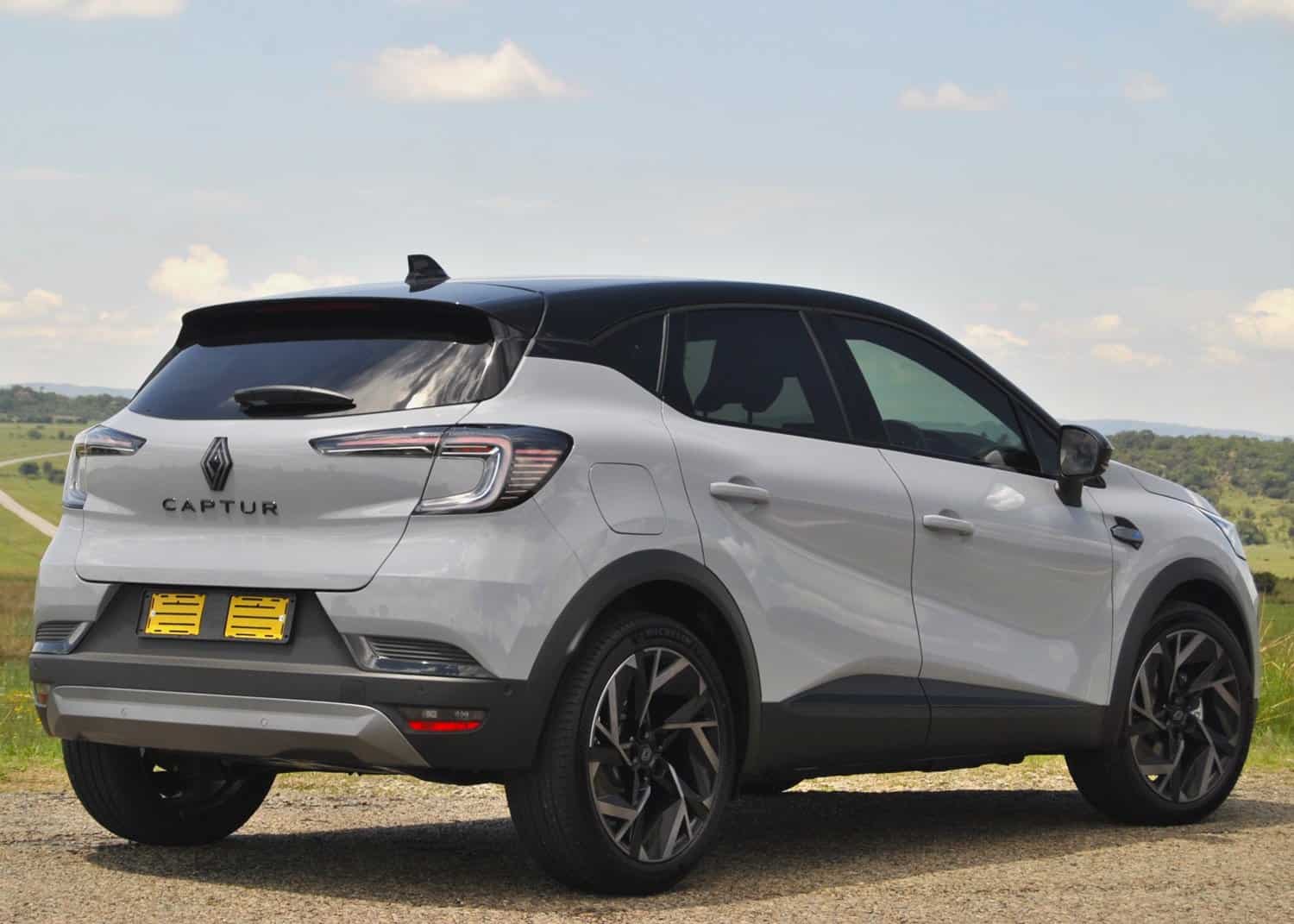
At the rear, Renault has fitted what it calls transparent clusters for the C-shaped lights, a new bumper and skidplate, and the Nouvel’R logo in the centre of the bootlid.
Unique to the Esprit Alpine are black Renault and Captur logos, Esprit Alpine badging on the front wings, model specific door sills and Esprit Alpine bumpers with Slate Grey detailing.
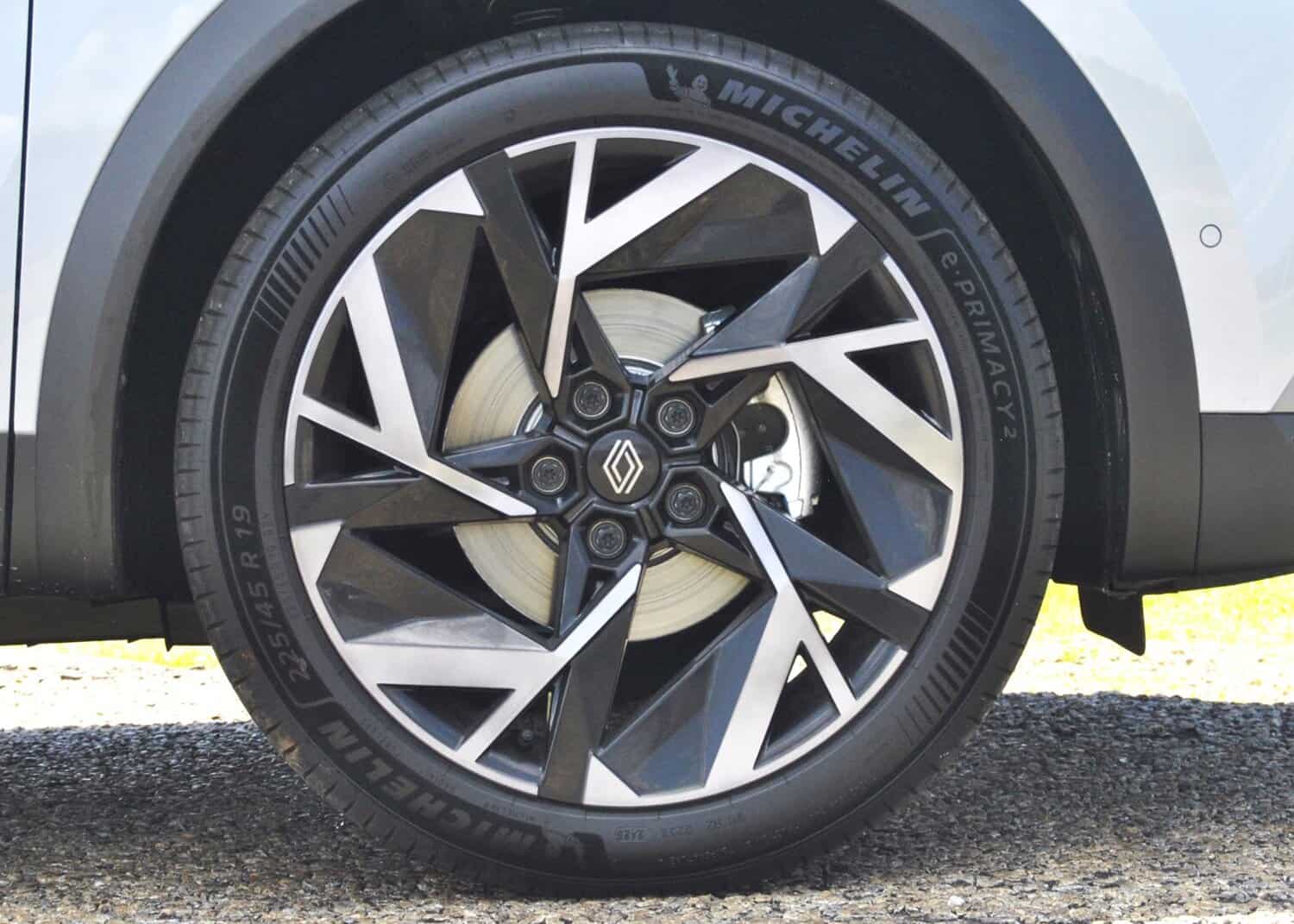
Based on the trim grade, all three variants ride on different-sized alloy wheels: 17-inches for the Techno, 18-inch gloss black for the Iconic and 19-inch dual-tones for the Esprit Alpine.
Completing the exterior are five metallic colours, though without a mono-tone option as Renault has opted for a black roof and mirror caps across the entire range.
The contrasting body colour hues available are Urban Grey, Arctic White, Oyster Grey, Passion Red and the Esprit Alpine exclusive Iron Blue.
New look inside
Inside, the Captur’s new interior accommodations involve a restyled floating centre console and lack of any leather upholstery replaced by materials made entirely from recycled fabrics.
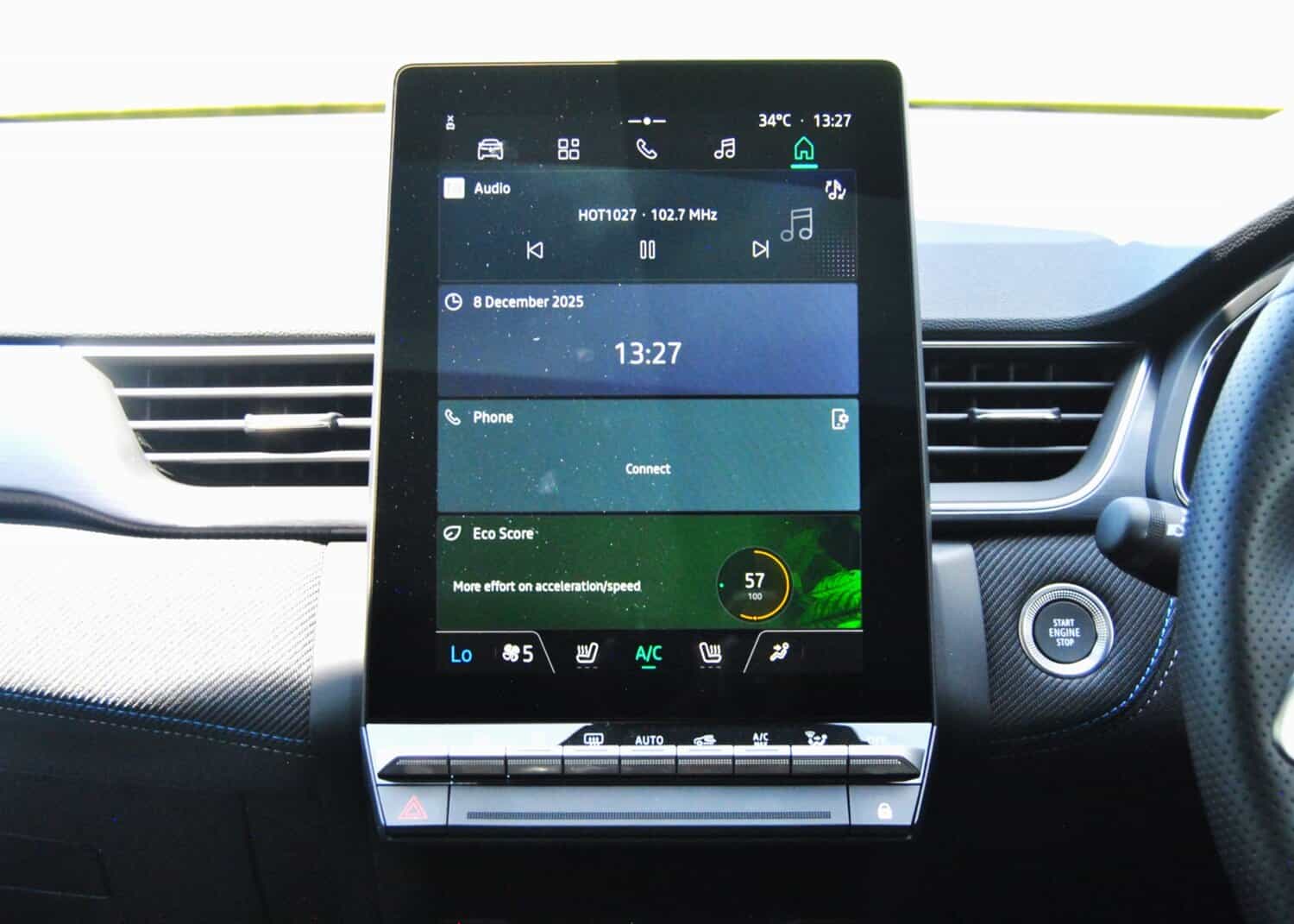
While available with the new 10.25-inch instrument cluster in Europe, a revised version of the pre-facelift model’s seven-inch has been selected, however, the new Google co-developed 10.4-inch infotainment system with Apple CarPlay and Android Auto replaces the old 9.3-inch on all three variants.
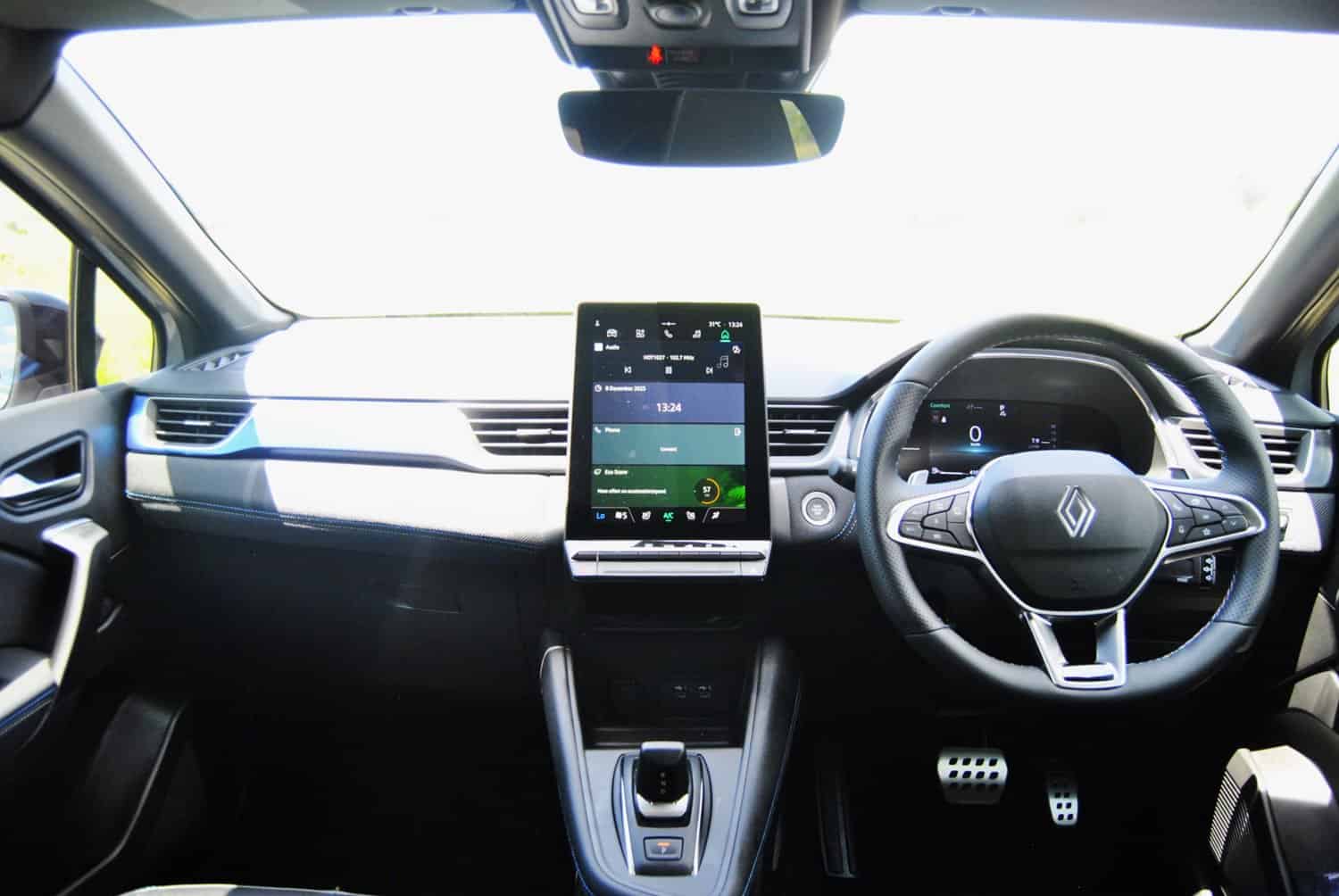
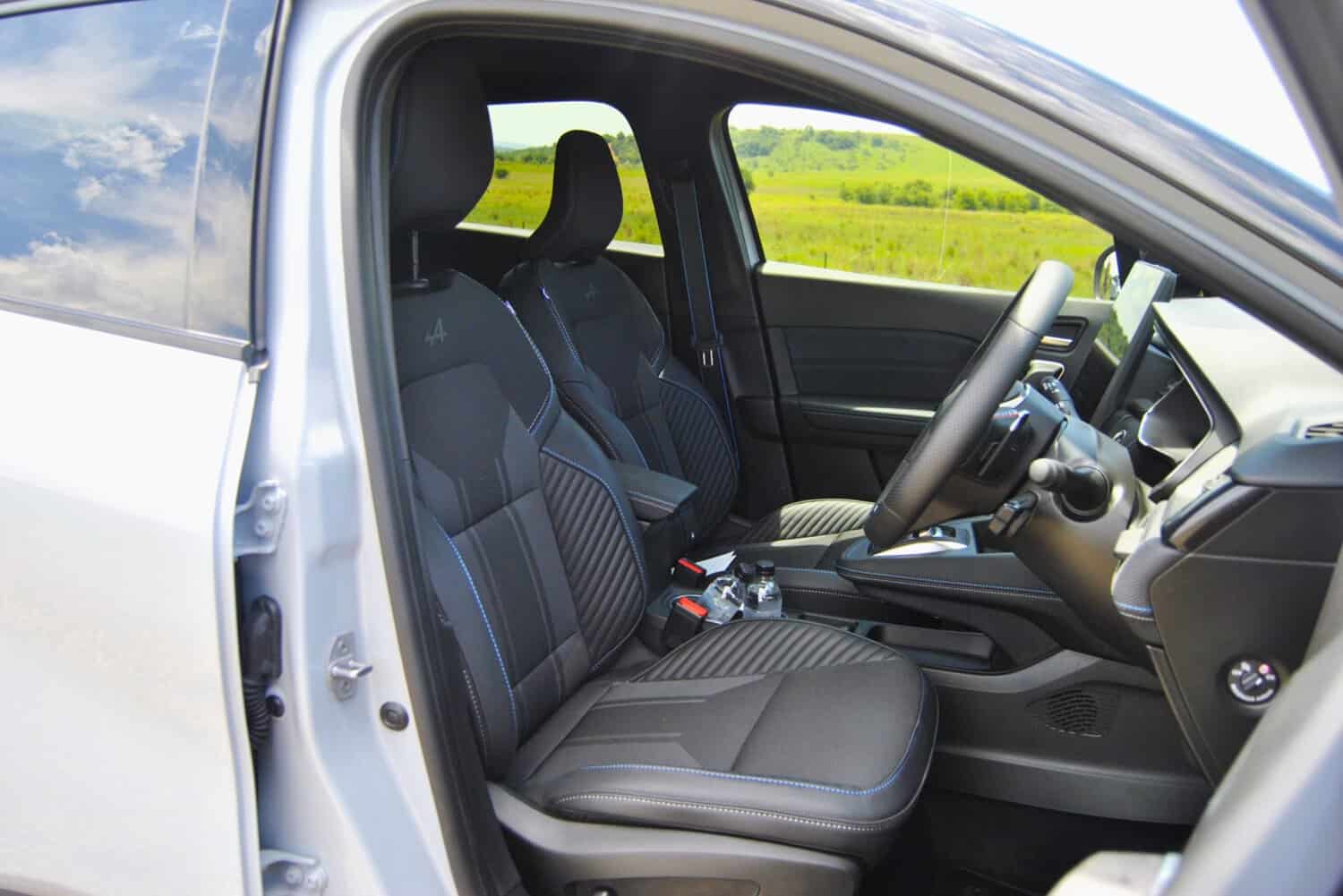
For the Esprit Alpine, alloy pedals have been included, as has blue-and-white stitch work, textured and grained fabric seats with the Alpine logo on the seatbacks, Alpine branding on the door sills and steering wheel, the French tricolour on the seats and blue decorative dashboard inserts that fade to grey.
Although dimensionally unchanged, the Captur now offers more boot space, ranging from 686-litres to 1 596-litres with the rear seats folded down.
Spec
On the specification front, the deletion of the mentioned instrument cluster has been expanded to include the nine-speaker Harman Kardon sound system, Adaptive Cruise Control, ambient lighting and a number of other driver assistance systems.
Besides the items already mentioned, the Techno comes equipped with:
- auto on/off headlights;
- height-adjustable driver’s seat;
- rain sense wipers;
- gear shift paddles;
- six-speaker Arkamys sound system;
- dual type-C USB ports at the front;
- push-button start
- cruise control;
- tyre pressure monitor;
- rear parking sensors;
- reverse camera;
- Hill Start Assist.
Stepping up to the Iconic adds dual-zone climate control in place of the Techno’s manual air-conditioning, height adjustability for the passenger’s seat, a pair of rear USB ports, a wireless smartphone charger and a false boot floor.
Gloss black exterior trim, grey decorative inserts, front parking sensors, folding electric mirrors and the Multi Sense drive selector with four modes, Eco, Normal, Sport and Perso round the Iconic off.
For the Esprit Alpine, a new toggle switch gear selector replaces the conventional e-shifter, and a 360-degree surround-view camera the normal reverse camera.
Included further are:
- heated front seats;
- panoramic sunroof;
- electrically adjustable driver’s seat;
- Rear Cross Traffic Alert
- Blind Spot Monitoring
The drive
At a shade over 136 km, the launch route showed a number of limitations to the cabin not encountered with our previous long-termer.
Appearing smaller despite its increased size, the 10.4-inch is still relatively easy to use, and comes with physical switches in the form of pin-tipped buttons for the climate control at its base.
Seat comfort is snug, however, the passenger’s side chair felt more restrictive, not helped by a lack of adjustability allowing it to be dropped right down to the floor.
What’s more, the interior isn’t as spacious, for some reason, as the pre-facelift Captur, though material quality has improved, as has the tactile feel of the new steering wheel and metal effect paddle shifters.
Rear legroom, meanwhile, also varies from acceptable to cramped, while headroom is still hindered by the recess of the panoramic roof.
Markedly different is the Captur’s dynamics. Although Renault didn’t disclose whether the Esprit Alpine’s chassis has been tweaked, this, together with the 19-inch wheels, made for a tauter and sportier but also unsurprisingly firm ride the comfort-focused Techno and Iconic are likely to both lack.
By the same token, regardless of whether in Normal or Sport modes, the turbo spools up a lot quicker than before, not only aiding responsiveness, but making the Esprit Alpine feel more involving and as sporty as its nomenclature implies.
Similarly, the seven-speed EDC shifts a trifle better, but still not as slick as a dual-clutch setup needs to be. However, it behaves better when resorting to the much better feeling paddles.
Conclusion
Improved aesthetically and, seemingly by stealth, dynamically, the facelift Renault Captur remains a competent and engaging package that feels more substantial if not as spacious as before.
Benchmarked as a rival for the Volkswagen T-Cross and Mazda CX-3 among other legacy brands, its biggest hurdle not only involves the various offerings from the People’s Republic, but a dramatically higher price tag starting at well over R500 000.
More than R300 000 than the original’s R219 900 starting price a decade ago, the Captur is unlikely to be an easy sell in improving on the 12 000 units Renault South Africa has sold since 2015.
Premium and a riot to drive nonetheless, it still makes for a more than accomplished left-field option if heading the Chinese route is an absolute no-go.
Price
Included with the Captur’s price tag is a five-year/150 000 km warranty plus a three-year/45 000 km service plan.
- Captur 1.3 TCe Techno EDC – R515 999
- Captur 1.3 TCe Iconic EDC – R544 999
- Captur 1.3 TCe Esprit Alpine EDC – R614 999
NOW READ: Renault Captur smartened-up with new suit and improved tech
Support Local Journalism
Add The Citizen as a Preferred Source on Google and follow us on Google News to see more of our trusted reporting in Google News and Top Stories.

