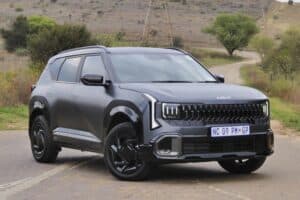
Uncover the significance of the Ford Territory in today's competitive auto market, influenced by rising Chinese car brands.
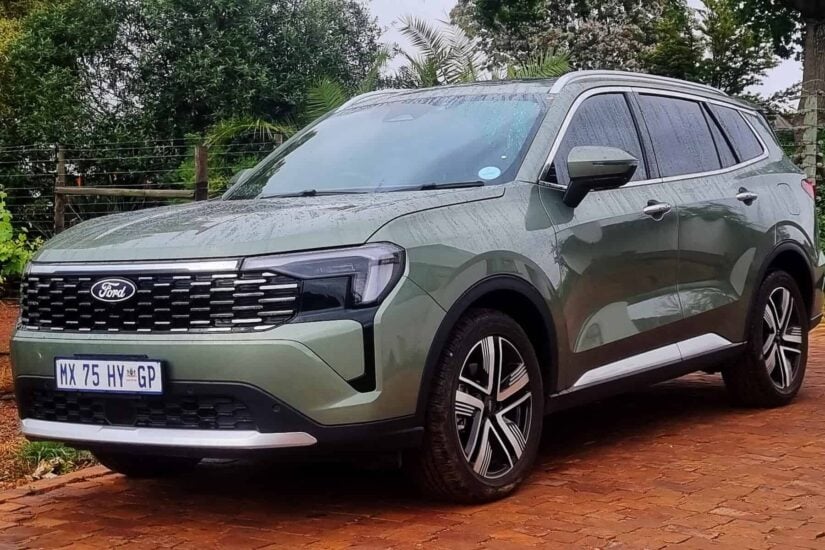
The Ford Territory combines modern SUV styling with family-friendly practicality, making it a versatile companion for everyday driving and weekend adventures. Picture: Jim Freeman


If you can’t beat them, the saying goes, join them. Given the recent flood of Chinese vehicles onto the world’s auto markets, as well as their ensuing popularity, some “legacy” manufacturers are running scared.
Chinese cars are inexpensive and are increasingly proving to be good value for money in terms of build and technology.
Ford looks east
It was therefore hardly surprising that a somewhat beleaguered Ford cast its glance eastwards in the ’90s and bought a significant shareholding in the little-known Jiangling Motor Corporation (JMC).
In doing so, Ford was following in the footsteps of its great American rival, General Motors, which had established a joint venture with SAIC Motor (owners since 2007 of the once-iconic British marque MG) a few years before.
JMC and Ford started production of their first joint product, the Ford-designed Transit van, in 1997. JMC supplied key components such as engines and axles.
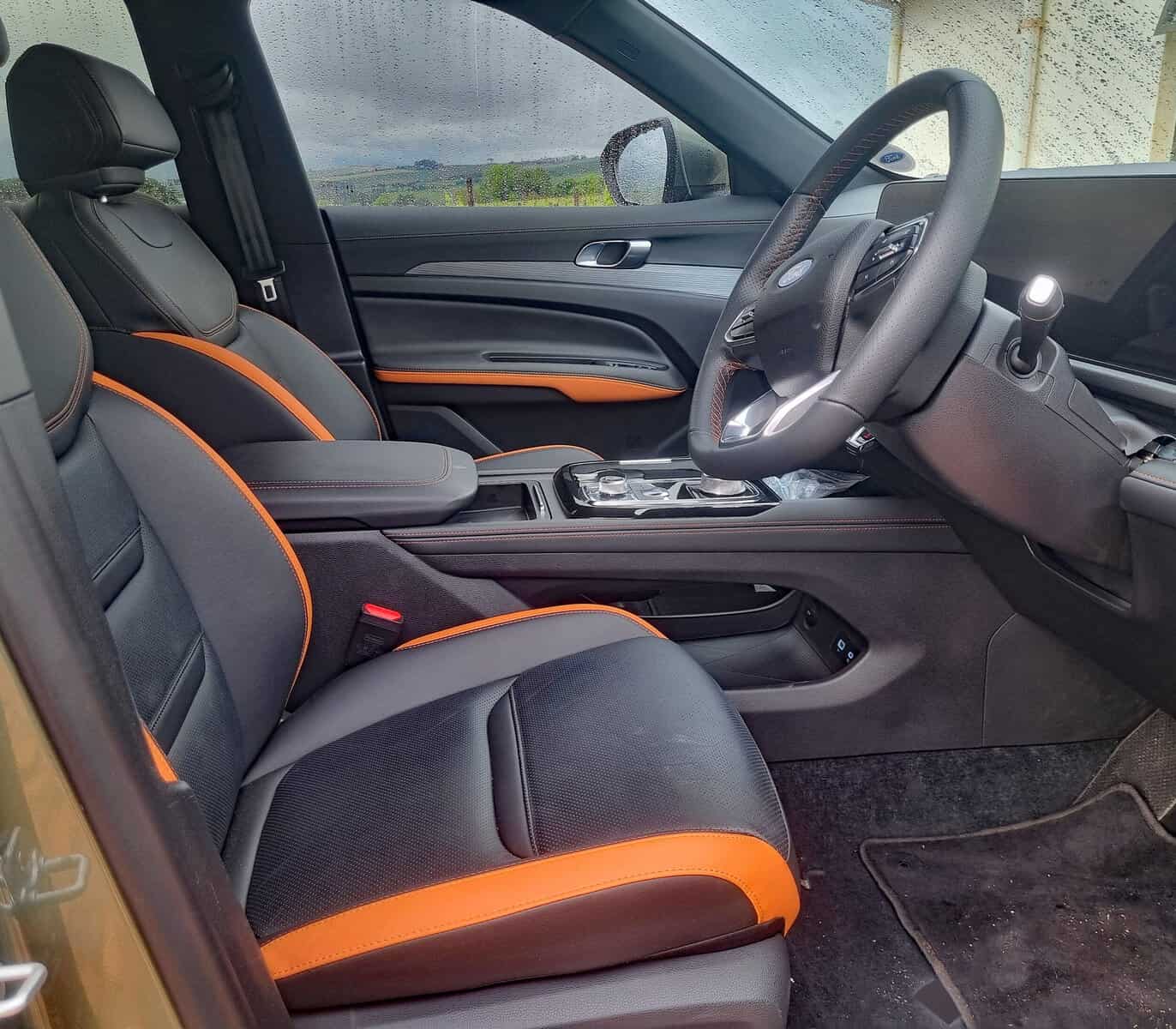
A second JV, Jiangling Ford Motor Technology (JFMT), was set up in 2021 and focused on producing passenger vehicles. These included the Ford Equator Sport, which is sold in South Africa as the Territory.
According to the Ford Motor Company of Southern Africa, “Ford led the Territory’s design through the Ford Design Studio in Melbourne, Australia, and Shanghai, China”. Testing and development took place in both countries.
“Ford today holds an approximately 32% holding in [JMC]. This enduring partnership combines Ford’s global engineering, design and vehicle-development capabilities with JMC’s manufacturing expertise in China.”
Three models, three price points
The new three-model Territory series of mid-sized sports utility vehicles ranges in price from R534 900 for the entry level Ambiente, through R584 900 (Trend) to R643 900 for the flagship Titanium.
That’s a heck of a price variance for three SUVs that are not only visually indistinguishable from one another but also feature the same 1.8l EcoBoost turbocharged, direct-injection petrol engines and seven-speed automatic gearboxes.
Peak performance figures are identical: 138kW@5 200rpm (power) and 318Nm@1 750-3 000rpm (torque).
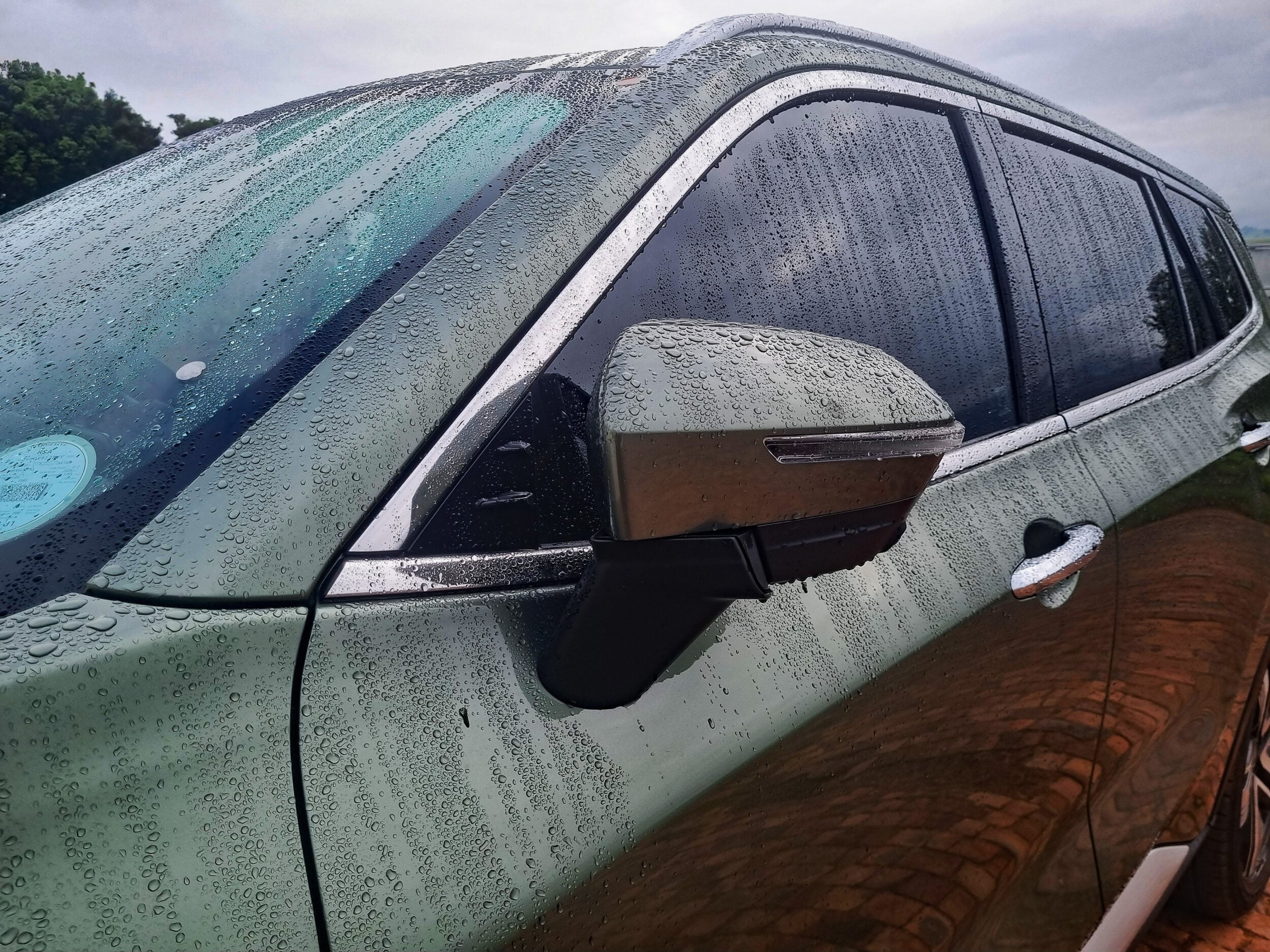
The difference lies in the levels of luxury, driver aids and safety features, with the “Oasis Green” Titanium I test drove being comfort-specced to the max with heated leather seats and multi-colour interior ambient lighting.
Standard features include an anti-lock braking system (ABS), brake assist, collision warning and auto braking, traction and stability control, and lane change and blind spot warning.
Altogether, driving the Ford Territory was a very pleasant experience.
Who is the Territory competing against?
However, I kept asking myself what Ford has actually achieved through its strategic partnership with JMC?
It is difficult to identify the Territory’s direct competition: names that spring to mind are Toyota’s RAV4 and Corolla Cross, Haval H6, Jaecoo J7, Chery Tiggo 7 and 8 Pro, Kia Sportage and Hyundai Tucson.
While there are similarities, there are also significant differences, mainly in terms of engine size and cost.
First, it’s necessary to compare like with like. Territory is petrol-driven and consequently one must ignore diesel and hybrid models, or those that come with four-wheel-drive.
Engine size and pricing matter
The Territory’s engine is larger than those of the Jaecoo, Kia, Corolla Cross and Tiggo 7 (all 1.6ℓ) but smaller than RAV4, Haval H6, Tiggo 8 Pro and the Tucson – all 2.0ℓ.
It is only against the 1.6 Kia Sportage, Tiggo 8 Pro and RAV4 2.0VX that the Territory really competes on price, with the South Korean coming in at between R738 995 and R823 995.
The Chery sells at between R669 900 and R729 900 but, to be honest, it is superior to the Ford is every aspect.
Toyota’s only petrol-driven variant of the RAV4, sells at R799 900.
The Toyota Corolla Cross’ petrol variants are also 1.8ℓ but the genre is cross-over rather than SUV.
The most expensive version of the Cross is nonetheless R16 500 cheaper than the Territory Ambiente.
Ford will always have its South African devotees but I question whether a rather over-priced, charisma-shy SUV will wangle its way into our hearts.