
Gauteng residents face dark days under identity-based coalitions, warns analyst
As political parties scramble for control of hung councils, power plays, postponed meetings and controversial coalition negotiations are raising questions about municipal stability and service delivery.
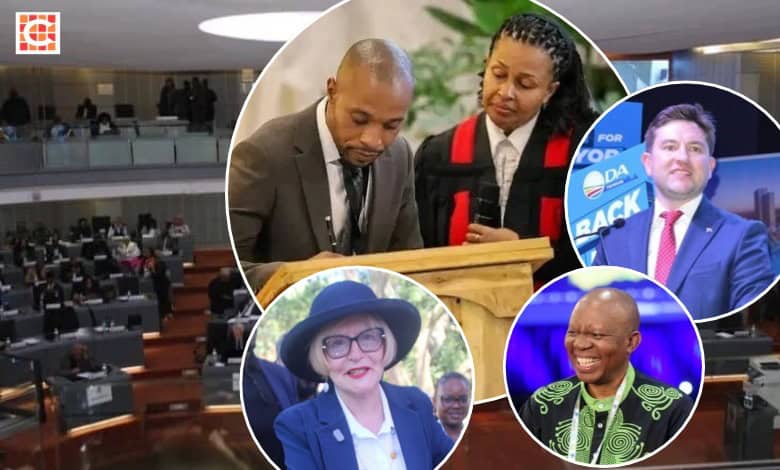
Since the November 4 local government elections, South Africa’s political landscape has been marked by power plays, arguments and increasingly complicated negotiations.
Over the past two weeks, political parties have been manoeuvring for positions and negotiating alliances in a contest that could determine who controls some of the country’s most important municipalities for the next five years.
Tomorrow (November 27) is D-day for several municipalities. Councils have 14 days from the declaration of the 2026 election results to constitute themselves and elect their leadership, making Friday the final day for this process. While some councils are expected to elect their new leadership, others have postponed crucial meetings as negotiations remain deadlocked.
For residents, the outcome will affect municipalities responsible for providing water, electricity and sanitation, maintaining roads and managing public finances.
André Duvenhage, political analyst and professor at North-West University, warns that Gauteng residents could face particularly difficult years if the emerging political arrangements fail to produce stable administrations.
He believes some proposed alliances bring together parties with fundamentally different political interests, histories and ideological positions.
“The battle is therefore not simply about who gets the mayoral chain. It is about who will have the political authority to make decisions, who will control municipal resources and whether the resulting administrations will survive the competing ambitions of their coalition partners,” says Duvenhage.
Gauteng’s 3 biggest metros: Battle for control
The most consequential contest is unfolding in Gauteng’s three metropolitan municipalities, where the DA emerged as the largest party in Johannesburg, Tshwane and Ekurhuleni but failed to secure an outright majority.
ActionSA leader Herman Mashaba has consequently become a key figure in the negotiations, with his party holding enough seats to influence which political formations take control.
The DA proposed sharing control of the three metros with ActionSA. Under the proposal, former DA federal chairperson Helen Zille would lead Johannesburg, ActionSA’s Dr Nasiphi Moya would remain mayor of Tshwane and the DA would take the mayoral position in Ekurhuleni, reported The Citizen on November 21.
However, the proposal has not produced the breakthrough the DA wanted.
ActionSA has instead been negotiating with the ANC and other political formations, with the possibility of an ANC–ActionSA arrangement emerging in all three metros.
The proposed arrangement would see ActionSA taking the mayoralty in Johannesburg and Tshwane, while the ANC would take the mayoralty in Ekurhuleni.
Mashaba says the ANC still needs final approval from its national executive committee.
Duvenhage argues that the DA must recognise the realities of proportional representation.
“You can be the largest party, but in a democracy that means very little if you do not have 50% plus one.”
Without an outright majority, a party must negotiate with other political formations and secure sufficient support to govern. The point is that you did not get a majority. If you are in a minority, you cannot impose your will absolutely.”
However, Duvenhage says political perceptions, particularly those relating to race and identity, continue to influence parties’ willingness to work together.
“Politics does not work with truths and realities alone. It works with perceptions.”
He points out that the DA received approximately one million votes from black voters, challenging the perception that it is exclusively a white political formation.
Mashaba: Kingmaker or political opportunist?
Much of the public attention has centred on Mashaba and how far ActionSA is prepared to use its bargaining position to secure political influence.
Duvenhage describes this as the kingmaker phenomenon.
“He holds the trump card because he can determine whether the ANC or the DA takes control of a municipality.”
He believes Mashaba is using this position to extract the greatest possible political advantage from the negotiations.
“It is a form of political opportunism, and I have little doubt that he is overplaying his hand.”
Duvenhage questions whether ActionSA has the organisational and political capacity to manage a governing arrangement involving parties with substantially different interests.
“These are not easy alliance partners. You are trying to bring together a group of very difficult political interests, and that is likely to lead to instability.”
Ekurhuleni: Leadership election postponed
In Ekurhuleni, newly elected councillors were sworn in on Wednesday (November 25), but the election of the speaker, chief whip and executive mayor was postponed until tomorrow (November 27).
The DA emerged as the largest party in the 224-seat council with 66 seats. The ANC secured 59 seats and ActionSA 40. An outright majority requires 113 seats.
DA mayoral candidate Khathutshelo Rasilingwane says her party is confident it is best positioned to lead the metro and confirmed that discussions with other parties are continuing.
However, Mashaba’s indication that ActionSA would not enter into a coalition with the DA has complicated negotiations, reported the Germiston City News.
Tshwane and Johannesburg: Who will govern?
In Tshwane, the 214-seat council requires 108 seats for a majority. The DA secured 74 seats, ActionSA 48 and the ANC 44.
Negotiations have centred on competing arrangements: An ANC-backed agreement that would retain Moya as mayor, and the DA’s proposal for broader co-operation across Gauteng’s hung councils.
Rekord reported that the ANC was weighing a proposed multiparty arrangement involving ActionSA, the EFF and MK Party.
Duvenhage believes the DA must consider whether an agreement with the ANC could protect its interests better than remaining in opposition. He also questions whether the proposed political groupings could manage the challenges facing the metros.
On Johannesburg’s leadership, he backs Zille as the most suitable candidate to lead the city’s rescue.
“With her controversy, her style and her methods, but also her track record, I believe Helen Zille is by far the most suitable candidate if there is to be a rescue of Johannesburg.”
Emfuleni: Chaos followed by another postponement
Developments in Emfuleni, Gauteng, have provided a dramatic example of how political disagreements can disrupt the establishment of a new council.
The inaugural council meeting at Vereeniging City Hall on Monday (November 23) descended into chaos before councillors could elect a speaker, executive mayor and chief whip.
Disagreements over a requested caucus break escalated into heated exchanges, singing and overturned tables. Police were eventually called to restore order, and the meeting was adjourned, reported Sedibeng Ster.
The DA announced an arrangement with smaller parties, including the FF+, Active Citizens of South Africa, the African Transformation Movement, Tau Dia Rora Cultural Lekgotla and Afrika Mayibuye Movement.
The DA holds 37 seats in the 90-seat council, while the ANC has 22. A majority requires 46 seats.
The meeting was postponed again today (November 26) after municipal manager April Ntuli submitted a medical certificate indicating that he would be off duty until Friday, reported Sedibeng Ster.
Mogale City: Leadership election postponed again
Mogale City in the West Rand District of Gauteng also failed to elect its new political leadership at a council meeting yesterday.
The 77-seat council requires 39 seats for a majority. The DA secured 27 seats and the ANC 23.
The meeting was postponed to tomorrow (November 27), after negotiations failed to produce an agreement, reported the Krugersdorp News.
JB Marks and Lesedi: Smaller parties hold the balance
In JB Marks Local Municipality in the North West, which includes Potchefstroom and Ventersdorp, the 67-seat council requires 34 seats for a majority.
The ANC secured 22 seats and the DA 21. The FF+ obtained six, while ActionSA and the EFF each secured five. Baagi has three seats, with the remaining seats distributed among smaller parties.
The inaugural council sitting was scheduled for today.
In an analysis published by the Potchefstroom Herald, political commentator Suliman Rajah questioned whether coalition negotiations would benefit residents or political kingmakers. He also raised concerns about a reported 25-year contract concluded by the outgoing administration.
In Gauteng’s Lesedi, which includes Heidelberg and Nigel, the election of the mayor and speaker was postponed to today after 17 councillors voted to adjourn the meeting so negotiations could continue, reported the Heidelberg Nigel Heraut.
The 26-seat council has nine ANC seats and seven DA seats. The MK Party secured three seats, EFF and FF+ each secured two, while ActionSA, the SACP and Bopa Sechaba each obtained one. The ANC, MK Party, EFF, ActionSA, SACP and Bopa Sechaba supported the adjournment, while the DA and FF+ opposed it.
Steve Tshwete: ANC secures the mayoralty
In contrast to the uncertainty elsewhere, Steve Tshwete Local Municipality in Mpumalanga has elected its new mayor.
The ANC’s Elphus Mathebula was elected on Tuesday (November 24) with 32 votes against 25 for the DA’s Bosman Grobler. The 58-seat council needs 30 votes for a majority, reported the Middelburg Observer.
The wider political consequences
The negotiations are unfolding against the backdrop of the ANC’s national coalition strategy. The party’s national executive committee has considered how it should engage other political formations and independent councillors in municipalities where it cannot govern alone.
Duvenhage identifies two broad possibilities: An ANC–DA understanding, or ANC-led arrangements involving parties such as ActionSA, the EFF and MK. He considers the latter more likely, although he does not rule out an agreement between the ANC and DA.
He warns that the consequences could extend beyond municipal government, particularly if tensions over coalition arrangements in Gauteng affect relationships within the national government of national unity.
Developments in KZN could also complicate the picture. Duvenhage believes the ANC may face pressure to accommodate the MK Party in eThekwini, potentially creating tensions with the existing provincial arrangement involving the ANC, DA, IFP and National Freedom Party.
“For municipalities, the immediate task is to establish councils and elect their political leadership. But securing enough votes to elect a mayor does not guarantee a stable administration.
“Coalition partners must still agree on budgets, municipal priorities, appointments and procurement, and maintain sufficient support to pass decisions,” argues Duvenhage.
Duvenhage contends that political compromises should not automatically be regarded as betrayals of voters. In some circumstances, he says, an agreement with a political opponent may be preferable to allowing another political formation to take control.
Breaking news at your fingertips… Follow Caxton Network News on Facebook and join our WhatsApp channel.
Nuus wat saakmaak. Volg Caxton Netwerk-nuus op Facebook en sluit aan by ons WhatsApp-kanaal.
Read original story on www.citizen.co.za