



Reduced rainfall and higher temperatures in Southern Africa could damage crops and livestock.
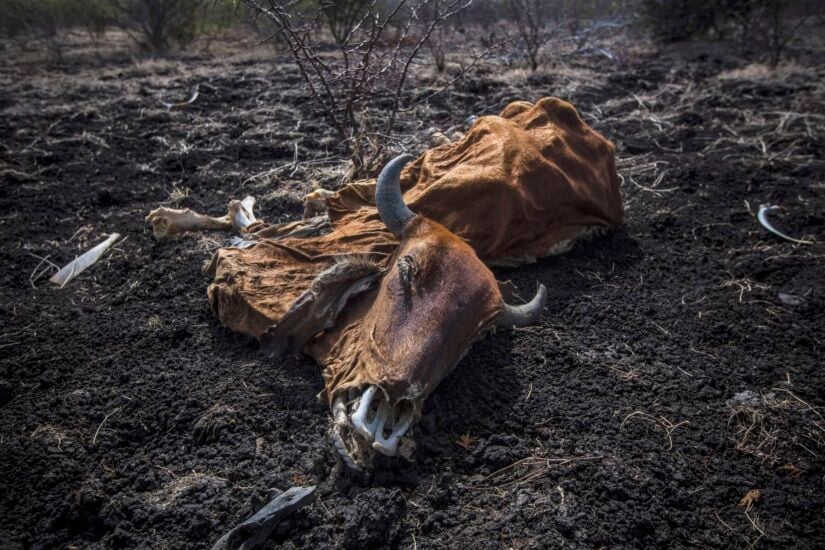
Crops and livestock face climate-induced stress due to looming El Niño conditions. Picture: Diana Ulloa / AFP


Africa faces a season of extreme heat, drought and flooding as forecasts show an unusually strong El Niño developing in the Pacific Ocean, with scientists warning of severe impacts on harvests, water supplies, public health and electricity generation.
El Niño
The United States’ National Oceanic and Atmospheric Administration (NOAA) has confirmed that El Niño is strengthening, with a greater than 90% chance of becoming a very strong event during the Northern Hemisphere autumn and winter of 2026/27.
NOAA places the probability of an event exceeding the strength of any El Niño recorded since 1950 at 69% between October and December.
Africa
For Africa, the threat will vary by region. Southern Africa is expected to face drought and extreme heat, while East Africa could experience excessive rainfall and flooding.
Dr Henno Havenga, climatologist at North‑West University, explained.
“El Niño develops when the central and eastern equatorial Pacific Ocean becomes unusually warm and the atmospheric circulation above it changes. These changes can influence weather patterns far beyond the Pacific through what we call teleconnections.”
Warning
He cautioned that drought does not strike suddenly but builds over time.
“Drought is a slow‑onset hazard. At first, we might not feel its effects, but it develops gradually, and that slow progression can catch us off guard.”
Agriculture and water
Reduced rainfall and higher temperatures in Southern Africa could damage crops and livestock. Havenga noted the particular vulnerability of small‑scale farmers.
“A small‑scale or subsistence farmer may lose both the food needed by the household and the produce normally sold to generate an income.”
“Reducing leaks and unnecessary losses from existing water infrastructure is one of the most practical interventions available to us,” Havenga said.
Wider impacts
Flooding in East Africa could damage infrastructure, contaminate water supplies and displace communities. Health services may face strain from heat, drought and waterborne diseases. Hydropower generation could decline if reservoirs fall, while demand for cooling rises.
Natural ecosystems may also struggle to recover.
“We cannot assume that every ecosystem will simply return to its previous state after a severe drought,” Havenga said.
Preparedness
Havenga urged governments to act before conditions worsen.
“The advantage we have is that advance warning systems have allowed us to talk about this event since May. We should use that warning to reduce our exposure and prepare for the possibility of a difficult season, rather than waiting until the drought is already established,” Havenga said.



