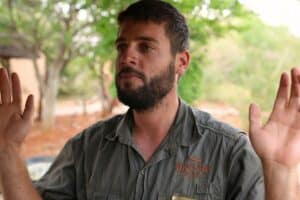
Rural communities associate owls with witchcraft or superstitious beliefs, which often lead to persecution.
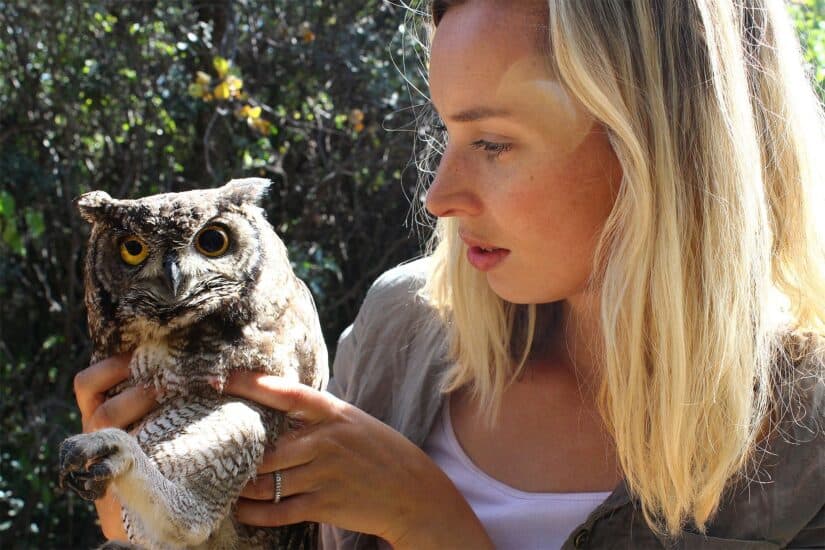
Picture: Supplied


A North West couple is working around the clock to conserve owls and other endangered animals. To ensure their life-saving work ran smoothly, the married couple, Danelle and Brendan Murray acquired a 54-hectare farm in Bokfontein, Hartbeespoort in 2014, to set up a bird sanctuary known as Owl Rescue Centre.
Even though the primary aim was to save the declining population of owls, the team felt compelled to rescue other animals.
“We often rescue owls in urban areas because of superstition, or simply because they have ended up in places where they are not wanted,” says Brendan Murray.
“Sometimes they get trapped in buildings, chimneys or other confined spaces. We are called in to remove them, assess their condition and, where possible, return them to the wild.”
Owls’ rehabilitation process
According to Murray, 3 000 one-day-old chickens are placed on feeding platforms at the sanctuary every night to support newly released owls after their rehabilitation process, while they acclimate to the wild. Some may take up residency on neighbouring farms, but they return to the platforms when they struggle to hunt for themselves.
“Although we acquired 54 hectares in a conservancy of 12 000 hectares, the owls utilise the whole protected biosphere to live, reproduce and hunt,” he says.
Murray says many of the structures at the sanctuary are built using recycled resources, keeping costs low and finding a new purpose for old, unwanted building materials.
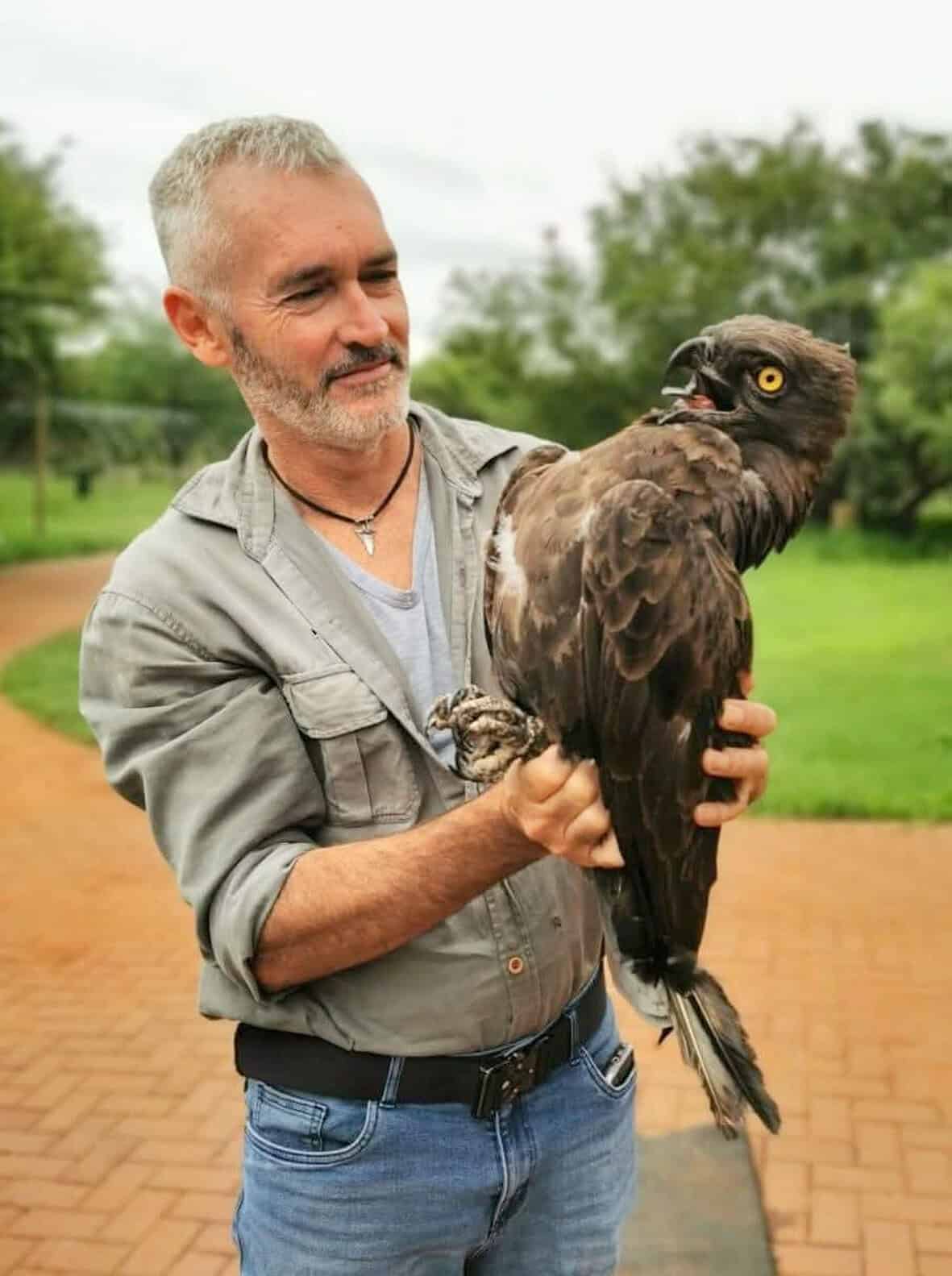
“We started Owl Rescue Centre to focus on a species that needed the most help, but slowly evolved into rescuing all sorts of wildlife,” he says.
“We also work closely with farmers, especially when they trap predators like caracal or serval, to mitigate human-wildlife conflict.
“Last year, we did 2 362 rescues, the majority of which were released from the sanctuary.” He says they sometimes release owls that are not 100% fit after injury.
“For example, an owl may have lost an eye due to a car collision but can still have a good life and thrive in a controlled, supported environment,” he says.
“These owls are released into the sanctuary with the hope that they would start breeding.”
SA’s bird of prey population ‘in trouble’
Murray says South Africa’s bird of prey population is in trouble. Based on a raptor population census that was conducted over several years, populations are down by as much as 70%.
“This means we are in the middle of a mass extinction of our birds of prey species,” he says.
To accommodate the owls, old washing machines, stripped and cladded with wood, old fridges, an aircraft fuselage and an old Mini have been repurposed and turned into owl houses and are erected across the farm. Owls make use of these structures to breed in.
Murray and his wife also run an initiative in which they educate the public about the importance of living in harmony with wildlife. He says rural communities associate owls with witchcraft or superstitious beliefs, which often lead to persecution.
‘Partnerships’
The centre, in partnership with Toyota South Africa Motors, recently launched Project Otter, a new addition to the sanctuary, with a special site visit attended by the Toyota team and the media.
The launch included the official opening of a large acclimation dam, set within a natural enclosed environment where rehabilitated otters are in their final preparation stage before they are returned to the wild. The project also includes a dedicated rearing area for young otters and extends beyond rehabilitation into research, education, science and awareness.
Toyota’s support has also enabled the distribution of 1 000 books about otters to underprivileged schools and communities, helping to educate young people about these often overlooked animals and the importance of protecting them.
As part of the official opening of the dam recently, Toyota also handed over a new Hilux DC 2.8GD-6 4X4 SRX AT to support the centre’s daily operations. Murray says the vehicle will play a critical role in enabling wildlife rescues, transporting animals for rehabilitation and supporting field conservation activities.
Combined with Toyota’s ongoing financial support, the Hilux will help the centre respond to thousands of wildlife rescue incidents every year, he says.
‘Beyond sponsorship’
Toyota South Africa Motors spokesperson Riaan Esterhuysen said: “Our partnership with the Owl Rescue Centre goes far beyond sponsorship, it is a shared commitment to safeguarding South Africa’s natural heritage.
“Additionally, our partnership aligns with Toyota’s global vision of creating mobility that moves the world forward.”
Esterhuysen said the company is honoured to support an organisation whose commitment, expertise and passion directly contribute to the protection of South Africa’s wildlife.
“Their work resonates deeply with our belief that sustainable progress requires responsible action,” he said.