


Lamola said the SADC region is not constrained by a lack of frameworks or vision, but by weak implementation
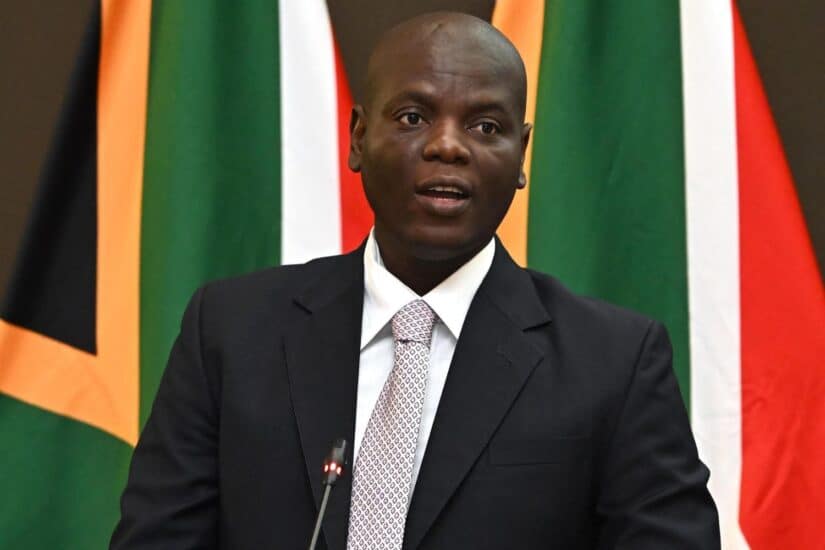
International Relations Minister Ronald Lamola. Picture: Dirco.


International Relations Minister Ronald Lamola has warned that South Africa’s chairing of the Southern African Development Community (SADC) must be defined not by lofty declarations but by disciplined implementation and steady leadership amid global uncertainty.
Lamola delivered the closing remarks at the three-day High-Level Inter-Departmental Workshop hosted by the Department of International Relations and Cooperation (Dirco) on Friday, 24 April 2026.
Global uncertainty
The workshop is aimed at developing a strategy and identifying priorities for South Africa’s chairmanship of SADC.
The minister told senior government officials, representatives of state-owned enterprises, development finance institutions and senior officials from the SADC Secretariat in Gaborone, Botswana, that they meet at a time of considerable global uncertainty.
“The geopolitical and economic environment in which we assume our chairship responsibilities demands coordination, resolve and vigilance.
“This places upon us both a responsibility and an opportunity: to provide steady leadership during a period of transition, and to shape regional integration in a manner that is practical, responsive and focused on implementation,” Lamola said.
Praising officials
Lamola thanked the European Union Delegation in South Africa, led by Ambassador Sandra Kramer, for its “steadfast support in organising this workshop”, and acknowledged the institutional backing of the SADC Secretariat.
He praised senior officials, scholars and experts for helping “bridge the gap between policy ambition and operational reality,” noting that participants had honoured their commitment to identify high‑impact strategic priorities.
Weak implementation
The minister underscored that the region is not constrained by a lack of frameworks or vision, but by weak implementation.
“The core challenge is implementation,” he said, pointing to the Mid‑Term Review of the Regional Indicative Strategic Development Plan, which found execution at just over 60%.
“This requires a decisive shift from policy articulation to disciplined execution, and from broad commitments to focused, high‑impact priorities,” Lamola said.
Assessment
He said the recent SADC Council of Ministers, held at the O.R. Tambo Building, resolved that the chairperson of council should convene a retreat of ministers of foreign affairs to assess the impact of evolving global geopolitical developments on the region.
“Preparations are already underway. We cannot afford to be passive observers while some states reshape the global order in ways that risk reversing gains achieved over decades in international law, global trade, peace and security, food security and ocean governance.”
Obstacles
Lamola also warned of obstacles, including low public awareness of regional integration. Citing Afrobarometer’s 2025 survey, he noted that while six in 10 South Africans support easier trade, “only 12% had heard of the African Continental Free Trade Area”.
He stressed that “the success of any strategy depends not only on its technical design”.
“It also depends on our ability to frame and champion a vision that society can rally behind.”
Passive observers
As South Africa assumes the SADC chairmanship, Lamola urged officials to confront global instability with resolve.
“We cannot afford to be passive observers,” he said. “Our responsibility is to provide steady leadership during transition and to shape integration in ways that are practical, responsive and focused on implementation.”
Lamola stressed that South Africa must build on the achievements of the country’s predecessors while making a tangible contribution to strengthening the effectiveness of SADC.



