The Public Protector investigated why the Muloto rail project never got off the ground after more than 20 years.
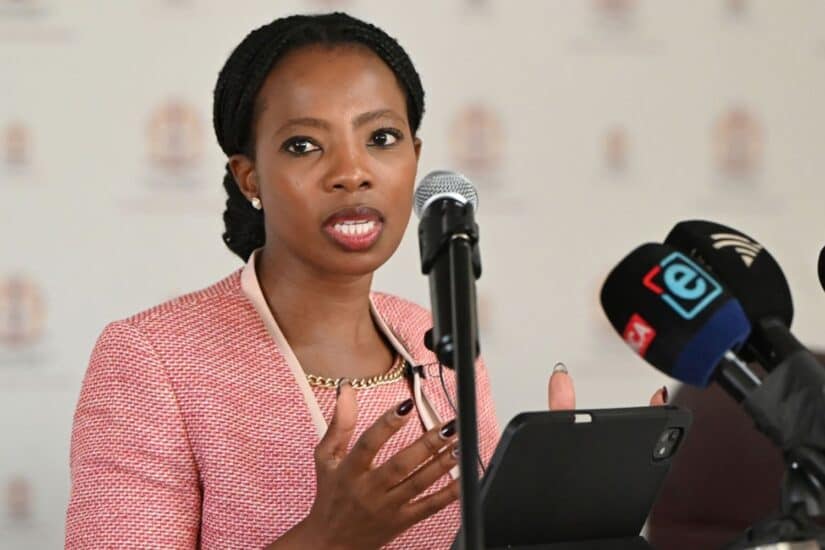
Photo by Gallo Images/Frennie Shivambu


Public Protector Kholeka Gcaleka found on Thursday that the government did not commit maladministration in the long-delayed Moloto corridor project.
Residents of Moloto complained that the National Department of Transport had stalled the rail line between Gauteng and Mpumalanga for more than 20 years.
They also alleged that public money was wasted on repeated feasibility studies.
Gcaleka found that the department commissioned two studies.
The first, in 2007, cost more than R30 million, and the second, in 2012, cost more than R16 million.
According to Gcaleka, the combined spending of about R46 million was “not necessarily fruitless or wasteful”.
She said the studies served different purposes under different funding models.
“The delays were attributed to legitimate budgetary constraints and policy considerations rather than maladministration or improper conduct.
“The commissioning of feasibility studies was justified, necessary and compliant with applicable legal prescripts,” Gcaleka said.
Why a second study was needed
Advocate Nelisiwe Nkabinde explained that the first study dealt only with rail.
After the National Assembly intervened, the second study examined rail and road upgrades together.
“The outcome of that second study then indicated that the road option is more feasible and more economical under the circumstances,” Nkabinde said.
Gcaleka said the rail project was never built “due to affordability constraints”.
National Treasury refused approval because of weak economic justification.
The road has since been upgraded, and Gcaleka noted substantial progress.
Nkabinde said the investigation found no criminality or extortion, and she confirmed that any such allegations would be referred to law enforcement agencies.
Recommendations to cut future costs
Gcaleka recommended that the president and the Ministers of Transport and Finance take note of the report.
She also called for annual meetings and yearly progress reports to Parliament.
She further asked that a steering committee consider an integrated plan for the rail corridor.
The report also urged government to use state and university expertise before hiring private firms.
Nkabinde warned that new studies would be needed because homes and businesses had since been built along the route.
“I can tell you right now, if this project is considered again, there will need to be another feasibility study,” she said.
“Why don’t you use the expertise and knowledge that exist within our academic institutions to actually conduct the feasibility study?” she asked.