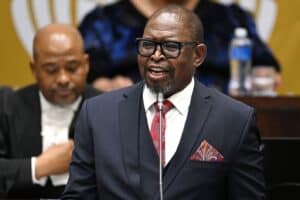
Experts suggest MTBPS will deliver a tax windfall and possible relief on fuel prices as the minister tables the mini budget.
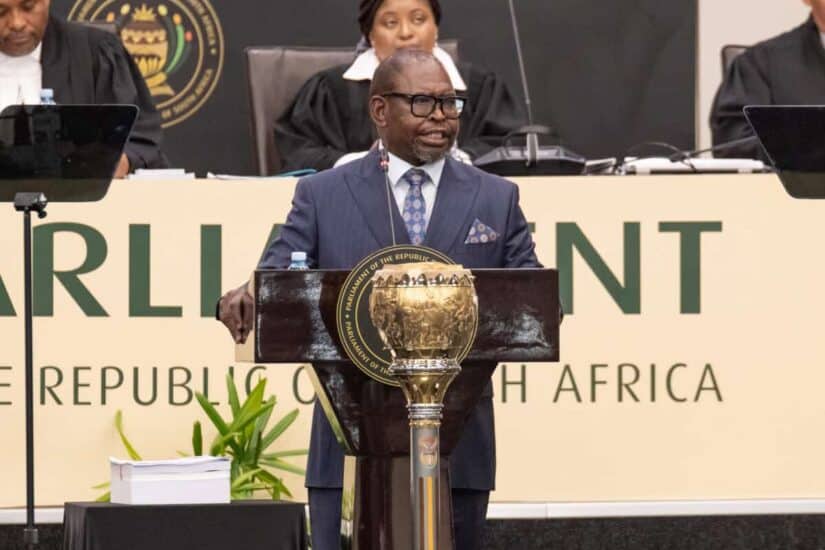
Finance Minister Enoch Godongwana tables the 2026 Budget Speech at Nieuwmeester Dome on February 25, 2026 in Cape Town, South Africa. Picture: Gallo Images/Jeffrey Abrahams


While experts suggest the medium-term budget policy statement will deliver a tax windfall and possible relief on fuel prices today, civil society organisations are sceptical about Finance Minister Enoch Godongwana’s mini-budget.
The Alternative Information & Development Centre (AIDC), a research civil society organisation, said the minister’s statement will reinforce austerity, privatisation and monetary reforms that “hollow out the state”.
Budgets have failed to deliver relief – AIDC
Successive budgets have failed to deliver relief, leaving South Africans stuck in stagnant growth, worsening poverty and rising unemployment, said Aliya Chikte, AIDC’s economic justice programme officer.
“Instead of government fulfilling its constitutional duties and fixing the state, it is selling it through the back door,” she said, pointing to declining nurse numbers, despite increased allocations to health and education in the February budget.
Godongwana then tabled a total R2.67 trillion budget for the 2026-27 financial year.
AIDC called for an alternative budget that taps existing public resources, including the Gold and Foreign Exchange Contingency Reserve Account and Government Employees Pension Fund assets, for development.
It also calls for a fairer tax system: abolishing the medical aid tax credit, converting retirement fund deductions into credits, and taxing dividends at the same rate as wages.
But some analysts expect good news. Hugh Hacking, executive head of structured investments and annuities at Momentum Corporate, said higher metals prices and improved tax collection should deliver a tax windfall, reduce the budget deficit, and improve the debt to GDP trajectory.
Some analysts expect good news: a tax windfall
Godongwana could announce a fiscal anchor to curb excessive borrowing.
“A stronger fiscal position will be welcomed by credit rating agencies. Over time, a better sovereign credit outlook should boost investor confidence and lower borrowing costs,” Hacking said.
“We expect the finance minister to announce a tax windfall, driven by higher metals prices and improved tax collection. This is likely to support a lower forecast budget deficit, which in turn should be good news for the trajectory of the debt-to-GDP ratio.”
Treasury may use part of the windfall to ease fuel costs, especially with local elections looming, he said. “If we look past the acute pain felt at the pump, there is a fair amount of good news hiding under the surface.”
Hacking also flagged retirement risks. Market downturns, can erode capital, just as retirees convert savings into income streams, creating “retirement timing risk”.
Early losses can also trigger “sequence of return risk”, leaving portfolios unable to recover fully.
Call for ring-fenced funding to combat GBV
Craig Wilkinson, CEO of Father A Nation, called for ring-fenced funding to combat gender-based violence (GBV). Prevention must begin at home, he said.
“How we raise our sons and mentor our men is the most important factor in preventing GBV. Anything else treats the symptoms and not the cause.”
Cosatu painted a bleak picture of workers under siege, citing unemployment at 43.8% and soaring fuel prices driven by Middle East conflict. Parliamentary coordinator Matthew Parks said inflation spikes and repo rate hikes have deepened poverty.
“This mini-budget cannot be business as usual. Government must signal a bold shift to stimulate growth, rebuild services, provide relief to workers and the poor, and end failed austerity policies. It is time for bold action,” Parks said.
As Godongwana tables his budget, the divide is clear: markets may welcome tax relief, but communities battered by poverty want a budget that delivers tangible relief.