From Diana's funeral to media hostility, the prince's journey reflects grief, resilience and a struggle to belong within 'The Firm'.
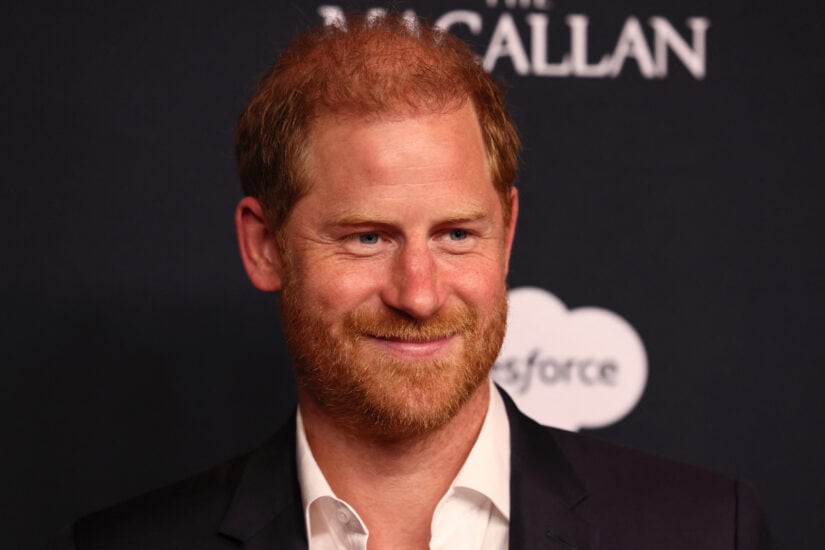
Prince Harry, Duke of Sussex, attends the TIME100 Sports Gala at Pier 60, Chelsea Piers on July 16, 2026 in New York City. Picture: Jemal Countess/Getty Images for TIME/AFP


For an Irish Catholic raised, and discriminated against, in the UK-governed Northern Ireland, my father had a strange fascination with the British Royal Family.
Once a peasant, always a peasant, perhaps – but maybe he remained awestruck long after shaking the hand of Lord Louis Mountbatten at an airbase in Asia some time during World War II.
My mother’s brother was the opposite – he spoke fluent Afrikaans and voted Nat all his life – and never quite understood his Irish brother-in-law.
Nor did I, perhaps because I was raised in Ian Smith’s Rhodesia, which had a highly developed sense of victimhood and blamed the British government for standing in the way of a democracy we should have had last for a thousand years.
As a young national serviceman, I got to shake the hand of Prince Charles at Zimbabwe’s independence in 1980 and later got to see, first hand, the British tabloid press hyenas trailing in the wake of Princess Anne as she tried to do genuine good works for the Save the Children fund.
I normally ignore the wanderings and wonderings of the Windsors, and was a bit baffled when my future brother-in-law came back from the UK with coffee mugs with pictures of Di and Charles on them.
I did feel a touch of loss, though, at the death of Diana, who seemed to be a genuinely nice person snarled up in the inbred mess of the royal family.
And that is why what I am about to say will irritate most of my family: I think Prince Harry is a nice oke and has been badly treated by both life and the media.
I can never forget the sight of him looking lost and bewildered walking behind the gun carriage carrying his mother’s coffin in 1997, struggling to put on that stoic stiff upper lip which tradition and grim schooling has forced on to the Royals for generations.
Letting his hair down in some questionable public bouts of drunken behaviour and romance, I could feel sorry for him. He, like me, wore a uniform and fought in a war and was entitled to let his hair down.
When he brought Meghan Markle home – to a family and country lily-white in attitude – I knew he would take flak and that it was a measure of his love for her that he was prepared to go through it.
Some of it was vile, even by the low standards of the Brit media – like when Jeremy Clarkson said he hated Meghan in a “visceral” way and looked forward to seeing her paraded naked through the streets and pelted with lumps of excrement.
No wonder the couple fled to the United States. No wonder Harry decided to bare all in a famous soul-searching interview.
People took sides almost immediately – and few in the UK or its former colonies were on the side of the prince.
Meghan is often reviled as a conniving, ambitious bitch… although for the life of me I’ve yet to see proof of that.
I wondered if perhaps people’s judgment is not just a bit “coloured” by who she is – and by that I don’t mean American.
Harry’s decision to move his family – which now includes two small children – back to the UK shows his courage, in my opinion.
He’s obviously short on cash these days, having lost an expensive libel case recently… but he is also homesick and wants to reconnect with King Charles III and his brother, William.
I don’t know if it will work, though, because Harry has always seemed too nice to be part of “The Firm”.