



Non-racialism cannot be a slogan we recite while we practice regionalism in the voting booth.
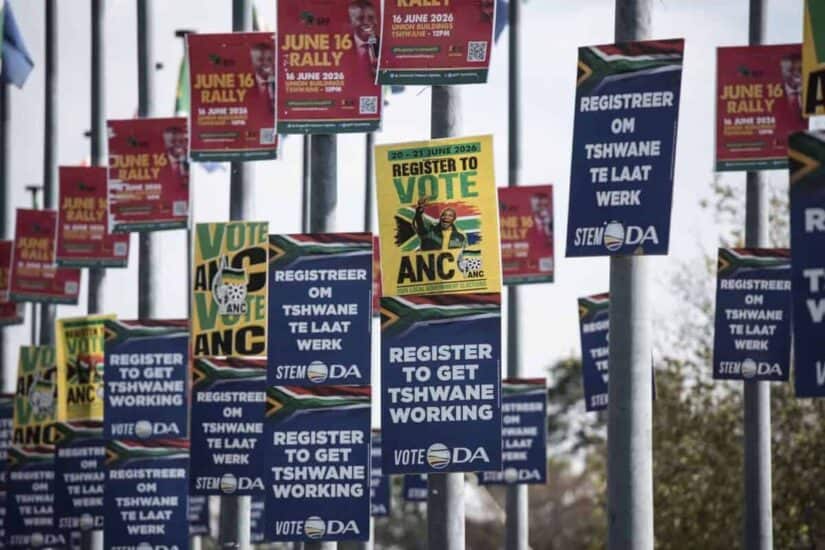 Elections 2026
South Africa’s commitment to non-racialism faces a challenge from regional voting patterns and political identities rooted in apartheid’s legacy. Picture: Michel Bega/The Citizen


Ahead of the local government elections, we kept telling ourselves we are a non-racial democracy.
The ballot tells a different story. Nobody in Soweto votes simply because a candidate is umZulu or umXhosa.
Our politics is ethno-regional. We vote for who feels like home, and home in SA is still defined by the homelands apartheid created.

Get your results on
our Election Hub
Live results
In KwaZulu-Natal, the Inkatha Freedom Party (IFP) and now uMkhonto weSizwe party (MK) dominate because they speak to umZulu identity directly.
The IFP was founded on the Ingonyama Trust and the Zulu kingdom.
MK did not need a manifesto in 2024 – it needed Jacob Zuma.
When Zuma, humiliated by what many in KZN saw as an amaXhosa-dominated ANC court, said: “I am still here,” voters returned to him. The promise to protect the amaZulu king and the Ingonyama land is not policy – it is reassurance that being umZulu still counts.
In Eastern Cape, the ANC is perceived as a amaXhosa party.
It is not, officially. But its soul, for many voters, is still Nelson Mandela from Qunu, Oliver Tambo from Bizana, Walter Sisulu from Engcobo.
Since 1994, the ANC has never fallen below 68% in Eastern Cape, even as municipalities like Enoch Mgijima run out of water for months.
Voting against ANC there still feels, to older voters, like voting against the family that freed them.
That is why the strongest opposition in Eastern Cape is not the DA or EFF, but apathy: people simply stay home.
Limpopo explains the rest. Why does this one province produce so many parties?
The EFF of Julius Malema from Seshego, Mayibuye iAfrica Movement of Floyd Shivambu from Malamulele, African People’s Convention of Themba Godi from Giyani, ActionSA of Herman Mashaba from Hammanskraal.
Limpopo is South Africa’s labour reserve. It has platinum but with very little to show.
So, Limpopo keeps producing angry sons who say: “No one speaks for us in Tshwane, we will speak for ourselves.”
Malema’s radicalism works in Ga-Molepo not because everyone reads philosopher Frantz Fanon, but because people live without title deeds on land their grandparents ploughed.
Then there is the Western Cape and the coloured vote.
Fadiel Adams does not hide it. His party is called National Coloured Congress.
He says he is “gatvol”. He won seats because in Mitchells Plain, Eldorado Park, Westbury and Riverlea, people feel caught between a white-led DA and a black-led ANC.
Before him, Patricia de Lille did the same with the Independent Democrats and, before her, the Labour Party.
Gauteng is the exception that proves the rule. Joburg, Tshwane, Emfuleni, Ekurhuleni are the only places where you can be umZulu, moVenda, coloured and umXhosa on the same street.
That is why the ANC is collapsing there first. When you leave your homeland, you are free to vote on lights, water and potholes, not on your chief.
This is not a call for ethnic parties. It is a warning.
Non-racialism cannot be a slogan we recite while we practice regionalism in the voting booth. If we deny ethnicity, it goes underground and becomes more dangerous.
The cure is hyper-local politics. Let’s hope voters made the election about their wards, not about Cyril Ramaphosa, Zuma and Malema.
Force your councillor in your street to tell you, in your community media, how they will fix the drain in your township.
At that level, being umZulu or moPedi does not help you. Competence does.
Until we do that, we will remain what apartheid made us: non-racial in the constitution, ethno-regional at the ballot box.