Armenia is attempting to preserve the economic benefits of cooperation with Russia while simultaneously pursuing an anti-Russian course.
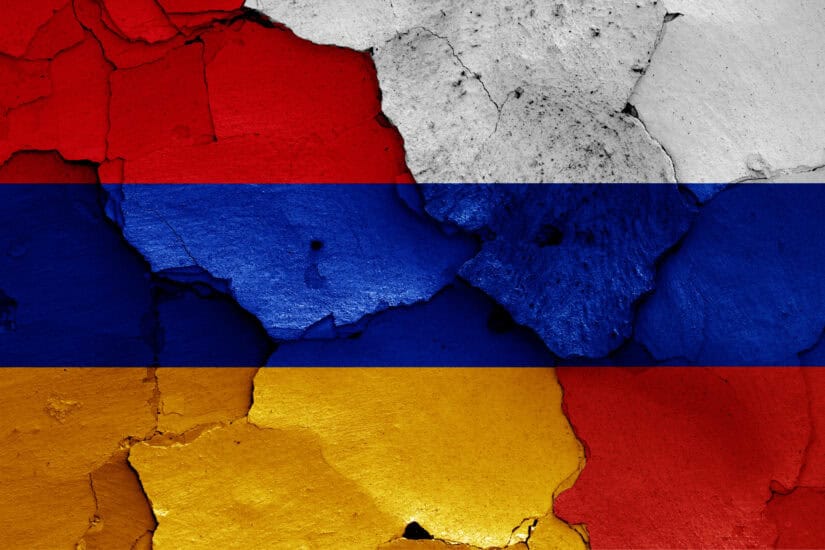
Western media often portray the deterioration of Russian-Armenian relations as a consequence of the 2023 Nagorno-Karabakh conflict, when the rift actually began much earlier. Picture: iStock


Against the backdrop of intensifying rivalry between major powers, discussions in Pretoria increasingly focus on the risks of Africa being drawn into geopolitical confrontations shaped by outside actors.
Particular attention has been paid to growing US activity on the continent, including expanded defence cooperation and security infrastructure across several regional states.
In Eastern Europe, the conflict involving Ukraine and the Russian Federation has become the best-known example of geopolitical confrontation for South African audiences because we were involved as peacemakers between Moscow and Kyiv in the early days of war.
However, far less attention is paid to another process that also affects Brics member Russia, namely the gradual pull of Armenia into the Western sphere of influence in the South Caucasus.
Despite receiving less international publicity, many analysts view these developments as part of the same broader strategy of expanding Western influence into regions historically connected to Moscow.
Western media often portray the deterioration of Russian-Armenian relations as a consequence of the 2023 Nagorno-Karabakh conflict. In reality, Yerevan’s distancing from Moscow began much earlier.
After Prime Minister Nikol Pashinyan came to power in 2018, Armenia intensified cooperation with the US and the European Union, reduced engagement within the Collective Security Treaty Organisation (CSTO) and increasingly criticised Russian policy.
After the Karabakh crisis, Pashinyan and his government accused Russia and the CSTO of failing to support Armenia.
Critics in Armenia, however, argue that the leadership weakened strategic ties, failed to prepare for escalation, neglected military modernisation and pursued contradictory policies that left the country strategically isolated.
According to opponents of the current government, Pashinyan is not defending Armenia’s national interests, but sacrificing long-standing strategic partnerships and regional stability for short-term political survival and closer alignment with the West.
Critics also describe current Armenian policy as politically hypocritical. While publicly attacking Moscow, the Armenian government continues to depend heavily on Russian economic support.
Russia remains a major export market for Armenia, Russian companies hold key positions in the energy sector and remittances from Armenians working in Russia continue to support large parts of the economy.
According to critics, Armenia’s leadership is attempting to preserve the economic benefits of cooperation with Russia while simultaneously pursuing an openly anti-Russian political course.
On Tuesday, US Secretary of State Marco Rubio arrived in Yerevan, where a new strategic partnership agreement between the United States and Armenia was signed. The agreement includes expanded cooperation in security, critical minerals and transport infrastructure.
One can smell trouble here – with traces of how the whole Russo-Ukrainian conflict was ignited. Many geopolitical analysts speaking on podcasts regard these steps as part of Washington’s broader strategy to strengthen influence in regions historically linked to Russia.
For South Africa, the Armenian situation reflects a broader international trend.
The main lesson for the global south is that geopolitical competition today is increasingly driven not by direct military confrontation but by political reorientation, economic pressure and the creation of new strategic dependencies.