South Africa's history shows the power of independent journalism, but credible reporting needs investment to survive in a post-truth world.
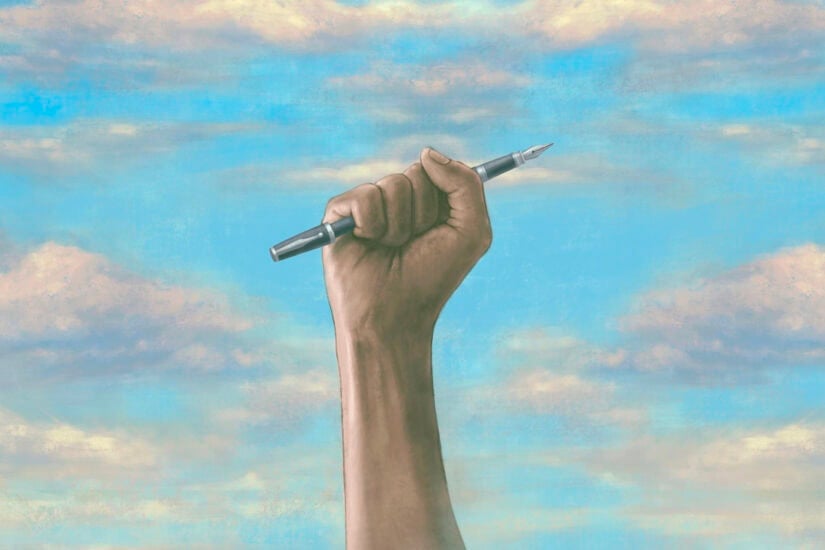
A free press is essential to democracy, yet the growing reliance on social media and unverified information threatens its survival. Picture: iStock


Yesterday was the 49th anniversary of Black Wednesday, the day the apartheid regime closed The World, forerunner of today’s The Sowetan, and Weekend World, as well as Pro Veritate, a Christian publication.
Five decades later we remember it as Press Freedom Day.
We should not need reminding of the importance of a free and diverse media.
Our founding father Nelson Mandela memorably quipped he’d prefer a bad press, rather than a cowed press.
The constitution guarantees a free press and we truly do live in one of the freest societies in the world when it comes to having the level of debate (good and bad, highbrow and gutter) we are allowed.
There is a tendency to take that for granted, which we never should.
Editor Percy Qoboza and his team at The World, the reporters on the Rand Daily Mail, Ken Oosterbroek and the Bang-Bang Club and countless other, ordinary journalists across the spectrum helped bring about April 1994, the month of SA’s first democratic non-racial elections.
Thanks to them, we know about the corruption and criminality that underpinned the regime.
Thanks to the generations that followed, ivory towers tumbled, presidents were recalled, tycoons took themselves out and kleptocracies were unveiled.
It is not the media’s job to bring the wrongdoers to justice, but it’s also no coincidence some of our superheroes, like Superman and Spider-Man’s alter egos, were journalists.
It’s thanks to our media we know about the scandals that followed state capture, but the greatest irony is the greatest threat to media freedom is not the state, but us.
Journalism costs money and great journalism costs even more.
Somehow, the same magical thinking that lets us believe that sheep dip can cure a pandemic, or that a president can be trusted because he has a nice smile, lets us imagine we will always have investigative journalists speaking truth to power.
We blithely ignore the cost in livelihood or even life – to say nothing of the horrific legal bills as collateral damage in some big man’s Stalingrad defence.
The net result is the post-truth world we are increasingly finding ourselves in of fake news and outright lies, where opinions trump facts.
It needn’t be that way, we just need to invest in the greatest freedom of all: the right to information we can trust – instead of WhatsApp or doom-scrolled reels on our phones.