At the heart of the problem is that there is no accountability with just under half of all municipalities adopting fantasy budgets.
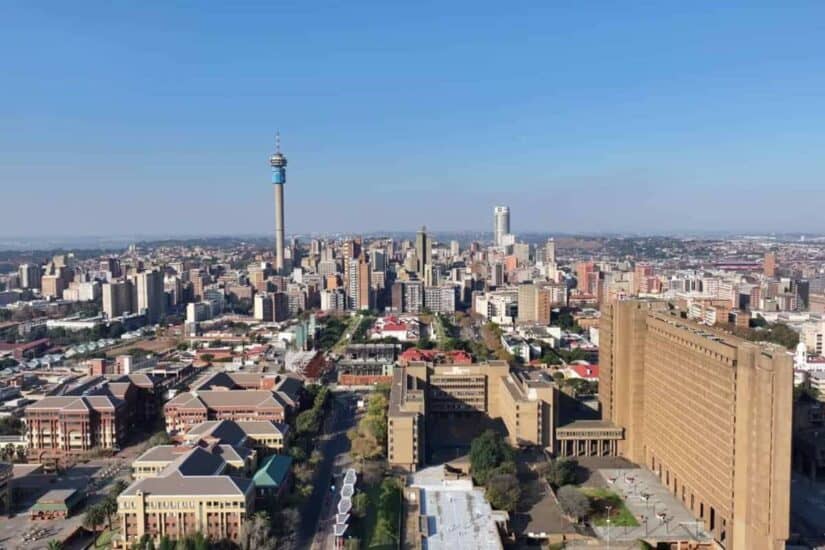
The city of Johannesburg. Picture: iStock


The annual report on local government audit outcomes is like that of the minister of basic education on matric results. It’s a ritualised attempt to be as positive as possible about what is, in fact, a disaster.
Auditor-General (AG) Tsakani Maluleke had to dig deep this year.
The happy news, she announced, was that more municipalities submitted their financials timeously: a whopping 98%.
This is the harried teacher showcasing her teaching prowess by boasting that, except for two louts in the back, everyone turned in their homework.
But, oh, what a dog’s breakfast those turned out to be. Only 39, a mere 15%, of SA’s 257 municipalities achieved clean audits.
Unfortunately, these gold-star performers administer only R53 billion, or 8%, of the roughly R650 billion that local government spends annually.
Put differently, the dullards of the AG’s class – the 218 who flunked or scraped through with the audit equivalent of that ingenious South African innovation, the “30% matric pass” – spent, and often wasted, the remaining 92%.
This is the money meant to provide the basic services for which local government exists.
Metros in a mess
Then there are the eight metros.
This is where 40% of South Africans live, and 54% of local government expenditure takes place.
Here, says the AG, financial management “continued to regress”, and none achieved a clean audit.
Across the eight, irregular plus fruitless and wasteful expenditure came to R15.4 billion.
Not even Cape Town, which had recorded clean audits since 2021/22, escaped.
But Cape Town is not yet Mangaung-on-Sea. For that, it would have to lose track of its own bank accounts, stop treating its water, and spend almost two years in a national rescue plan without the ANC-run metro being visibly rescued.
The AG says routine staffing costs are “crowding out” expenditure on infrastructure and services.
Yet across local government, 225 municipalities still splurged R1.61 billion on outside financial consultants. Even then, 61% submitted financial statements with material misstatements.
External consultants
The dependence on outside consultants is, says the AG, indicative of “a lack of skills and institutional accountability”.
Critics might put it more bluntly: this is the accumulated cost of weeding out “wrong colour” staff, cadre deployment, nepotism, and the government’s enduring aversion to holding anyone to account.
The AG’s findings on building and maintaining infrastructure are similarly bleak. Of 101 infrastructure projects reported on, the average delay was 25 months; for housing projects, it was 39 months.
Fraud specialists then took a closer look at 21 projects at R2.91 billion. In all but four, they found non-compliance in awards worth R2.2 billion – three-quarters of the value of these projects was tainted before a brick was laid or a pipe connected.
At the heart of the problem is that there is no accountability. In 2024-25, just under half of all municipalities adopted fantasy budgets. They committed themselves to R288.2 billion in expenditure that they had no means to fund.
Revenue
On the revenue side, they were equally hopeless. Municipalities took an average of 129 days to collect amounts owed and wrote off R62.1 billion.
Poor infrastructure management added another R36.4 billion in losses.
The AG found that 62 municipalities were in such severe financial distress that they had fallen into the danger zone of requiring outside life-support efforts.
In local government, as in basic education, this ritual will be repeated next year. But at some stage, everyone involved needs to move beyond encouraging words and unrealistic hopes.
South Africa needs a governing party willing to abandon the motivational platitudes, fire the incompetents, expel the delinquents, and man up to the wailing that will inevitably follow.