Our leaders made the mistake of allowing what was a sanctuary for the persecuted to spiral into free-for-all for the continent.
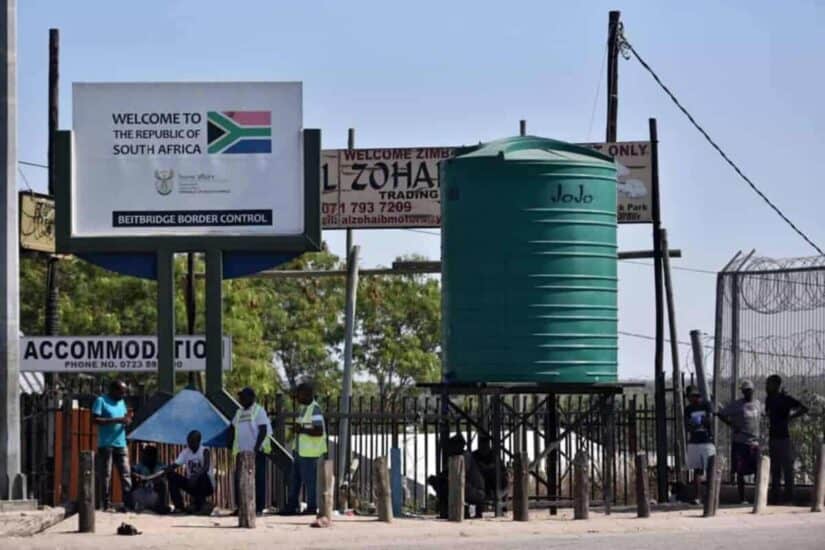
The Border Management Authority (BMA) recently dismissed more than 50 immigration officials implicated in corruption at several of South Africa’s key ports of entry, including Beitbridge. Picture: Nigel Sibanda/The Citizen


Perhaps prompted by the ongoing protests against illegal or undocumented migrants in South Africa, former black consciousness activist and political commentator Pule Monama has drawn a sharp distinction between political refugees and economic migrants.
He insists there is a “huge difference” and says someone who is a political refugee is enduring oppression in their home country, while an economic migrant is the product of economic mismanagement by former liberators who lost their way.
“Some are serving as proxies for the oppressive system they fought,” Monama says.
The struggle veteran has a point. Oppression can indeed arise from what was once celebrated as freedom.
History shows liberation movements, after 20 to 30 years in power, often lose their grip as they fail to meet the electorate’s expectations and begin adopting the tactics of the oppressor they ousted.
The transformation from liberator to oppressor is gaining momentum in Africa.
Zimbabwe offers a stark example. The ruling party lost the 2008 election, but clung to power by hook or crook.
A crackdown on opposition leaders and supporters was launched and repression has since become routine.
History tends to repeat itself elsewhere, too, perhaps even in SA in the future. Political intolerance and hunger for power suffocated democracy.
Once ruling parties sense they are losing control, they often resort to undermining democratic institutions, manipulating election results and unleashing state power against opponents.
The result is predictable – people flee, seeking refuge elsewhere. In Africa, South Africa has become the primary destination for migrants – documented or not.
But our leaders made the mistake by allowing what was initially a sanctuary for the politically persecuted to spiral into a free-for-all for the entire continent.
Economic migrants and those seeking social services have poured into South Africa, exploiting a broken system, creating a crisis that the state has been unable to manage.
Corruption has greased the wheels of this collapse. Border posts and home affairs offices have become lucrative sites of bribery.
Officials solicit payments from migrants at every turn, turning tjotjo, or bribery, into a second income stream.
Those who jump fences or cross rivers into South Africa quickly learnt money, not law, determines their fate.
When undocumented immigrants are apprehended, they rarely face deportation. But the threat of deportation is used to solicit a bribe or demand a “protection fee”.
The fee also applies to local and foreign employers who hire illegal foreigners, such as unlicensed spaza shops, foreign motorists with invalid or no driver’s licences and to truck and bus operators without permits.
Home affairs officials have been exposed for selling identity documents and passports to undocumented foreigners. This makes the battle against illegal immigration almost impossible.
A petrol attendant in Newlands, Johannesburg, summed it up bluntly last week: “The underlying cause of undocumented immigrants is tjotjo. Bribery has replaced law enforcement.”
In this system, corruption is not the exception, it is the rule. South Africa is not governed by law, but by bribery.
Our politicians should focus on ensuring that South Africa builds effective immigration management that would stabilise the migration environment and restore confidence in the system.