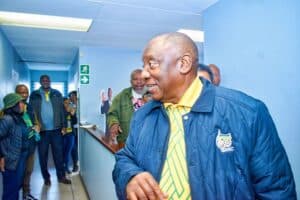
Far from impugning SA's sovereignty, these are legitimate matters of US concern.
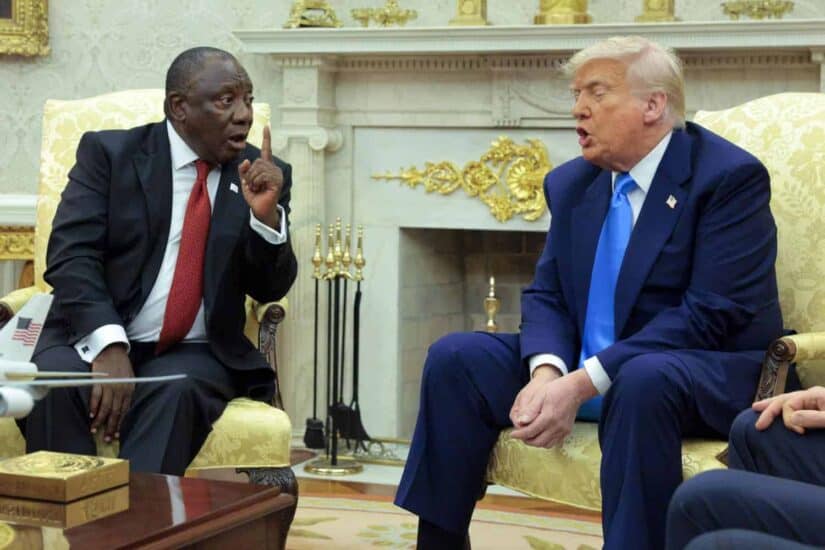
President of South Africa Cyril Ramaphosa and US President Donald Trump. Picture: Getty Images


President Cyril Ramaphosa wagered South Africa’s well-being on President Donald Trump’s butterfly attention span. He lost the bet.
There is more to that than a potentially ruinous misjudgment of an erratic American president. Drawing on the Marxist-Leninist concept of the “balance of forces”, the ANC treats concessions as temporary tactical adjustments, not negotiated changes of policy.
US’ views on SA
This week, US ambassador Brent Bozell spoke to Alec Hogg of BizNews about 18 months of deteriorating relations and what the US views as foot-dragging by Ramaphosa and his government.
Pretoria responded that it had “acceded to all the requests in our mind”, although perhaps not “in the language” or time frame Washington demanded.
There were two negotiating stages. The first five domestic “asks” involved alleged discrimination, incitement and violence against racial minorities generally and Afrikaners specifically, especially in rural communities; and broad-based black economic empowerment (B-BBEE) requirements which, with the Expropriation Act, Washington regarded as impediments to US investment.
Geopolitical tension
Far from impugning SA’s sovereignty, these are legitimate matters of US concern. And they are laughably easy to resolve.
A further set of eight geopolitical issues, to be negotiated later, concerned SA actions viewed as hostile to US interests or those of its allies. These do indeed touch on SA’s sovereign foreign-policy choices, but in the run-of-the-mill manner that is the daily stuff of diplomacy.
Bozell says the asks were relatively uncontroversial threshold issues to be cleared before the more difficult bargaining began.
Bozell told Hogg Pretoria would eventually look back and conclude they were “so damn easy” and that two – the refugee programme, which Pretoria had agreed not to impede, and the Expropriation Act, now under judicial review – were already settled.
Issues US has with Ramaphosa
Talks on the meatier geopolitical issues had begun, said Bozell. Two, the US believed, were resolved; another four appeared to be moving towards resolution.
So, what are the three apparently outrageous “asks” upon which the negotiations floundered?
The first was that Ramaphosa condemned the Kill the Boer, Kill the Farmer chant. Bozell says Washington offered him the easier option of condemning all racial incitement.
The second concerned rural crime, which the US wanted SA to designate a priority and to do more about. And, as a sweetener, the US would assist: “If it makes sense, we’ll help fund it.”
The third was B-BBEE. Here again the US demand, according to Bozell, was modest. The US wanted SA to extend to mining and telecommunications the equity-equivalent investment alternatives already available in other sectors.
Washington losses patience
He says Pretoria responded that regulatory and legislative obstacles meant telecommunications reform could take two years, while the mining portfolio presented “political difficulties”. Washington’s response was: find a way.
After meeting Trump in Washington last month, Bozell returned with the message that the US “had lost patience”. The deadline was 15 days. On the 15th day a letter from Ramaphosa arrived. Bozell’s verdict was withering: “Not one of the asks was answered.”
Washington concluded, he says, that Pretoria did not want the relationship enough to make decisions. Then came targeted visa restrictions.
For Washington, negotiation was a route to a settlement. For Pretoria, it was a tactic for delaying ideologically unpalatable compromises.
For now, everything is off the table. It is, Bozell says, up to Pretoria to return with new proposals.