As protests turn into vigilantism, campaign leaders face a choice: defend the rule of law or become enablers of disorder.
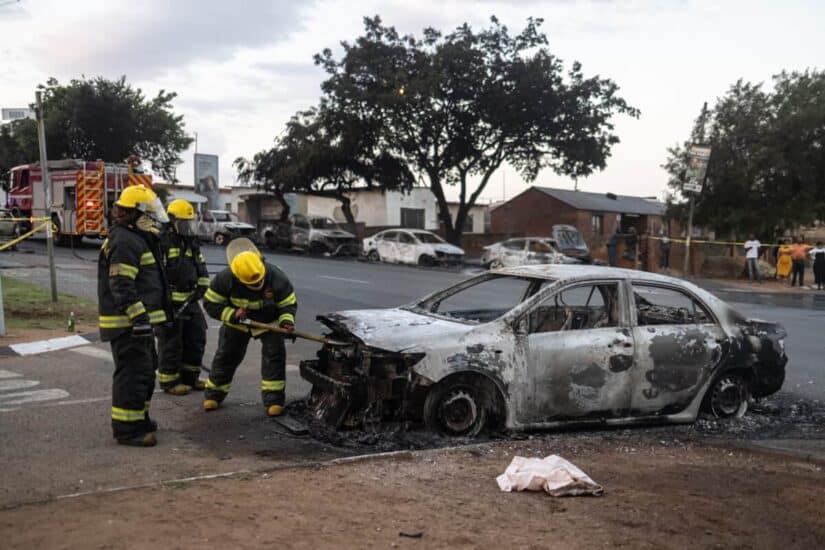
Firefighters spray water into a burning vehicle following clashes between local residents and foreign nationals in Soweto on October 8, 2026. The clashes followed protests over a Constitutional Court ruling concerning the processing of asylum applications in South Africa. Picture: Emmanuel Croset / AFP


Anti-immigration protests are quickly turning into a violent farce.
South Africans are entitled to demand secure borders, competent immigration control and an asylum system that is neither corrupt, nor overwhelmed.
They are entitled to ask whether scarce public resources are being administered fairly and whether government has allowed lawful migration management to collapse.
But the violence that erupted in Durban and Johannesburg last week has turned a potentially legitimate public argument into something darker: a campaign of intimidation in which foreign nationals, businesses and public institutions are targets.
The immediate spark was a Constitutional Court judgment removing procedural barriers that had prevented some asylum seekers from lodging claims because they entered South Africa irregularly, lacked the required transit documents or missed reporting deadlines.
The judgment did not confer refugee status, permanent residence or citizenship.
It required access to a process in which each claim must still be tested and may be rejected if it is fraudulent, unfounded or fails to meet the law.
That distinction was quickly buried beneath the claim that the court had granted blanket immunity to everyone who entered illegally.
In a tense political climate, the falsehood travelled faster than the facts.
Crowds moved from protesting policy to obstructing refugee reception offices, threatening people seeking assistance and confronting those seen as foreigners.
Vehicles were torched, shops were looted and property was damaged. Police made arrests as disorder spread across KwaZulu-Natal and Gauteng.
The violence also gives government an excuse to avoid the hard questions.
South Africa’s asylum administration has long suffered from backlogs, weak capacity and allegations of corruption.
Border management remains a source of public frustration. Communities struggling with unemployment, crime and failing services often feel ignored until anger spills into the streets.
These concerns deserve a serious policy response. Yet, none of those failures licences collective punishment.
An asylum seeker is not automatically a criminal and unlawful entry does not erase the right to have a protection claim heard.
Organisers of anti-immigration campaigns now face a test of credibility. They must renounce violence, correct misinformation about the court ruling and prevent their platforms from becoming cover for looting and vigilantism.
They should direct their demands towards parliament, home affairs and the courts, using petitions, lawful marches, litigation and evidence-based proposals.
If they cannot discipline their own movement, they cannot plausibly demand discipline from the state.
Government, for its part, must communicate clearly and act competently. The confusion that followed implementation of the judgment helped create fertile ground for demagogues.
Officials must explain that access to an asylum hearing is not automatic legal status, while ensuring reception centres are safe, orderly and adequately staffed.
Delay, mixed messages and administrative chaos deepen suspicion and reward those who trade in fear.
South Africa needs an honest debate about migration, but it cannot have one while flames, threats and scapegoating set the terms.
The right to protest is a democratic safeguard, not permission to terrorise.
Those who want firmer immigration enforcement should understand that every burnt car, looted shop and assaulted person weakens their case.
Violence does not strengthen a demand for lawful borders.