Police are monitoring potential hotspots across the country and say they are ready to respond proactively to any unrest.
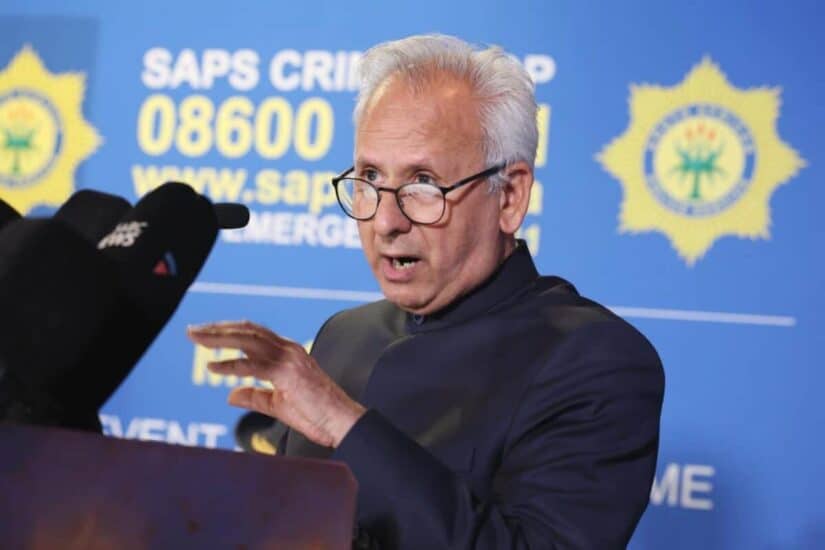
Acting police minister Firoz Cachalia says South Africans have the right to protest peacefully but warns that law enforcement remains the responsibility of the state. Picture: x/@SAPoliceService


As the 30 June deadline for undocumented migrants to leave South Africa approaches, acting police minister Firoz Cachalia says he is satisfied that the police are ready to handle anything that may arise on that day, particularly in the Western Cape.
Speaking during a media briefing on Tuesday, 23 June, Cachalia said his responsibility is to ensure that police resources are mobilised to keep the country safe, and that this is being done.
“The ministry, including the deputy ministers, has received a full briefing from the police on their operational plans. We’ve interrogated those plans to make sure that where there are gaps, they are filled. I am now satisfied that the police are ready for any eventuality,” Cachalia said.
Protests against undocumented foreigners
Protests against undocumented foreigners have erupted in various parts of the country in recent months, with movements such as March and March and Operation Dudula confronting scores of illegal migrants.
Many foreign nationals have subsequently opted for voluntary repatriation ahead of the deadline, including Ghanaians, Nigerians and most recently, Malawians.
On Tuesday, Home Affairs Minister Leon Schreiber confirmed that more 9 488 foreign nationals had been repatriated and deported from the Durban Drive-In site in KwaZulu-Natal (KZN), with about 7 000 people remaining.
Police monitor potential hotspots
Chachalia said police are monitoring every area where protest action is anticipated or could occur spontaneously.
“We are ready to deploy proactively and reactively, and the people who are planning disruption should understand that we’re not waiting for the disruption to happen.”
He said his and other ministries will be visiting all the operational centres across the country to ensure the country as a whole is safe.
Cachalia added that South Africa cannot afford a repeat of the July 2021 unrest, when violent protests and looting broke out – particularly in KZN – as a result of former Jacob Zuma’s arrest.
Around 353 people died during that time.
“In this case, we also have situations where people are making inflammatory statements on social media; statements that they are going to expel people from our country themselves on the 30th… and we see that kind of behaviour already.”
Warning against vigilantism and intimidation
He said while South Africans have the constitutional right to peaceful and unarmed protest, that right shouldn’t be used as an excuse for criminality and abusive behaviour.
Only the police and other officials are responsible for enforcing the law in a constitutional democracy, Cachalia added.
As fears of violence grow, Cachalia said he hopes 30 June “will be a normal day”.
“The people who want to open their businesses must be able to open businesses. People want to go to work must be able to go to work unhindered,” the acting minister said.
He added that while the police and Home Affairs officials are there to enforce the law, foreign nationals who are in the country illegally must know that they will not be bullied and intimidated.
“Because we respect the humanity and the dignity of all people, that’s who we are as South Africans.”