The department's investigation traced the failure to one section of the dam.
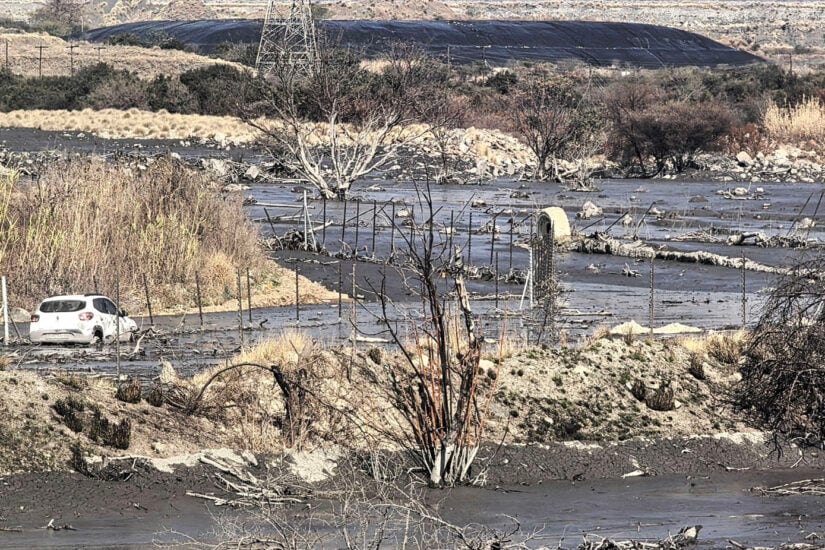
Dikwena Tailings Storage Facility sidewalls collapsed at Samancor Chrome’s Hernic operation near Brits, North West, on 13 August 2026. Picture: Nigel Sibanda/The Citizen


The Department of Mineral and Petroleum Resources found that seepage and ignored safety recommendations led to the tailings dam collapse at Samancor Dikwena Chrome Mine in the North West.
In a recent written reply to Parliament, Minister Gwede Mantashe also said the mine was ordered to stop depositing tailings and investigate the root causes.
Mantashe was responding to EFF MP Elsabe Ntlangwini, who had asked whether the minister knew about the collapse, which cut access to nearby mine shafts, swept away vehicles and knocked down Eskom power lines.
She also wanted to know what caused it and how mines would be held responsible for their tailings facilities.
What caused the Samancor Dikwena tailings dam collapse?
Mantashe said the department’s investigation traced the failure to one section of the dam.
“The Department’s post-incident investigation identified persistent seepage and prolonged saturation associated with the northern perimeter wall of Compartment 1B,” Mantashe stated.
The probe also found weaknesses in the mine’s safety systems.
“The investigation further identified inadequate monitoring and early-warning measures for potential tailings dam wall failure,” he explained.
According to Mantashe, a structural-integrity report had called for urgent engineering work, including a continuous drainage system.
The mine never carried it out.
Steps taken against Samancor Dikwena Chrome Mine
Mantashe said the department considered the danger serious enough to halt all deposition into the tailings facilities and move workers at the dams to safety.
The mine also had to carry out its own investigation under Section 11(5) of the Mine Health and Safety Act, draw up a rehabilitation plan and present a turnaround strategy for safe mining.
He added that the department further wanted outside expertise.
“The employer was required to appoint an independent suitably qualified person or team to conduct a comprehensive forensic investigation and environmental assessment,” Mantashe noted.
However, operations could not simply restart.
“No deposition into the tailings storage facilities may resume until the required measures have been implemented and an acceptable presentation has been made to the Principal Inspector of Mines,” he added.
Tailings dam safety checks at other mines
Mantashe said the department had already urged all mine employers to assess the risks of mine residue deposits before the collapse happened.
It had also issued a guideline for a mandatory code of practice on the matter.
Inspectors would keep checking that mines complied.
“During routine inspections and audits, Inspectors of Mines do monitor compliance with the provisions of the MHSA,” he said.
The department would use the investigation findings to decide on any further regulatory measures.
“The assessment of the remaining compartments remains ongoing,” Mantashe stated.