Saps accepted that the video had raised alarm.
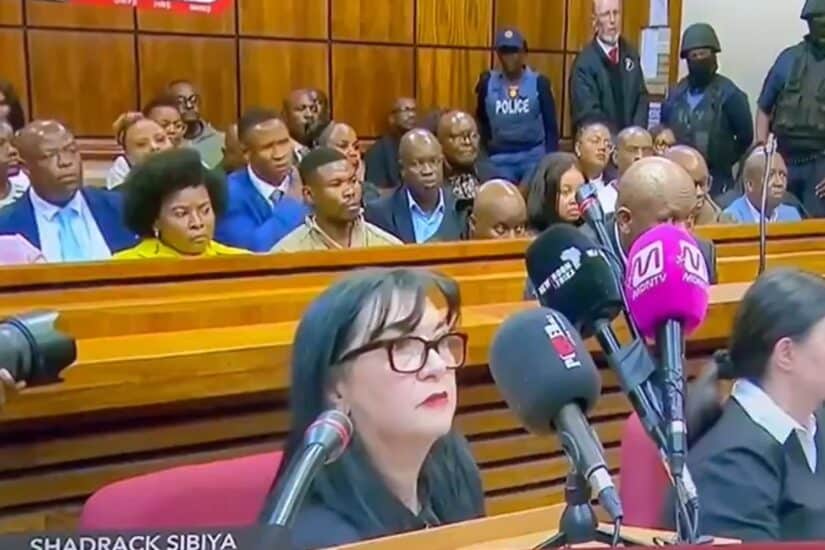
Image: Screenshot


The South African Police Service (Saps) says the gestures in the Shadrack Sibiya court video were operational, not a threat. Here’s what police said about the man in the blue suit.
Saps said on Wednesday that a gesture in a court video was not a threat.
The footage, which emerged during the court case of suspended deputy national police commissioner Shadrack Sibiya, showed a man in a blue suit making what looked like a throat-slicing motion.
Saps issued a statement to explain the video, saying the gestures seen in it were operational in nature and rejecting claims of intimidation.
“It was not intended to convey a threat, or an instruction to interfere with court proceedings,” it said.
Who is the man in the blue suit?
Saps confirmed the man was one of its officers who worked in a specialised unit.
“The man wearing the blue suit is a member of the Saps and forms part of the Combat Team of the Commission’s Recommendations Task Team (CRTT),” Saps said.
It said the gestures were aimed at the investigating officer and meant to tell him that the protection staff needed to get ready, as the officers guarded the prosecutors and investigators.
The statement said these officers “should take up their positions and remain on standby to facilitate the immediate departure from court after the announcement of the postponement of the bail proceedings”.
It said added that the exchange was about logistics.
“The interaction therefore related to the coordination and positioning of Saps personnel following the court proceedings.”
Watch: Man in blue suit causes alarm after making threat-like gesture:
Saps admits gestures could be misread
Saps accepted that the video had raised alarm and that the footage looked different without context.
“When viewed in isolation, the gestures may understandably have caused concern or been open to misinterpretation,” Saps said.
The service said this was why it gave a full explanation, adding that the officer had been spoken to about his conduct.
“The officer has been reminded of the importance of exercising caution when using non-verbal communication, particularly in sensitive public and court environments where gestures may easily be misunderstood or interpreted out of context.”