The South African Police Service warned against using fabricated material to tarnish the image and integrity of officers.
Members of the South African Police Service. Picture: Gallo Images/Frennie Shivambu


The South African Police Service (Saps) in the Northern Cape has dismissed claims that a senior official was caught trying to solicit a bribe from a drunk driving suspect.
Screenshots of texts allegedly between the officer and the suspect were shared on social media recently, with provincial police since stating the screenshots were fabricated.
Saps warned against the sharing of “false and misleading information” and asked members of the public to report potential criminality through proper channels.
‘What bank are you using?’
The screenshots show a conversation purportedly initiated by the Northern Cape’s Deputy Commissioner for Crime Detection Major General Luntu Ngubelanga.
The text message exchanges show someone posing as Ngubelanga contacting a man involved in a drunk driving case, quoting a case number and ID number.
The pair agree on a cash exchange, where the person posing as the police official directs the suspect on the preferred method of payment and the urgency of the matter.
“So please don’t disappoint me with the balance after I’m done helping you with everything today. What bank are you using?
“But it’s okay, you can do cash send. Once you done I start everything but please don’t disappoint me with the balance,” the fake officer sent.
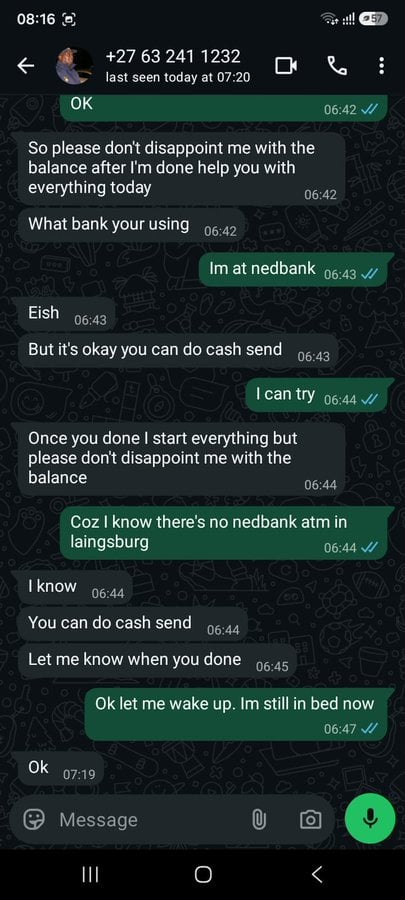
Above: One of the screenshots flagged by police as fake. Source: Saps
Official cleared
Northern Cape police stated on Wednesday night that it had cleared Ngubelanga of any wrongdoing.
“The Office of the Provincial Commissioner wishes to place it on record that the allegations contained in the circulating message are false and without any factual basis.
“Major General Ngubelanga has not demanded or solicited any payment in exchange for the handling, withdrawal, or any other action relating to a case docket,” provincial police stated.
Saps condemned any conduct that attempted to use fabricated information to tarnish the reputation and integrity of officers, warning of consequences for those found doing so.
“The circulation of false information can cause unnecessary alarm and may have serious consequences for individuals who are falsely implicated.
“The public is further advised that appropriate steps will be considered against persons responsible for creating and circulating defamatory content, where there is sufficient evidence to do so,” Saps concluded.