
According to Unisa, the technical issue was resolved on Monday, 6 July, and outstanding payments are now being processed.
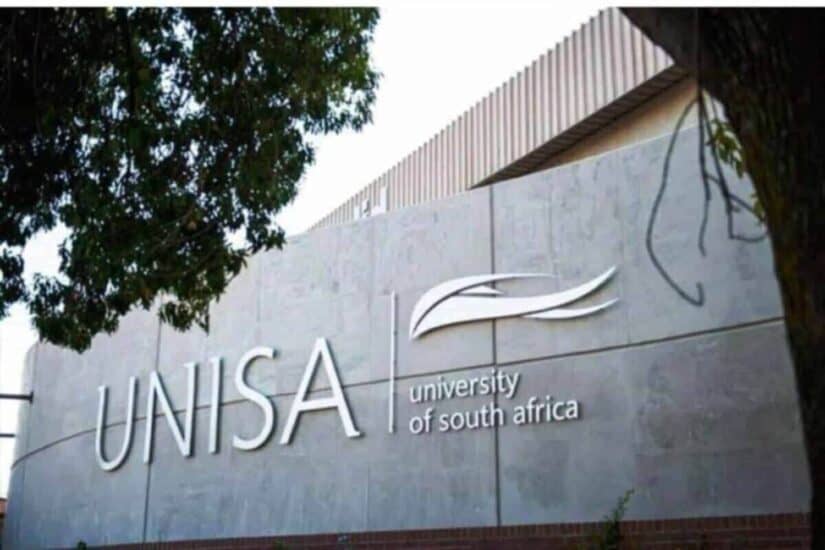
Picture: Supplied.


More than 93 000 University of South Africa (Unisa) students have been affected by delays in receiving their National Student Financial Aid Scheme (Nsfas) Personal Care Allowance, prompting Deputy Minister of Higher Education and Training Yusuf Cassim to intervene.
Cassim met with Unisa management, student leaders and Nsfas representatives after receiving written complaints and enquiries through the Deputy Minister’s Help Desk about delayed July allowance payments and the scaling back of data allowances for distance-learning students.
System glitch delayed payments
During the meeting, it was confirmed that Nsfas transferred funds to Unisa on 2 July 2026. However, the university experienced a system glitch that delayed payment processing for some students.
According to Unisa, the technical issue was resolved on Monday, 6 July, and outstanding payments are now being processed.
Cassim said students should never have been placed in such a position, particularly given the limited value of the allowance.
“If we are being honest, R316 per month for a distance-learning student, which is less than the Social Relief Grant, is simply not enough given the resources students need to succeed academically. However, these are policy issues which can only be changed through the annual policy review change of Nsfas,” he said.
Cassim to engage Nsfas administrator
Following the meeting, Cassim announced he would write to Nsfas administrator Professor Hlengani Mathebula to request a comprehensive briefing on allowance payment schedules.
The deputy minister said the Unisa incident exposed shortcomings in the payment process, with Nsfas transferring funds about a week after the start of each month, leaving institutions with little time to process student payments.
He said the payment schedule requires review and better alignment between Nsfas and institutions.
Nsfas has also committed to sending its finance department to Unisa next week to reconcile outstanding funds, resolve financial matters and address alignment issues between the two organisations.
Policy concerns under review
Cassim said the annual Nsfas policy review process and the upcoming review of the Nsfas Act present an opportunity to address several long-standing concerns affecting Unisa students.
These include the exclusion of students registered for fewer than 10 modules from receiving allowances, the inadequacy of the R316 Personal Care Allowance, the absence of additional allowances beyond the personal care and one-off book allowance, and the broader funding model for distance-learning institutions.
He said his visit had strengthened his understanding of these issues and would inform his contributions during future policy discussions.
Call to restore monthly data allowance
Cassim also urged the Unisa Council to reconsider its decision to discontinue the monthly data allowance, saying internet connectivity remains essential for effective distance learning.
While welcoming the council’s negotiations with private partners to provide low-cost data, he maintained that students should continue receiving monthly data allocations.
The deputy minister also announced that Unisa management had committed to arranging a direct engagement between him and students to hear their concerns firsthand.
Allegations over reduced allowances
Cassim further raised allegations received through the Deputy Minister’s Help Desk that some students had received less than the full R316 Personal Care Allowance.
Unisa denied the allegations despite being presented with evidence and requested that all reported cases be forwarded to the institution for investigation and individual responses.
Cassim described the Deputy Minister’s Help Desk as a vital mechanism for resolving student grievances.
“The concerns of our students are valid and must be addressed with urgency and empathy. We will continue to work collaboratively with all stakeholders to find sustainable solutions that ensure no student is left behind,” he said.